 Nick Trenkler

for two years, the dominant ai story was simple: america builds the frontier, china copies later.
that story is breaking.
by april 2026, the clearest usage data from openrouter shows something uncomfortable for us labs: chinese models are not just catching up on benchmarks – they are winning actual demand. they are taking the tokens.
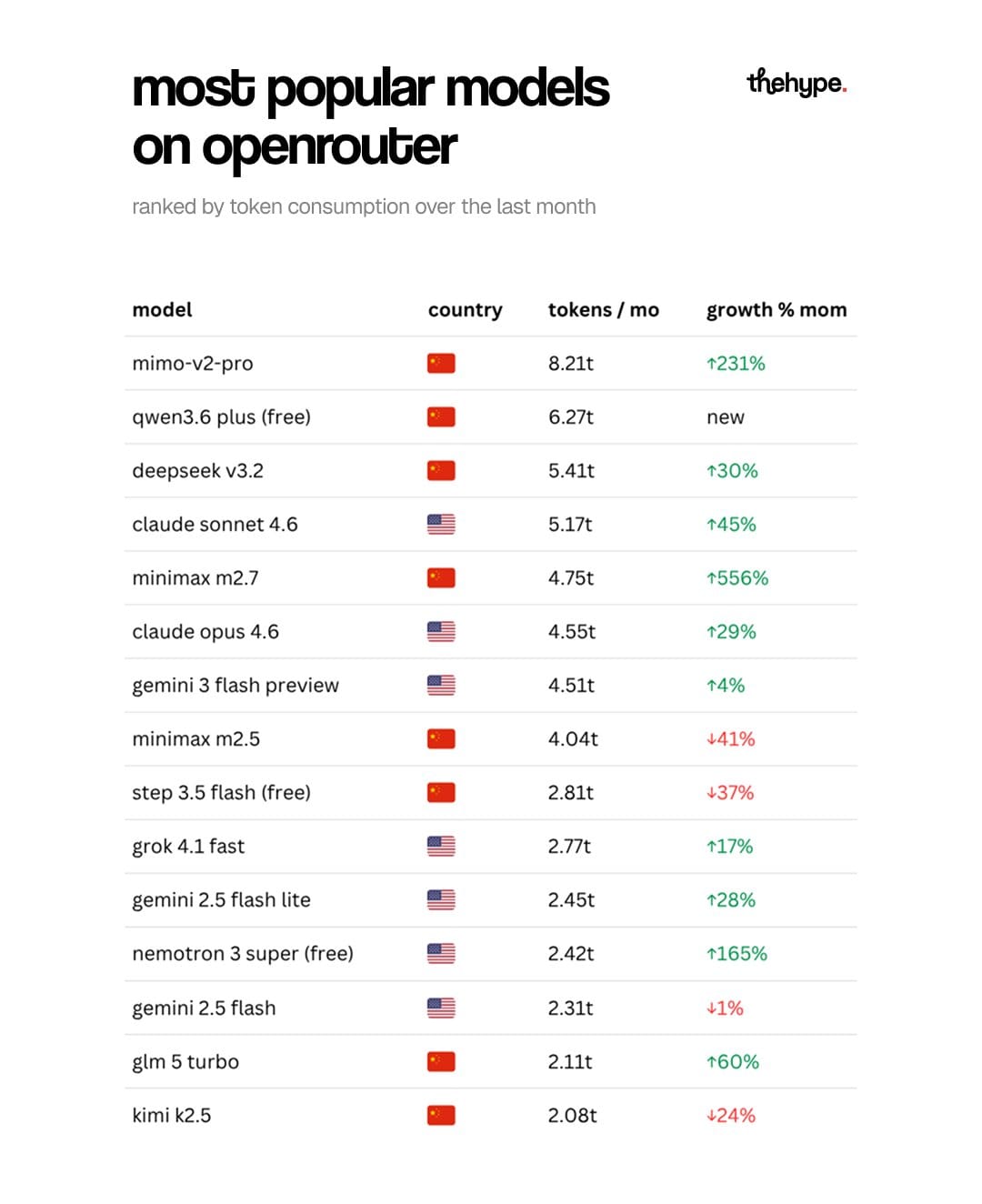
the #1 model by token consumption is not from openai, anthropic, or google. it is xiaomi’s mimo-v2-pro with 8.21t monthly tokens.
right behind it:
- qwen3.6 plus (free) — 6.27t
- deepseek v3.2 — 5.41t
- claude sonnet 4.6 — 5.17t
- minimax m2.7 — 4.75t
among the top 10 most-used models, 6 are chinese.
among the top 20, china dominates the upper half.
on weekly snapshots earlier this month, chinese models even took all top six spots by token usage on openrouter, according to multiple reports citing the platform’s own ranking.
this is not “interesting progress.” this is market capture.
market share: usa still leads, but barely
by provider-level market share:
- anthropic: 17.8%
- google: 16.5%
- openai: 12.3%
combined, the us big three hold 46.6%.
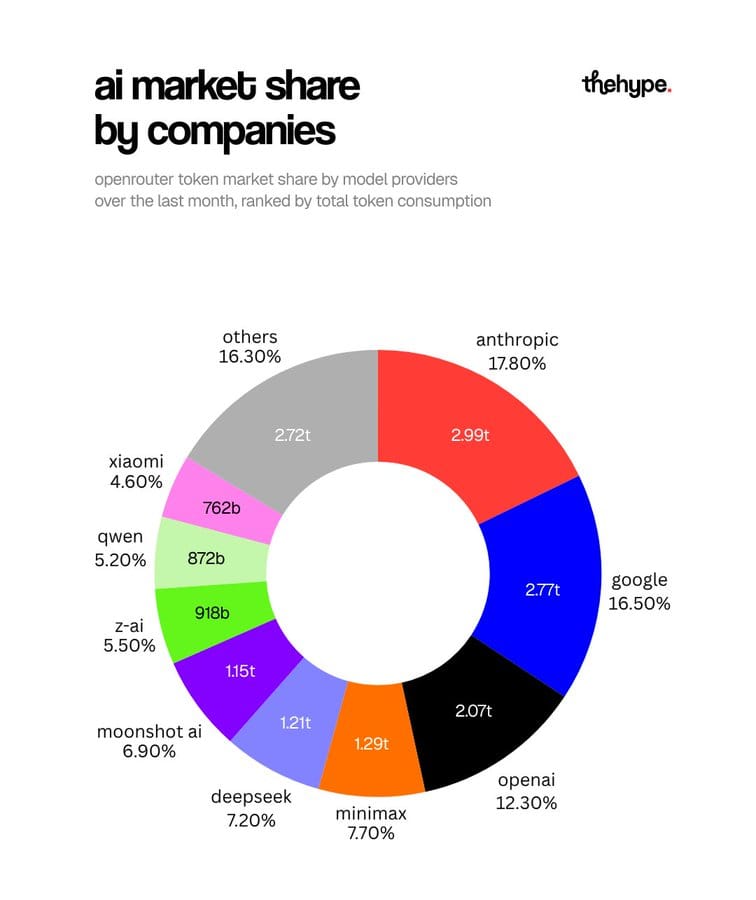
china:
- minimax
- deepseek
- moonshot
- z-ai
- qwen
- xiaomi
combined: 37.1%
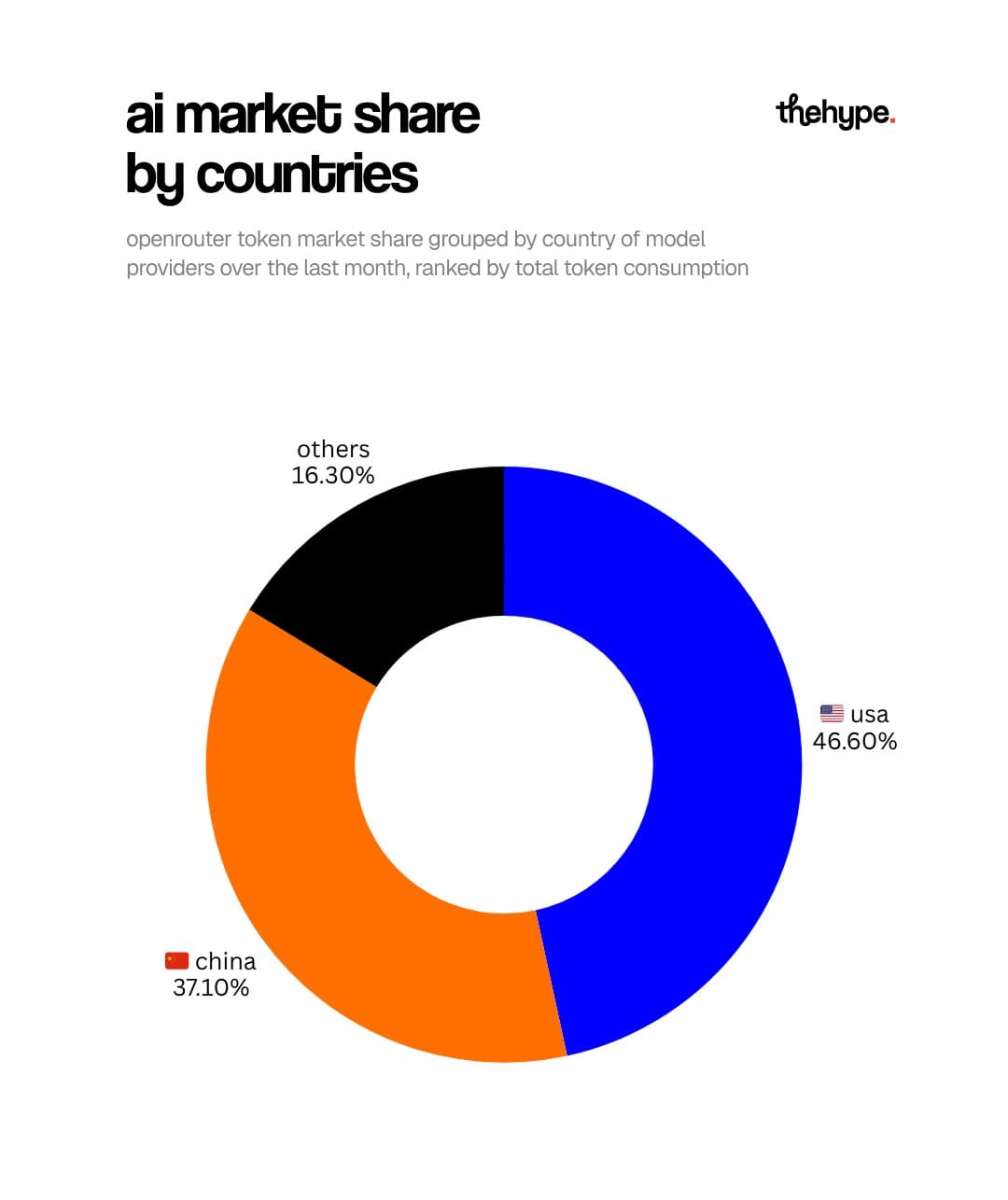
that gap is much smaller than most people think. and it is shrinking fast.
the most important part: china is winning not through one breakout lab, but through a dense cluster of competitive labs shipping aggressively.
america has winners. china has a system.
the benchmark gap is closing
the strongest argument against the “china is catching up” narrative is usually benchmarks:
“sure, they are cheaper – but the best models are still american.”
that is becoming harder to defend.
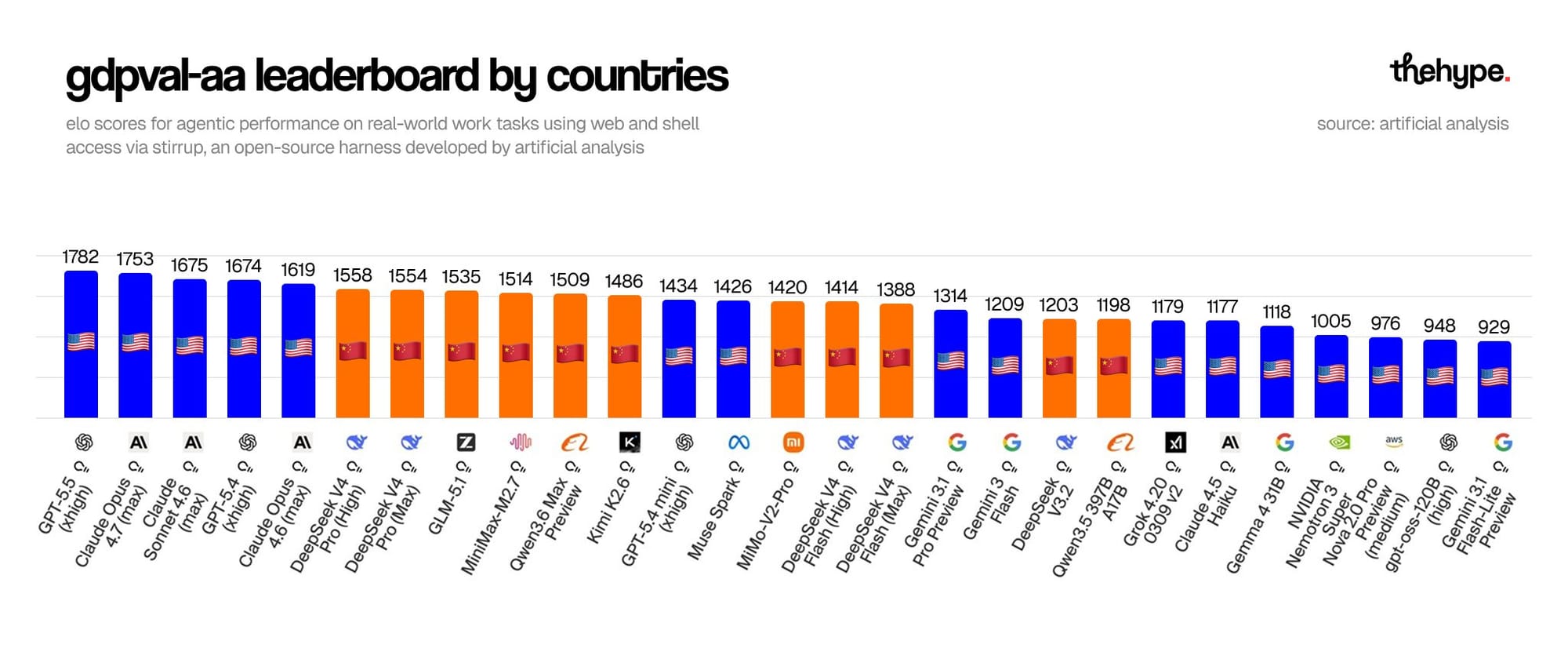
the gap between claude opus 4.6 and deepseek v4 pro is smaller than most people imagine – and for many production teams, pricing matters more than that delta.
even more important: china is not represented by one lab.
it is deepseek, minimax, qwen, kimi, glm, xiaomi – multiple labs, multiple model families, all shipping near the top.
the real threat is not “better models”
it is better economics.
the u.s. still thinks this race is benchmark-first. china is playing distribution-first. that is much harder to stop.
because once developers standardize around your APIs, your agent frameworks, your cheap inference, and your open model ecosystem, switching becomes expensive.
people do not migrate because another model scores +2 on a benchmark. they migrate when the entire workflow changes.
that migration is already happening.