Felix Laurent
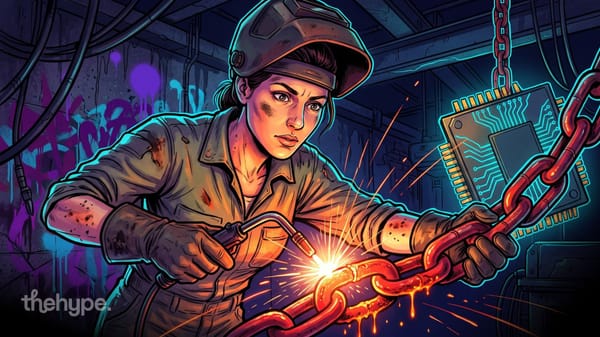
The US and its allies have agreed to jointly protect AI supply chains they consider vulnerable to China. The Financial Times reported the deal on November 15, and Bloomberg confirmed it the same day. Together, the signers will draw up a shared list of AI technologies and supply chains that need stronger protection.
Eight partners have already signed: Japan, Australia, Israel, the UK, South Korea, India, Qatar and the United Arab Emirates. Germany, Sweden, the Netherlands and the European Commission are expected to join next week. Jacob Helberg, the US under secretary of state for economic affairs, shared the details with the FT.
What the San Francisco Declaration says
The document is called the San Francisco Declaration on the Secure Foundations of Enduring Prosperity. It treats economic security as part of national security. It also calls for stronger protection against theft or unauthorized transfer of technology that could give hostile actors a military or intelligence edge.
The declaration sets up three main tools:
- a shared list of AI technologies and supply chains that need more protection;
- working groups on weak points in AI supply chains;
- economic hubs to attract investment into related industries.
Helberg said the agreement reflects a simple fact. The technologies and infrastructure behind AI usually span several countries, so securing them is a shared job. The list should help members spot sensitive technologies and the critical infrastructure needed for what President Donald Trump calls "super intelligence". It should also show where supply chains need to be diversified.
The deal is the latest step in a broader US program.
How the declaration fits into Pax Silica
The new declaration is part of Pax Silica, a US-led initiative launched in December 2025. It covers the whole base of AI, from semiconductors and critical minerals to energy infrastructure. Its first members included Japan, South Korea, Singapore, the UK, Australia and Israel.
The group has grown fast. Qatar and the UAE joined at the start of 2026, and more countries signed at a summit in June, including Germany and the Netherlands. The San Francisco Declaration adds concrete work on top of those earlier pledges: a common list and standing working groups.
The program is also about raw materials. Washington wants to cut its dependence on China for critical minerals, especially rare earths, which chipmakers and data centers need. China dominates the mining and processing of many of them.
The timing points to China directly.
Why the deal comes before the APEC summit
The announcement comes days before Trump is expected to meet Chinese President Xi Jinping at the APEC summit in Shenzhen, China. Negotiators on both sides have been racing to prepare deals for the meeting. Washington accuses Beijing of failing to keep its promises under the trade truce the two leaders struck in late 2025.
The chip race already shapes markets. AI chip stocks swung sharply around the US midterms. At home, Trump also wants AI data centers to build their own power plants.
Beijing has criticized Pax Silica since its launch. Chinese state media has called the initiative a distortion of market principles that is bound to fail. China is also building its own controls, such as licenses for exporting top AI model weights.
Will the AI supply chain pact actually protect anything
It is a framework more than a rulebook. The declaration creates a shared list and working groups, but it sets no binding export rules, tariffs or penalties. Its real effect will depend on what lands on that list and whether members act on it. That could mean screening investments or adding export controls.
Still, the alliance matters. Japan, South Korea, the Netherlands and Germany hold key parts of the chip supply chain, from lithography machines to memory and materials. With the Gulf states adding money and energy, the bloc covers much of what AI needs outside China. If the EU members sign next week as planned, most of the world's chip powers will sit inside one US-led supply chain pact. That happens just as Trump sits down with Xi.
Sources
- US, allies agree to guard AI supply chains from China, FT says, Bloomberg – November 15, 2026
- Report: US, allies sign accord to protect AI supply lines from China, Newsmax via Yahoo News – November 15, 2026
- US inaugurates Pax Silica with seven allies, Bower Group Asia – December 2025
- Qatar and UAE to sign up to US-led Pax Silica initiative, DatacenterDynamics – January 2026