Felix Laurent
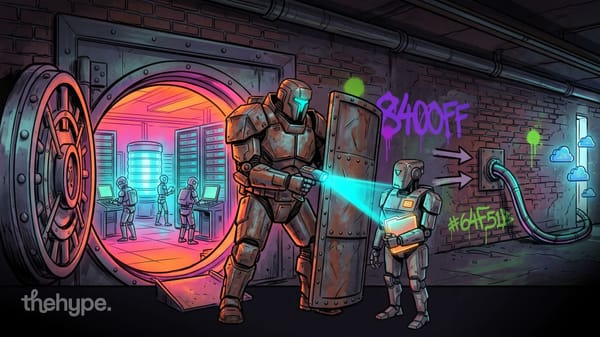
Anthropic now lets companies run Claude Managed Agents entirely on their own infrastructure. The release appeared in Claude Platform release notes on November 12, 2026. It covers the whole service: the API, the agent loop and the storage for agents, sessions and their history. Model calls can still go to Anthropic, or to Amazon Bedrock, Google Cloud, Microsoft Foundry or a company's own gateway.
Self-hosted Managed Agents is not open to everyone yet. To request access, companies contact their Anthropic account team. We gathered what Anthropic's docs and posts say and how others have covered the launch.
What self-hosted Claude Managed Agents includes
Managed Agents is Anthropic's hosted platform for long-running AI agents, launched in public beta in April 2026. You define an agent, start a session and exchange events with it while it works. Until now, Anthropic always ran the core of that service.
Anthropic's docs split the platform into two parts and three hosting options:
| Option | Sandboxes | Service | Model |
|---|---|---|---|
| Cloud sandboxes (default) | Anthropic | Anthropic | Anthropic |
| Self-hosted sandboxes | You | Anthropic | Anthropic |
| Self-hosted Managed Agents | You | You | Anthropic or a provider you choose |
Sandboxes are the containers or VMs where an agent's tools run commands and edit files. The service is the API, the agent loop and the storage. Self-hosted Managed Agents moves both to the customer.
A deployment has a few pieces:
- Server (
cma-server) serves the same API as Anthropic's hosted service, runs the agent loop and stores data; - Database is PostgreSQL 16 or later. Without one, data lives in memory and a restart erases it;
- Workers poll the server for work and run the agent's shell and file tools in sandboxes;
- Console is a web page on the server where people sign in through the company's identity provider.
The SDKs and the ant CLI work with a self-hosted server. Anthropic offers a Docker Compose stack for a first test on one machine and two Helm charts for production on Kubernetes. Each release ships with an operator guide that Anthropic suggests handing to Claude, so it can help configure the server.
The main reason to run all of this yourself is control over data.
Why companies would self-host Managed Agents
Anthropic names two cases. Some companies must store agents, sessions and session history on their own infrastructure. Others need model calls to go through a specific provider, such as Bedrock, Google Cloud, Foundry or their own model gateway.
The data retention rules change too. On the hosted service, Managed Agents is not eligible for zero data retention (ZDR), because Anthropic stores session transcripts until the customer deletes them. Anthropic's retention page now makes one exception: self-hosted Managed Agents. Transcripts stay in the customer's database, and model calls follow the customer's agreement with its provider. A company with a ZDR deal with Anthropic gets the same terms on these calls as on other Messages API requests.
Some data still leaves the network. Each model call sends the conversation so far, including tool inputs and results, to the chosen provider. Calls to the Claude API also carry session, agent and environment IDs. According to the docs, Anthropic has no remote access to the server or its logs.
Self-hosting also brings features the hosted service lacks:
- single sign-on through any OpenID Connect provider, with roles mapped from groups;
- vault secrets stored in the company's own secret manager;
- agent identity, where the server signs short-lived tokens for calls to MCP servers.
The trade-off is a shorter feature list and more work.
What self-hosted Managed Agents can't do
Anthropic lists the gaps in detail. A self-hosted server has no cloud environments, Files API or prebuilt docx, pdf, pptx and xlsx skills. It also lacks scheduled deployments, Dreams and webhooks, and it does not serve the Messages API.
Multiagent orchestration is limited to subagents that you list. Web search and web fetch are off until an operator turns them on, and MCP servers work only on an allowlist. Nothing moves over from the hosted service, so agents, skills, vault credentials and memory stores must be created again.
Security becomes the customer's job. The docs warn that the agent's bash tool "is a real shell with the worker process's permissions and network access" and needs isolation. Each tenant or trust level needs its own deployment, with its own database, API key and workers. Customers also install every release themselves.
Anthropic has been building toward this step for months.
How Anthropic got to self-hosting
Anthropic opened Managed Agents in public beta on April 8, 2026. "Introducing Claude Managed Agents: everything you need to build and deploy agents at scale," the @claudeai account posted. Anthropic's engineering blog said the challenge was to design a system for "programs as yet unthought of" from the start.
On May 19 came self-hosted sandboxes in public beta and MCP tunnels in research preview. According to Anthropic's blog, the agent loop "stays on Anthropic's infrastructure" in that setup, while tool execution moves to the customer. The @claudeai post named Cloudflare, Daytona, Modal and Vercel as sandbox providers. Customers quoted at the time included Amplitude, Clay, Rogo and DoorDash.
Not everyone bought the "execution sovereignty" pitch. A May 24 analysis on the Foundation's Edge Substack called that framing "half right" at best. Its point was that the agent loop, the planning context and the session log all stayed with Anthropic. Every tool result, even one produced inside a customer's own sandbox, still traveled back to Anthropic to reach the model. For regulated companies, that was the data that mattered most. The new self-hosted option answers this criticism directly, since the loop and the session history now run on the customer's servers.
Updates followed through the summer. On August 19, @ClaudeDevs announced that work done in a self-hosted sandbox can be saved to memory. The same release added domain allowlists for web tools and a redesigned session viewer in the Console. In August, Anthropic also added session budgets and an advisor model that a session can consult mid-turn.
By then, a long list of companies had built products on the platform.
Who builds on Claude Managed Agents
Anthropic named its first customers at the April launch. Most of them use Managed Agents to put agents inside their own software:
- Notion lets teams hand work to Claude from a task board, with more than 30 tasks running at once, from code to slides and websites;
- Asana built AI Teammates, agents with their own Asana accounts that pick up tasks inside projects;
- Atlassian is building developer agents into Jira, so customers can assign a ticket to an agent;
- Sentry pairs its Seer debugging agent with a Claude agent that writes the patch and opens a pull request;
- Vibecode uses Managed Agents as the default engine for turning prompts into deployed apps.
Other companies run agents for their own staff. Rakuten deployed specialist agents for product, sales, marketing and finance in Slack and Teams, each within a week. Anthropic's own sales team runs its inbound requests on the platform. In August, ABC Legal said it had more than 50 agents in production. It cut the cost of some manual tasks by up to about half. Every built a company agent in Slack and later released it to its subscribers.
The self-hosted sandboxes in May drew a further group. Amplitude, Clay, Rogo and DoorDash were quoted at that launch. Anthropic has not yet named any customer of the full self-hosted option. The figures above come from the companies themselves.
These customers show the demand, and outside coverage of the new option followed fast.
What others say about self-hosted agents
TechBytes reported on November 11 that Anthropic had opened "a private beta for self-hosted Claude Managed Agents" for development teams. The report said every component, from the agent harness to session history, now stays inside the customer's perimeter. Its link to an Anthropic article returned an error when we checked, so the release notes and docs are the primary source.
The launch also dates earlier guides. In October, Omnara, which sells an open-source agent platform, wrote that "you can't fully self-host Claude Managed Agents" at all. Its guide also said self-hosted sandboxes were not eligible for ZDR or HIPAA. The first point no longer holds, and the ZDR rules have changed for the full self-hosted option.
Rivals offer similar choices. Omnara's guide lists OpenAI's Agents API with self-hosted sandboxes, AWS options in Bedrock and AgentCore, and Google's managed agents API in preview. Open-source tools such as OpenHands also run fully on a company's own servers. In Europe, Mistral Studio added managed agents on November 5, on Mistral's cloud or on-premises.
Should companies self-host Claude Managed Agents
Banks, healthcare providers, governments and other regulated teams have the clearest reason to try it. They get Anthropic's agent harness and API with data on their own servers and model calls through the cloud they already use. The ZDR exception alone may unlock projects that the hosted service could not.
Smaller teams are better off on the hosted service or with self-hosted sandboxes. A self-hosted server means running Kubernetes, PostgreSQL, secrets and updates, and it gives up Dreams, webhooks and prebuilt skills. Anthropic has published no pricing, and access goes through its sales team, so the option is aimed at large enterprise accounts.
Sources
- Claude Platform release notes, Anthropic – November 12, 2026
- Self-hosted Claude Managed Agents, Claude Platform Docs
- Differences from the hosted service, Claude Platform Docs
- Data and access in self-hosted Claude Managed Agents, Claude Platform Docs
- API and data retention, Claude Platform Docs
- Claude on X: Introducing Claude Managed Agents – April 8, 2026
- Claude Managed Agents: get to production 10x faster, Anthropic – April 8, 2026
- New in Claude Managed Agents: self-hosted sandboxes and MCP tunnels, Anthropic – May 19, 2026
- Claude on X: self-hosted sandboxes – May 19, 2026
- Claude Managed Agents, decomposed, Foundation's Edge – May 24, 2026
- How ABC Legal turned every employee into a builder with Claude Managed Agents, Anthropic – August 17, 2026
- Notion Claude Managed Agents case study, Anthropic
- How Asana built AI Teammates, Anthropic
- Claude on X: Every's company agent – October 6, 2026
- ClaudeDevs on X: memory in self-hosted sandboxes – August 19, 2026
- Operate Claude Managed Agents inside your security perimeter, TechBytes – November 11, 2026
- Self-hosted managed agents (2026), Omnara – October 2026