Felix Laurent
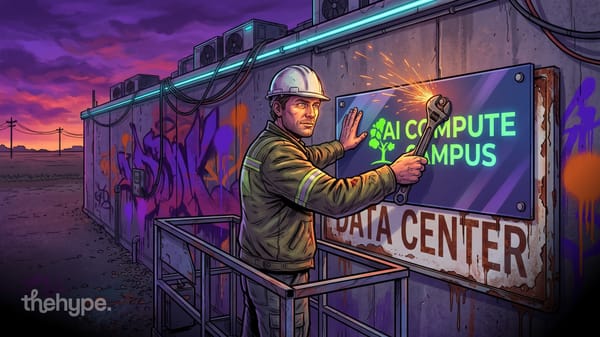
OpenAI data centers may soon go by a different name. Right after the US midterms on Tuesday, the company plans a policy and PR push that includes calling them "AI compute campuses" instead. Axios reported the plan on November 1, 2026, and TechCrunch picked it up the same day.
The timing is not random. Data centers have become one of the least popular things the AI industry builds. A new name is OpenAI's bet that part of the problem is the word itself.
What OpenAI plans after the midterms
Axios journalists Jim VandeHei and Mike Allen describe the plan as a "policy and PR blitz" that starts the day after the vote. After two years of a friendly White House, Axios expects AI companies to face a harsher Washington, with Democrats likely to win the House.
OpenAI also wants to shape the AI debate for the 2028 presidential race. Chris Lehane, OpenAI's chief global affairs officer, told Axios the midterms will be "a bit of a movie trailer" for 2028. He expects AI to be the main issue in that election.
According to TechCrunch, Lehane discussed four ideas for the push:
- AI "speed limits" for the most powerful systems;
- ways to help people see AI as empowering them in daily life;
- a US role in setting global AI standards;
- rebranding data centers as "AI compute campuses".
Lehane also called the data center debate "good and healthy" in the interview. In his words, communities should hold companies accountable so they get a transformative benefit from these projects.
That framing explains why the rebrand sits next to the policy ideas. Data centers are where the AI debate turns local.
Why data centers need a new name
Data center opposition is now stopping real money. Data Center Watch counted $68 billion in data center projects blocked or delayed between April and June 2026, Tom's Hardware reported, citing Bloomberg. The same group counts 843 local opposition groups in every US state except Hawaii.
A Carbon Direct report gave a longer view. Between January 2024 and May 2026, at least 46 AI data center projects in 20 states were publicly delayed or cancelled after community opposition. Their combined value was $170 billion, Route Fifty reported.
The most common reason projects were abandoned was a lack of transparency. Secret deals, unclear owners and undisclosed tenants drew faster and sharper pushback. The pressure has already changed industry habits: Amazon and Microsoft said they will no longer use NDAs in talks with local governments.
Polls point the same way. In a July survey by Americans for Responsible Innovation and Morning Consult, 71% said data centers need stronger rules or limits. Another 77% were concerned about deals made without public input.
So OpenAI is right that the label carries baggage. The harder question is whether the label is the cause.
Research says the backlash is not about the building
A University of Virginia study suggests it is not. Its National Security Institute surveyed 809 American adults on September 3, 2026 and published the results on October 23. Each person rated one facility planned within 10 miles of their home: a data center, a warehouse, a landfill or a nuclear power plant.
Data centers lost to nuclear power. Americans would rather live by a nuclear power plant than a data center, the authors write. Warehouses were the most welcome, and landfills the least.
The key difference was local benefit. Data centers were the only facility whose expected benefits grew with distance from home: lowest for the town, highest for the country. One in three people brought up jobs when rating a warehouse. Only 15% did so for a data center, and one in five of those mentions was skeptical.
Trust drove the rest. The table shows how the main findings compare.
| Finding | Data centers |
|---|---|
| Oppose a local build among those who see developers as opportunistic | 90% |
| Oppose a local build among those who do not | 41% |
| Higher chance of opposing among people who distrust the federal government | 32% |
| Share of answers that mentioned distance ("miles") | 1.5% |
People rarely thought about the building itself. Their most common words were water, AI and environment. For the other facilities, they wrote about smell, traffic and safety. The authors conclude that people judging a data center are "passing judgment on the AI industry at large" rather than on a building.
If that is right, the name is the smallest part of the problem.
Will AI compute campuses win over communities
Probably not on its own. "Campus" suggests jobs, people and a place that belongs to the town. The UVA data shows that local benefit is exactly what people do not expect from data centers. Renaming the building does not change what happens inside it.
A label can even backfire. Projects with hidden owners and secret deals already face the sharpest opposition, and a softer name can read as one more attempt to hide something. Distrust of developers is the strongest driver in the data: 90% opposition among those who see builders as opportunistic.
What the research does reward is what Lehane himself described: accountability and a visible local benefit. If OpenAI's campuses come with jobs, open deals and money that stays in the town, the new name may stick. If they arrive as the same buildings under a new sign, communities are likely to judge them the way they judge the AI industry now.
Sources
- Behind the Curtain: OpenAI's post-election power play, Axios – Jim VandeHei and Mike Allen, November 1, 2026
- OpenAI might rebrand its data centers as "AI compute campuses", TechCrunch – Anthony Ha, November 1, 2026
- The data center backlash is not about data centers, UVA National Security Institute – survey of 809 adults, October 23, 2026
- Community opposition helped block $170B in data center projects, Route Fifty – Carbon Direct report and ARI / Morning Consult poll, July 31, 2026
- Local opposition blocked $68 billion worth of data center projects in Q2 2026, Tom's Hardware via Yahoo Finance – Data Center Watch figures, September 21, 2026