Felix Laurent

The biggest AI news of November 2 was about the size of the AI bet. Anthropic's amended IPO filing showed about $17B of revenue in one quarter. Marvell agreed to buy Lumentum in a $115B deal for AI data-center optics. A new SemiAnalysis benchmark found that even the best model solves only 12% of expert-level work. Below are the big stories of Monday, November 2, plus the smaller updates and rumours from the same day.
Anthropic shows a $17B quarter in its amended S-1
Anthropic updated its IPO filing with third-quarter numbers, CNBC reports. Revenue reached roughly $17B in the quarter, up about 1,127% from a year earlier. Growth slowed, though: about 47% from the previous quarter, against 144% in the second quarter.
The quarter's net loss was $23.29B. Over nine months, revenue was $33.24B and the net loss was $104B, mostly from fair-value changes on convertible notes and derivatives. Anthropic has signed purchase and lease commitments worth about $895.4B, nearly all of it for compute and infrastructure.
The company is preparing to start its roadshow. A separate Japanese filing shows it plans to sell up to $3.5B of shares to Japanese investors; we covered that here. Our breakdown of the original S-1 from October 26 is here.
Marvell buys Lumentum in a $115B deal
Marvell agreed to buy Lumentum, which makes optical components that link chips inside AI data centers. The all-stock deal gives Lumentum shareholders 4.5 Marvell shares each and values Lumentum at about $115B. CNBC reports it is expected to close in the first half of 2028.
Investors did not like the price. Marvell shares fell 13% on Monday, and Lumentum dropped nearly 19%.
SemiAnalysis GDPx: the best model scores 12%
SemiAnalysis launched GDPx, a benchmark of expert-level work in 11 fields, from chip design and biology to law and quant trading. Even the best model, Claude Opus 5.5, scores just 12%. Each task gets three attempts with an 8-hour limit, and all fields count equally.
Opus 5.5 is the best all-round model and wins quant trading, hardware design and chip design. Gemini 4 Carbon, which Google gave to cyber defenders first, leads biology, and GPT-6 Astra leads materials science and recursive self-improvement. SemiAnalysis says safety classifiers hold back Opus 5.5 and GPT-6 Astra overall, and no model solved the finance tasks.
OpenAI signs four deals with Abu Dhabi
Abu Dhabi signed four agreements with OpenAI on November 2, witnessed by Crown Prince Sheikh Khaled bin Mohamed bin Zayed and Sam Altman. The deals cover government services, energy and investment. ADNOC becomes the first energy company to deploy OpenAI Frontier, and Mubadala will use it for investment analysis.
The stated goal is to make Abu Dhabi the first fully AI-native government. No contract values were disclosed. Our breakdown of the four deals is here.
Smaller updates
Seven smaller stories covered models, money, jobs and policy.
- Meituan released LongCat-2.5 Preview, a multimodal model with 1.6T total and about 48B active parameters for long coding tasks. It is available in Meituan's chat and API, with GitHub and Hugging Face releases planned, TechNode reports.
- Oracle filed to sell $10B of stock and $10B of senior notes to fund its AI buildout. Its shares fell 8.8% on Monday, CNBC reports. Oracle's AI World announcements from last week are in our October 27 digest.
- SUSE will cut about 10% of its 1,900 staff. CEO Dirk-Peter van Leeuwen wrote that "automation and AI are fundamentally shifting how software companies operate", The Register reports.
- 42AI came out of stealth with $62.5M from its founders and Infinity Group. Its "behavioral world model" predicts how traders react to volatile markets and already works with 10 brokerages, TechCrunch reports.
- South Korean President Lee Jae Myung presented a record 2027 budget of 820.9T won. It includes 21.3T won for chips, data centers and physical AI, plus 4.6T won for a sovereign AI model, The Korea Herald reports.
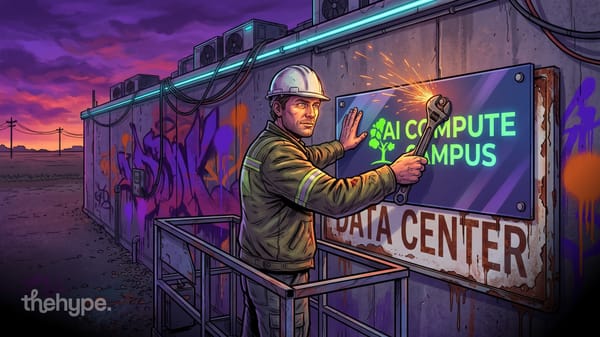
- OpenAI plans a policy push right after the US midterms, including calling data centers "AI compute campuses", Axios reports. More in our article.
- Macquarie Capital's Christina Lee told Bloomberg that AI may help junior analysts reach senior roles faster. We wrote about it here.
Two of the seven are about paying for AI infrastructure: Oracle's bonds and Korea's budget.
Rumours
Three more stories circulated on November 1–2, but we could not confirm them with the companies or a primary source.
- Gemini Notebook may add a "Comic" artifact that turns a user's sources into comics, TestingCatalog reports from a hidden beta tile. Google has not announced it. More in our article.
- A blog post by MIT CSAIL researchers claims GPT-6 Astra can read and edit the weights of Qwen3.5-0.8B from a plain-language instruction. It reports MATH-500 rising from 7.9% to 48.1%; OpenAI has not commented, and the result has not been reviewed.
- OpenAI reportedly launched a Grid Protectors Program, modeled on its Georgia campus, with up to 1GW of flexible demand and an $80M community fund. Only a secondary outlet reports it, with no OpenAI release.
Treat all three as unconfirmed until the companies announce them.
What the day was about
Monday was about how big the AI bet has become. Anthropic made about $17B in one quarter but committed about $895.4B to compute. Marvell paid $115B for optics, and Oracle asked the market for $20B more.
The benchmark news put that money in context. On GDPx, the best model still solves only 12% of expert work, and no model solved a finance task. On November 2 the spending was already sized for very capable AI, while the models were still far from doing most expert work.
Sources
- Anthropic S-1 quarterly financials – CNBC
- Marvell to buy Lumentum in $115 billion deal – CNBC
- GDPx: measuring frontier model capabilities – SemiAnalysis
- Meituan launches LongCat-2.5 – TechNode
- Oracle files to sell $20 billion in new stock and bonds – CNBC
- SUSE to cut one in ten employees because of AI – The Register
- 42AI comes out of stealth with $62.5M – TechCrunch
- Lee vows bold investment in AI – The Korea Herald