Felix Laurent
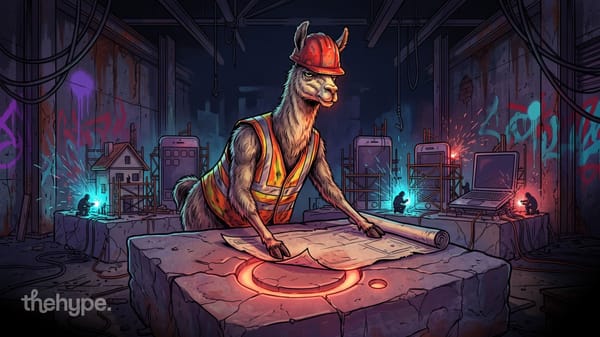
llama.cpp v1.0.0 is out, and with it ggml v1.0.0. Georgi Gerganov, who created both projects, announced the release on November 13. It is the first official major version of the open-source engine that runs AI models locally on almost any hardware.
The release adds few new features. Its point is a promise to developers: from now on, any change that breaks the public interface will come with a new major version number. The team says this matters because a growing number of apps are built on top of llama.cpp.
Why llama.cpp v1.0.0 matters
llama.cpp lets people run large language models on their own machines, from laptops to enterprise servers. It is written in portable C and C++, and it uses quantization to shrink models so they fit on ordinary hardware. Many popular local AI tools have built on it, including LM Studio and Ollama.
The project started three and a half years ago. Since then, more and more apps have come to depend on its code. "Every new integration means more developers depending on our library interfaces," the team wrote. So a flexible but stable API is now its top concern.
Until now, the project shipped constant numbered builds without a formal version scheme. Developers who embedded it often had to guess whether an update would break their app. Version 1.0.0 ends that.
The new versioning rules
Both libraries now follow semantic versioning. The rules apply to all ggml-org projects:
| Change | Version bump |
|---|---|
| Breaking change to the public C API | Major |
| New feature, backend update, model support or API addition | Minor |
| Bug fix with no API change | Patch |
The release covers two libraries. libllama is the LLM inference library, and libggml is the tensor library underneath it. The public headers in their include folders define what counts as the stable interface.
The team also wants more ways to install the software.
Where to get llama.cpp v1.0.0
Builds come through several channels:
- prebuilt files for Linux, macOS, Windows, Android and iOS;
- Docker and Debian packages for Linux;
- Homebrew for macOS and Linux;
- conda-forge for all three desktop systems;
- MacPorts for macOS and Winget for Windows;
- an XCFramework for iOS and macOS apps.
People who prefer an app can use Llama, the desktop app for macOS and Windows from the llama.cpp team at Hugging Face. It downloads and runs models without the command line.
What runs under the hood
ggml, the engine behind llama.cpp, is built to run on almost any hardware. Each type of chip gets its own backend, which can be compiled as a separate library and loaded at runtime. llama.cpp now supports more than 150 model architecture variants and all mainstream speculative decoding methods.
The project also invests heavily in testing. Hugging Face tools such as HF Buckets and HF Jobs scale its CI, so every change to the main branch is checked. NVIDIA, AMD, Qualcomm, Arm, IBM and Intel provide hardware for self-hosted test machines.
The team says it uses AI coding tools in development, but carefully. Keeping the codebase high quality, staying in control of the architecture and understanding the details remain its top priorities.
llama.cpp under Hugging Face
The team behind llama.cpp now works at Hugging Face. Gerganov's company, ggml.ai, joined Hugging Face in February 2026. Both projects stayed open source and community-driven, and Gerganov kept working on them full-time.
Version 1.0.0 is the clearest sign of that new phase. It turns a fast-moving hobby project into infrastructure that companies can plan around. For readers new to the topic, our guide explains how to run AI locally. We also compared hardware for a local AI build.
Does llama.cpp v1.0.0 change anything for users
For most people who chat with local models, little changes today. The same models run the same way, and apps like Ollama or LM Studio will keep updating in the background. The real winners are developers who build products on llama.cpp. They can now pin a major version and upgrade without fear of silent breakage.
That stability is what local AI needed to grow up. Privacy-focused apps, phone assistants and enterprise tools increasingly run models on device, and they need a foundation that does not shift under them. With a version promise, wider packaging and Hugging Face's resources, llama.cpp is now ready to be that foundation.
Sources
- llama.cpp v1.0.0 is now available, Georgi Gerganov on X – November 13, 2026
- llama.cpp v1.0.0: A stronger foundation for the local AI ecosystem, Hugging Face blog – November 13, 2026
- ggml.ai joins Hugging Face to ensure the long-term progress of local AI, GitHub discussion – February 20, 2026
- llama.cpp repository, GitHub