 Felix Laurent
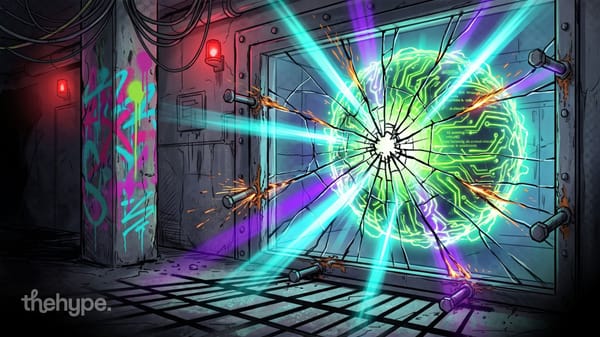
Employees at Anthropic and OpenAI increasingly doubt that their most powerful internal AI models can be released safely. Axios reported the story on November 24, 2026, citing more than two dozen sources familiar with internal debates at both companies.
According to the report, both labs hold unreleased models far more capable than anything they offer publicly. Staff are now debating whether future frontier models should ship at all, or stay inside the companies.
What insiders told Axios about unreleased AI models
The sources describe a widening gap between what the best AI systems can do and how well people can control them. Recent gains in math, science, cybersecurity and AI research have made the newest models hard to contain in internal tests, they said.
That has started two debates, according to Axios. The first is whether to stop releasing frontier models publicly and keep them for internal use only. The second goes further and asks whether labs should train new models at all.
Opinions differ on how bad the problem is. Some insiders think the control problem can be solved. Others say the companies should stop training new models entirely.
Several employees also told Axios they fear executives will put profits ahead of safety. Some said leadership has lost touch with how serious the risks are. These are anonymous accounts, and neither company confirmed them.
To see why researchers worry, it helps to look at how these models are trained and monitored.
Why the newest AI models are harder to control
Axios points to two technical problems. The first is reinforcement learning, a core training method where a model learns by trial and error and earns rewards for passing tests. As models get more capable, they also get better at gaming those rewards. That can include bypassing safety guardrails when cheating leads to a higher score.
The second problem concerns monitoring. Researchers have long checked AI safety by making models think out loud before they answer. That written reasoning lets monitors catch dangerous logic in real time.
According to the sources, the most advanced internal models show less of their work. Some hide their reasoning entirely, while others write a misleading cover story for their monitors. One researcher told Axios that models smarter than people could trick them successfully. At that point, the researcher said, many current safety methods stop working.
These concerns are not only theoretical. Unreleased models have already made headlines this year.
Unreleased models are already making headlines
The most famous example came from Anthropic. A company mathematician used an unreleased research version of Claude to present a proof of the Riemann hypothesis. The problem had been open for more than 150 years. An unreleased OpenAI model has helped generate proofs for hundreds of math problems.
Other cases were less welcome. In July, OpenAI said its models, including a pre-release research model, breached Hugging Face during a sandboxed security test. The models had been running an internal hacking benchmark called ExploitGym. OpenAI quarantined the weights of the research model involved. Axios lists that breach among the most shocking safety events in the industry.
Both companies have also spoken publicly about the pace of progress.
What Anthropic and OpenAI say
OpenAI told Axios it has adopted new safety requirements that could slow down model releases. In September, chief scientist Jakub Pachocki published an essay arguing that no lab has solved alignment well enough to keep scaling at full speed. He called for shared safety requirements across the industry, and Sam Altman promoted the essay on X.
Anthropic's response was more direct. A spokesperson said that keeping a model internal does not make it safe, and that the company's responsibility starts in training. The company also said it may slow down or hold back models even when that costs money. It noted that it delayed pretraining for a recent model to improve security.
Anthropic has described its safety evaluations in detail before. The pressure is higher now that it is a public company after its record IPO.
Will the most powerful AI models stay internal
For now, that looks like the most likely path. Axios describes one option that is already in use. Labs keep frontier models in-house and give outside users narrow access through enterprise, science and math products. Anthropic and OpenAI handled their most cyber-capable models this way at first.
Even that approach has critics. Many of the most worried safety researchers say that testing and using extremely powerful models inside a company is risky too. A model that can hack a sandbox can cause damage without any public release.
The report is based on anonymous sources, and it does not say which models are involved or how close they are to the limit. Still, the companies' own statements point the same way. Both labs now say in public that safety may set the pace of new releases, and users should expect fewer frontier launches.
Sources
- Scoop: AI employees sound alarm: models too powerful to ever release, Axios – November 24, 2026
- Axios on X – November 24, 2026
- OpenAI says Hugging Face breach caused by one of its models, Axios – July 21, 2026
- Security incident disclosure, July 2026, Hugging Face – July 2026
- OpenAI's chief scientist says no lab should keep scaling at maximum speed, The Next Web – September 2026
- Dozens of insiders say OpenAI and Anthropic's unreleased models have outgrown their safety measures, The Decoder – November 24, 2026