Felix Laurent
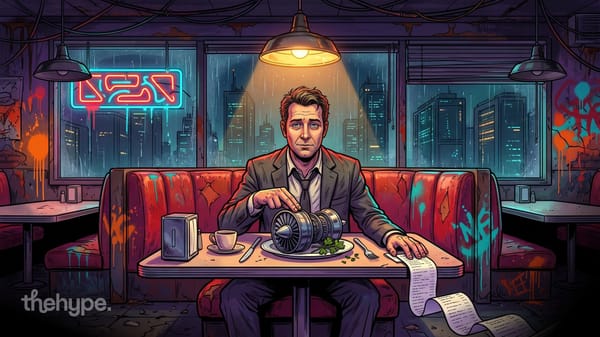
SoftBank has taken a $3.7 billion hit on its turbine bet. It wrote off gas turbines and other power equipment it had reserved for US AI data centers. The charge pushed the group to a net loss of ¥1.12 trillion, about $7.1 billion, for the July to September quarter. SoftBank reported the results on November 10, 2026. It is the company's first net loss in almost two years.
On November 12, TechCrunch wrote that the loss "may have put a cap on AI's natural gas ambitions" for now. The story shows how expensive the scramble for AI power has become, even for the biggest buyers.
What SoftBank wrote off
The charge sits in Silver Bands 7, a SoftBank unit that reserves factory capacity and buys power gear for US AI data centers. By the end of September it had paid ¥1.5 trillion, about $9.5 billion, in advance. SoftBank said it made the payments "in anticipation of shortages."
When SoftBank changed its procurement plans, it booked a loss of ¥597.2 billion, or $3.73 billion. The loss has two parts:
- $2.85 billion in non-refundable advance payments for factory slots and equipment
- $0.88 billion for contract changes and settlements
SoftBank could not get the fees back when it cancelled orders, chief accounting officer Kazuko Kimiwada said, according to Reuters. Silver Bands 7 can claim rebates of up to $2.1 billion on future purchases over the next ten years. SoftBank says it will still use the remaining $6.6 billion of payments, including for its PORTS-Pike power project in Ohio.
The company did not say which equipment it gave up. Reporting from The Wall Street Journal fills in that gap.
How SoftBank's turbine bet worked
SoftBank reserved more than 13 gigawatts of gas turbines between late 2025 and early 2026, the Journal reported, citing people familiar with the orders. Most came from GE Vernova. That is more than six Hoover Dams' worth of capacity. TechCrunch put it at almost 50% more than SoftBank needed.
The orders fit a pattern. SoftBank tends to go big once it commits to a trend. In February, its SB Energy unit said it would spend $33 billion on a 9.2-gigawatt gas power plant. Founder Masayoshi Son bet that by locking up turbines, SoftBank could control part of a scarce market. AI companies that needed power would have to come to it.
The shortage was real. Queues for new gas turbines now stretch into the early 2030s. Noreva CEO Peter Gardett told TechCrunch that SB Energy "did not have a choice except to overbook turbines" to get some quickly. He called the charge "price discovery finally happening."
The plan changed faster than the orders. Chief financial officer Yoshimitsu Goto said on the earnings call that the projects saw rapid development of the technology. He said SoftBank is carrying out "a thorough reassessment," including how it buys equipment. That reassessment had already become public in an unusual way.
Elon Musk's default claim
On November 6, Elon Musk posted on X that "SoftBank is defaulting on their turbine orders" without giving details. SoftBank pushed back hard. "This is simply not correct at all. There is no such default," Goto said, according to the Journal.
The results showed that both sides had a point. SoftBank did not default on payments, but it did walk away from orders it could no longer use and paid for that. "We need to balance between gas and brake," Goto said.
GE Vernova told the Journal the changes had "no negative or positive impact" on the company. Investors were less sure.
How markets reacted
GE Vernova's shares fell as much as 9.8% on November 10 before recovering part of the drop, according to TIKR data. Bloom Energy, which sells on-site power for data centers, also fell after the results, Bloomberg reported.
SoftBank's own shares rose about 14% on the day of the results, before the numbers came out. They then dropped more than 10% the next morning in Tokyo. The stock has lost more than half its value since its record in June.
The turbine charge was not SoftBank's only problem. Interest expenses for the six months to September more than doubled to ¥676 billion, and the company raised a record $56.5 billion in the quarter. Its biggest bet is still OpenAI, where it has invested $54.6 billion, now valued at $99.6 billion. The loss matters beyond SoftBank because so much of the AI build-out now runs on gas.
What the loss means for AI's natural gas push
Many AI companies have turned to natural gas because connecting to the grid can take years. Gas is proven and familiar, and on-site plants can be built faster than new transmission lines. Earlier this month, Anthropic bought $3.4 billion of gas generators from OnePWR to power its data centers.
Gas still has risks. Brent Nelson of consulting firm Ascend Analytics told TechCrunch's Equity podcast that supplies can be cut in winter, when demand spikes. He argued that most data centers would do better with a smaller grid connection backed by large batteries. Batteries can shave peaks and ride out requests from utilities to cut use.
The episode may also change how power equipment is sold. Buyers now have a public price for changing their minds, and suppliers have seen SoftBank lose $2.85 billion in advances. Suppliers will likely ask for larger deposits, while buyers may reserve later, once a tenant has signed.
Is the AI gas boom over
No. TechCrunch expects no wave of cancellations, because AI's demand for electricity is too large for that. GE Vernova reported 36.7 gigawatts of gas turbine orders in the first nine months of 2026, almost double a year earlier. Anthropic's purchase shows that other buyers are still paying for every slot they can get.
What SoftBank's loss ends is the idea of cornering the market. Reserving far more turbines than a company can use only works while every slot is guaranteed to find a buyer at a higher price. SoftBank found the limit of that bet at $3.7 billion. Other AI companies are likely to order gas power closer to what they actually need.
Sources
- SoftBank's billion-dollar loss may have put a cap on AI's natural gas ambitions, TechCrunch – November 12, 2026
- TechCrunch post on X – November 12, 2026
- Masayoshi Son's huge bet on electrical turbines backfires, The Wall Street Journal – November 11, 2026
- SoftBank Group earnings, Bloomberg – November 10, 2026
- SoftBank swings to $7bn loss after writing off $3.7bn of AI power gear, The Next Web – November 12, 2026
- SoftBank lost $3.7bn changing its power-equipment orders, No Diligence – November 2026
- SoftBank loses $3.7 billion on canceled AI data center gas turbine orders, Tom's Hardware – November 2026