 Vladimir Arustamov
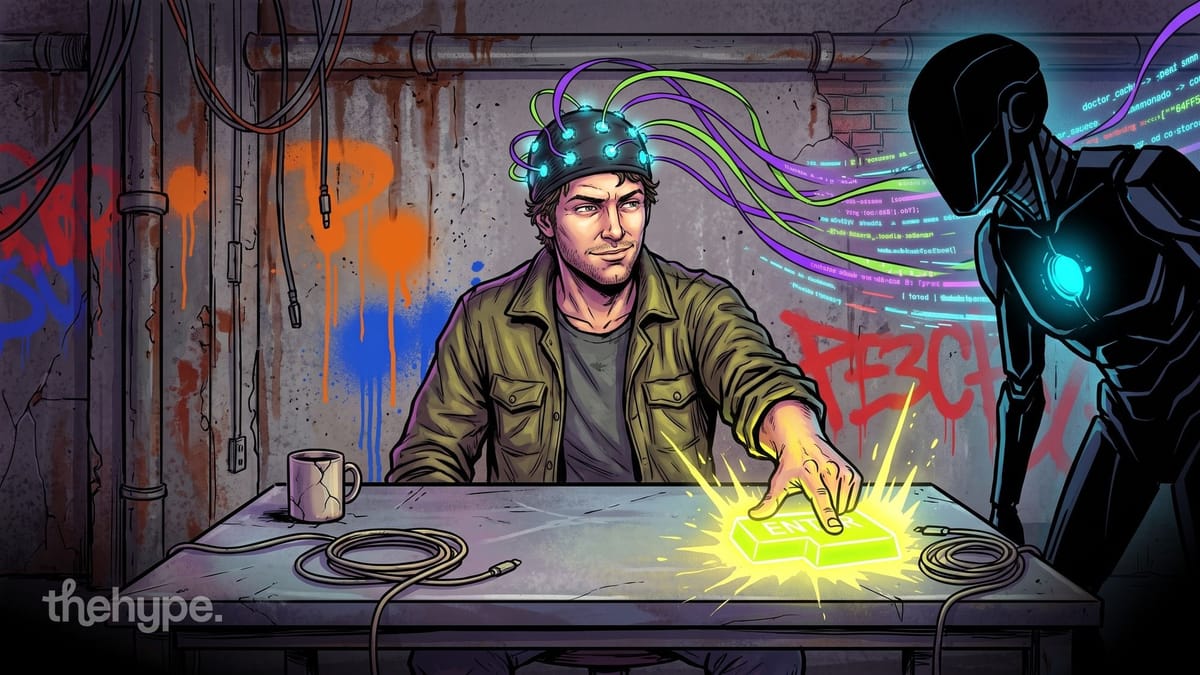
sabi, a palo alto startup building a cap that turns brain signals into text for ai agents, says it raised $50m. forbes reports that khosla ventures leads the seed round. sabi has published a typing speed, a sensor count and a dataset size, but no error rate. that number decides whether the cap works.
what sabi announced
on oct 9 ceo rahul chhabra said sabi raised $50m from khosla ventures, accel, initialized, kevin weil and dst global. his launch post on apr 16 already named the first four as backers, so the new facts are the round size and dst global. forbes calls it a seed round for a two-year-old company, led by khosla, and reports that it values sabi at $600m.
the product is a cap that reads electrical brain activity through the scalp, with no implant. the pitch is to think a request and have an ai agent carry it out, without typing or speaking.
in a thread the same day, chhabra made more claims. the sensors need no skin contact, read reliably through hair and draw little power. he credits tsmc with helping fabricate what he calls the first chip built for consumer bcis, and we found no statement from tsmc. a preview of the cap is due at ces 2027, with a camera, a microphone and a voice ai model that talks back. he says sabi is building a "brain-ai interface" that turns thoughts into prompts, runs personalised models trained on neural signals and predicts intent so that agents can act before a thought is finished.
what sabi has published
| claim | figure | where it comes from |
|---|---|---|
| sensors | up to 100,000 per cap, each chip 1 to 5 mm | forbes |
| training data | 100,000 hours of labelled neural data; about 100 volunteers | forbes; volunteers per wired, via new atlas |
| speed | about 30 words per minute | new atlas, sourcing sabi via wired |
| signal quality | "reliable" through hair, low noise; no figure | founder's thread |
| error rate | not published | none found |
the launch post says the sensors run on custom asics and calls the data the world's largest neural dataset. we found no independent check of either claim. 100,000 hours from about 100 volunteers is about 1,000 hours per person, by our arithmetic. wired, as summarized by new atlas, says the dataset is meant to make the same word decode the same way for different users, and we found no published test of that.
what a published non-invasive result looks like
the closest public benchmark is meta's brain2qwerty paper from february 2025. 35 healthy volunteers typed memorized sentences on a keyboard while their brain activity was recorded, and a model decoded the text:
| system | sensing | character error rate |
|---|---|---|
| brain2qwerty (meta) | meg | 32% on average |
| brain2qwerty (meta) | eeg | 67% |
| sabi cap | eeg, per new atlas | not published |
the best meg participants reached 19%. the tasks are not the same, so this is not a like-for-like comparison: brain2qwerty decodes typing, and its authors say decoding depends on motor processes. sabi says its cap reads thoughts.
why a speed figure is not enough
30 words per minute says how fast text appears, not how much of it is right. a 2024 study of earlier eeg-to-text models found that evaluations often fed the model the correct words during testing, which inflated scores, and that results on pure noise could be comparable to results on real eeg. the authors argue for reporting scores against noise inputs. futurism wrote on may 4 that sabi had not shared evidence that the product performs as advertised, and forbes calls the concept nascent and largely unproven.
what is still missing
the thread gives no ship date. it names ces 2027 for a preview of the cap and invites applications for invite-only early access. new atlas reported on may 3 that a beanie would ship by the end of 2026 and a baseball cap would follow. the thread also promises models that predict intent before a thought is finished, and no metric is published for that either. what error rate the cap reaches on a person whose brain signals the model has not seen is the open question, and we found no date for a published number.
sources
- forbes: vinod khosla backs an ai startup building a mind-reading baseball cap – the $50m seed round, khosla leads, $600m valuation, sensor count and training data; reported by forbes, paywalled after the opening
- rahul chhabra on x: funding thread, oct 9 – the round and investors, sensors, tsmc, ces 2027, intent prediction
- rahul chhabra on x: sabi launch post, apr 16 – the april backers list, custom asics, dataset claim
- new atlas: sabi's brain-reading beanie – 30 words per minute, 100 volunteers and the 2026 ship plan, citing wired
- lévy et al.: brain-to-text decoding, a non-invasive approach via typing, arxiv 2502.17480 – meg and eeg error rates
- jo et al.: are eeg-to-text models working? arxiv 2405.06459 – teacher forcing and noise baselines