 Yana Lialuke
We followed Florence's viral Opus 5.5 Motion Lab tutorial step by step. Claude Opus 5.5 built a 22-second Halloween short entirely from code. It has a haunted street, a pumpkin that carves its own face, four toy characters and a boot that stomps the pumpkin flat. It took 21 review rounds and about 2.5 hours of agent time. On our Claude subscription it cost nothing extra. At API prices the same tokens would be about $34.
What the Motion Lab tutorial says
Florence (@flxrnc) published "Opus 5.5 Motion Lab: Make Claude Animate Like a Studio" on X on Sep 30, 2026. It got 1.27 million views. The point: no fake one-shots, every prompt and every follow-up is counted and shown. The method comes down to five rules:
- A prompt template with fixed sections: GOAL, OUTPUT, TIME, LOOK, MOTION, SHOTS, BANNED and QA, plus MODEL and CAMERA for 3D
- Numbers instead of adjectives. "Make it pop" becomes a scale from 1.0 to 1.08 and back in 6 frames
- Every frame is a pure function of time, so the video renders frame-exact and never stutters
- A BANNED list of generic AI clichés that grows after every render
- Follow-ups point at frames, not feelings, with 1–2 fixes per round
Florence tested it on a liquid-chrome logo, a headphone ad and a voxel mascot. We wanted to see if it holds up on a full 3D scene with characters.
How we set it up
We turned the tutorial into our own Claude Code skill called animation. The article mentions two third-party tools, HyperFrames by HeyGen and Remotion skills. We read their code before installing anything and decided not to. HyperFrames sends telemetry by default, and Remotion needs a paid license for teams of four or more. We kept their rules and wrote them into the skill in our own words.
- Model: Claude Opus 5.5 as a background agent on a Claude subscription
- Output: one scene in three.js, 1080×1080, 24 fps, recorded frame by frame
- Brief: written by the template, with hex colors, lens sizes in mm and every event tied to a frame number
- Banned: pink fog, plastic-looking pumpkins, glow everywhere, any text other than our logo
- Process: a plan, code in chunks, a check that the scene starts, then rounds where Opus reviews its own frames on a contact sheet
- Test date: Oct 27, 2026
The whole job ran inside one Claude Code session, with no images or stock 3D models.
Version 1: 10 seconds in 19 minutes
The first brief was a 10-second clip. A pumpkin in a foggy field carves its own face with lines of fire, and a candle lights inside. Then smoke from under the lid turns into the thehype logo.
Opus built it in 19 minutes with 3 review rounds and 18 fixes. The rounds did the real work. In round 1 the logo was a white blob of glow and the frame after the candle lit was burnt out. Opus found both on its own contact sheet, pointed at the frames and fixed them.
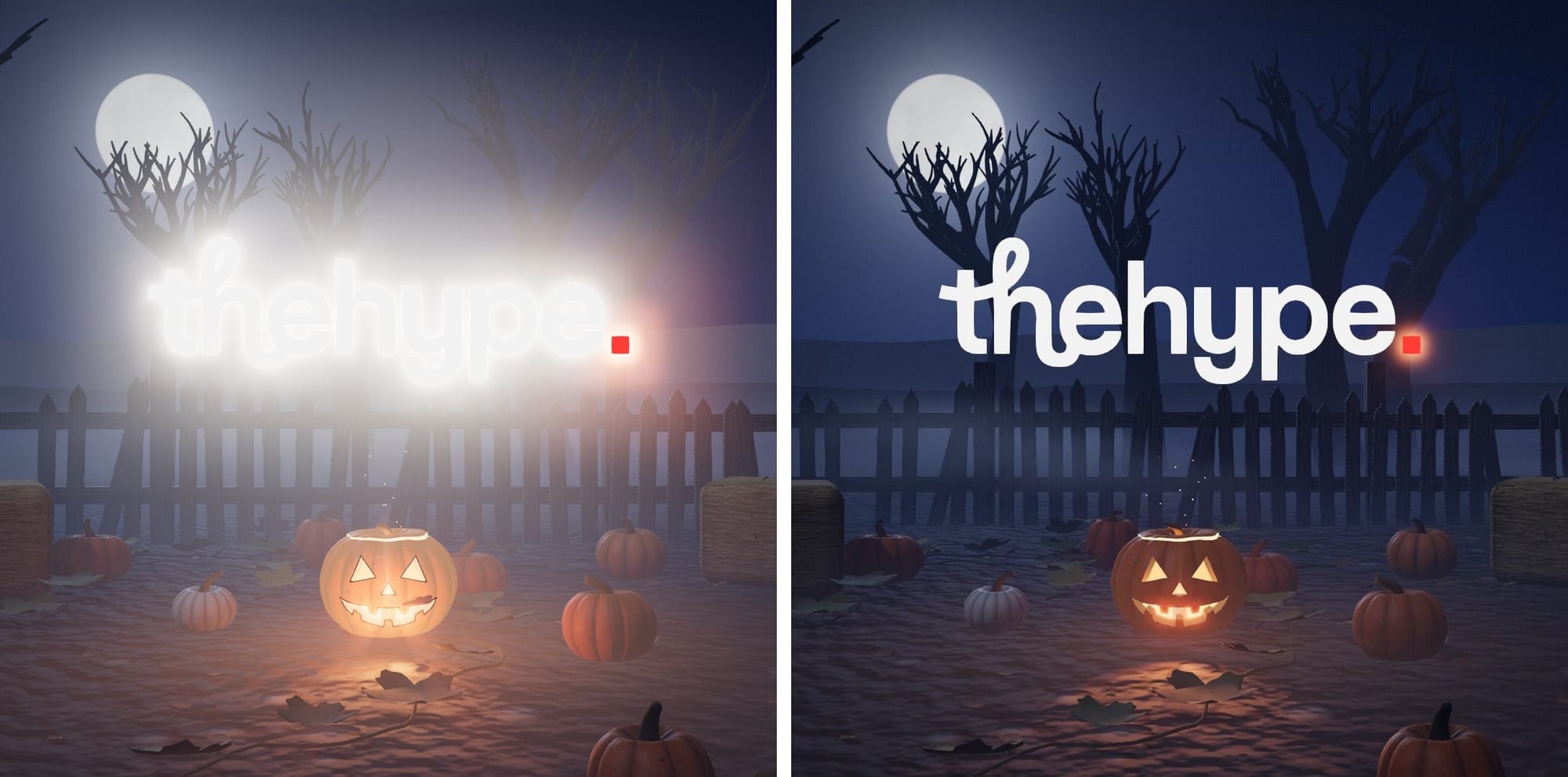
In round 3 it caught a 3-frame white flash on all the letters, a flicker that was on the BANNED list. The logo colors were then measured by pixels and matched our brand exactly.
Adding characters
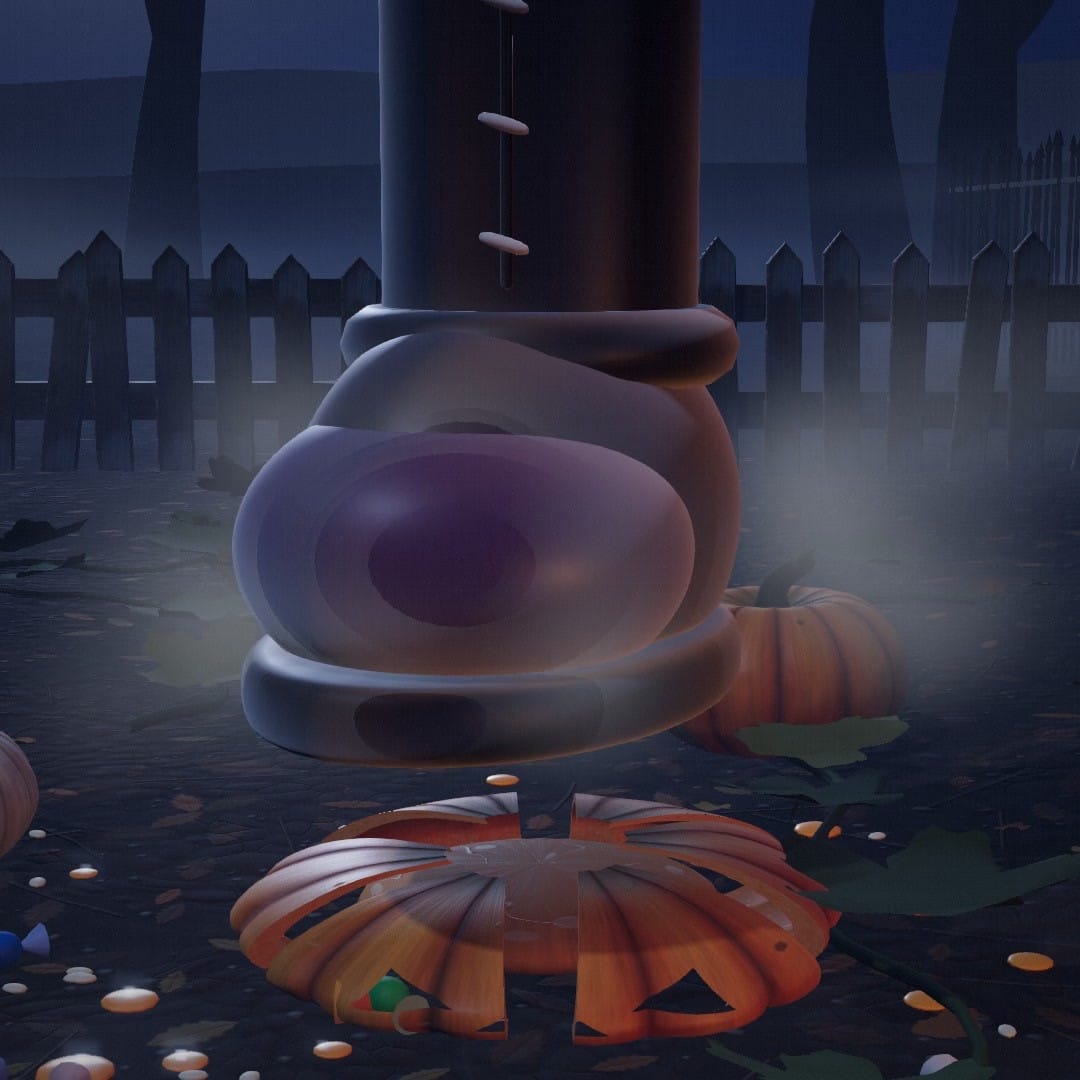
Next we asked for more: better textures and rats that run toward the pumpkin and vanish in a puff. We also added three cartoon characters, Frankenstein, a witch and a ghost, who throw candy. At the end, Frankenstein's boot stomps the pumpkin. The characters went through three versions.
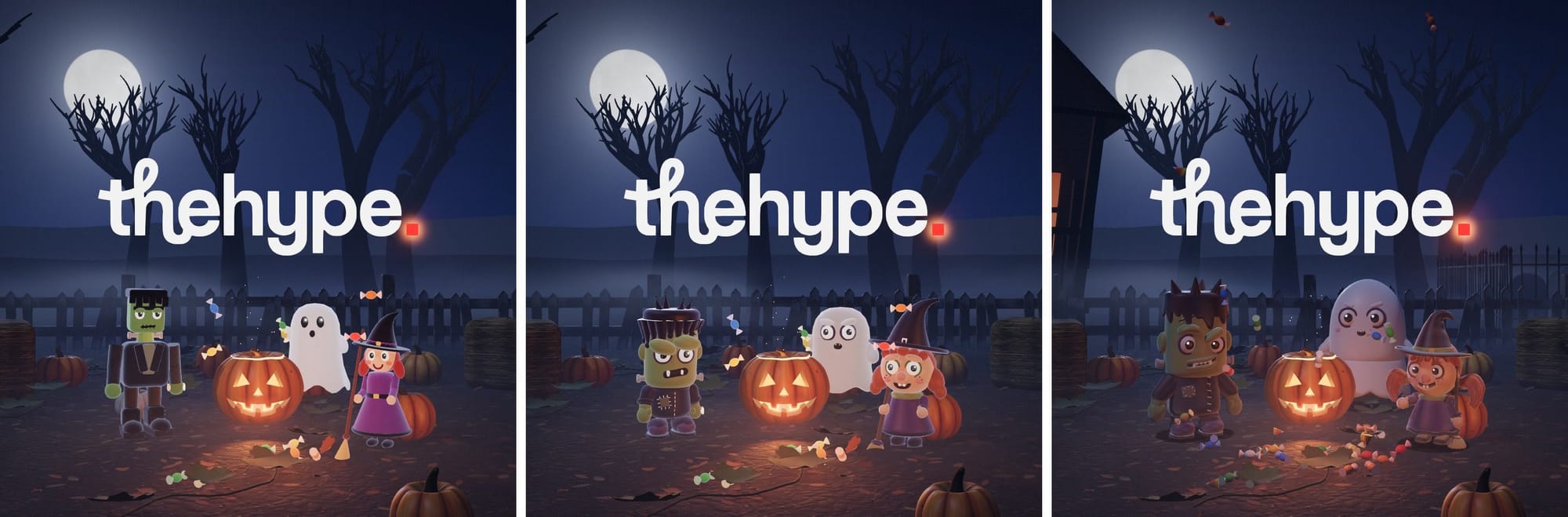
- Built from simple shapes in three.js. They looked like plasticine and stood apart from the scene
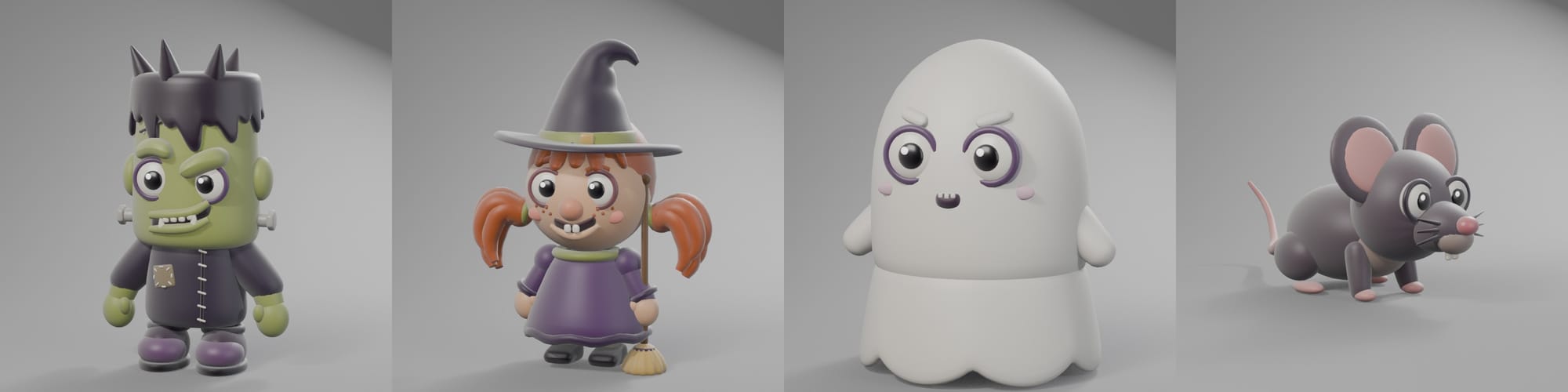
- Modeled in Blender with Python scripts, exported to the scene and lit by the same moon and candle as everything else
The skill sets the process, not the craft. It did not teach Opus how to sculpt a character in three.js. Moving the characters to Blender fixed that.
The final cut: 22 seconds
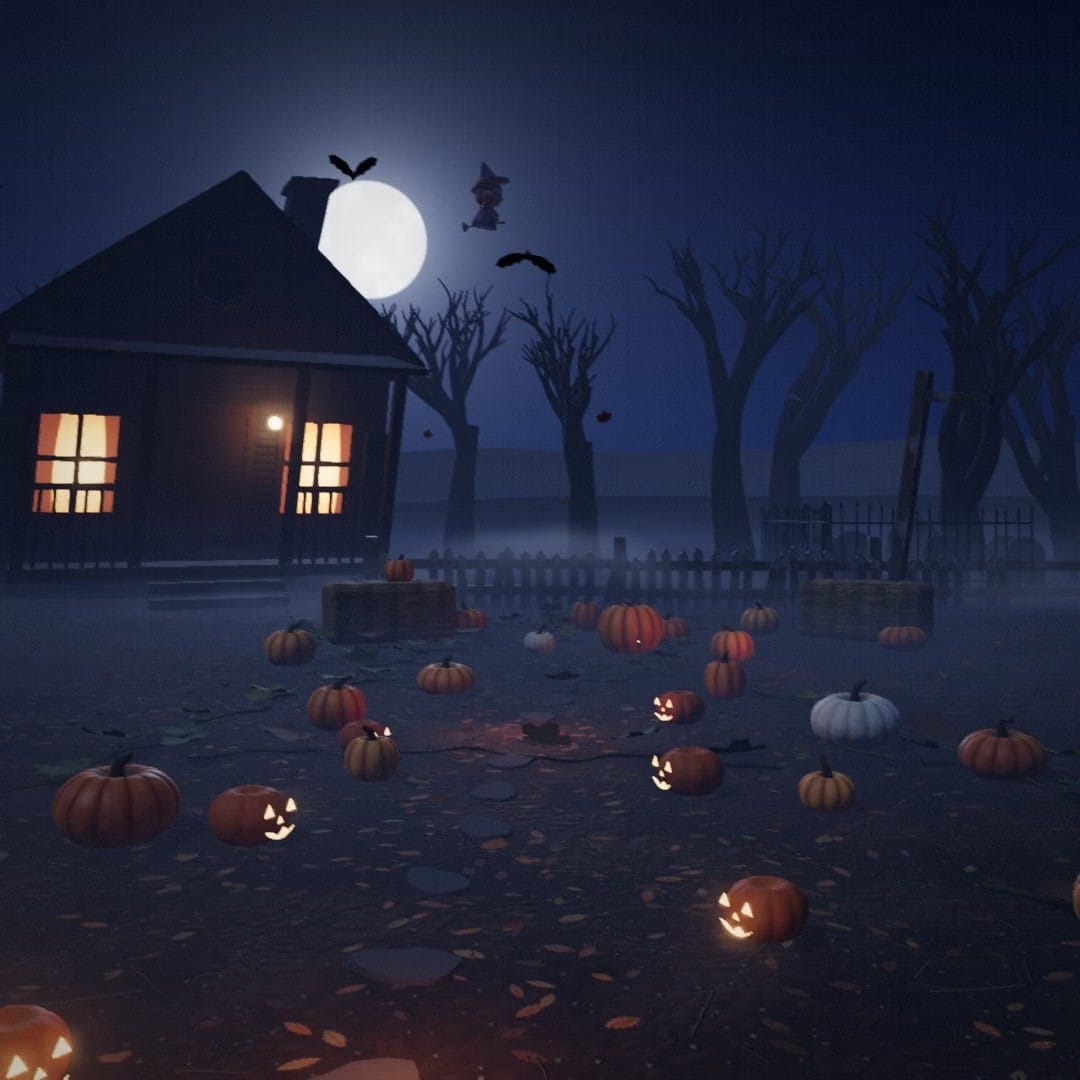
For the last version we asked for a bigger scene and film-style camera work. Opus wrote all of it as code:
- A drone flyover above a street with a lit house, a witch crossing the moon on her broom
- A low camera chasing the rats, a whip pan, and cartoon puffs as they vanish
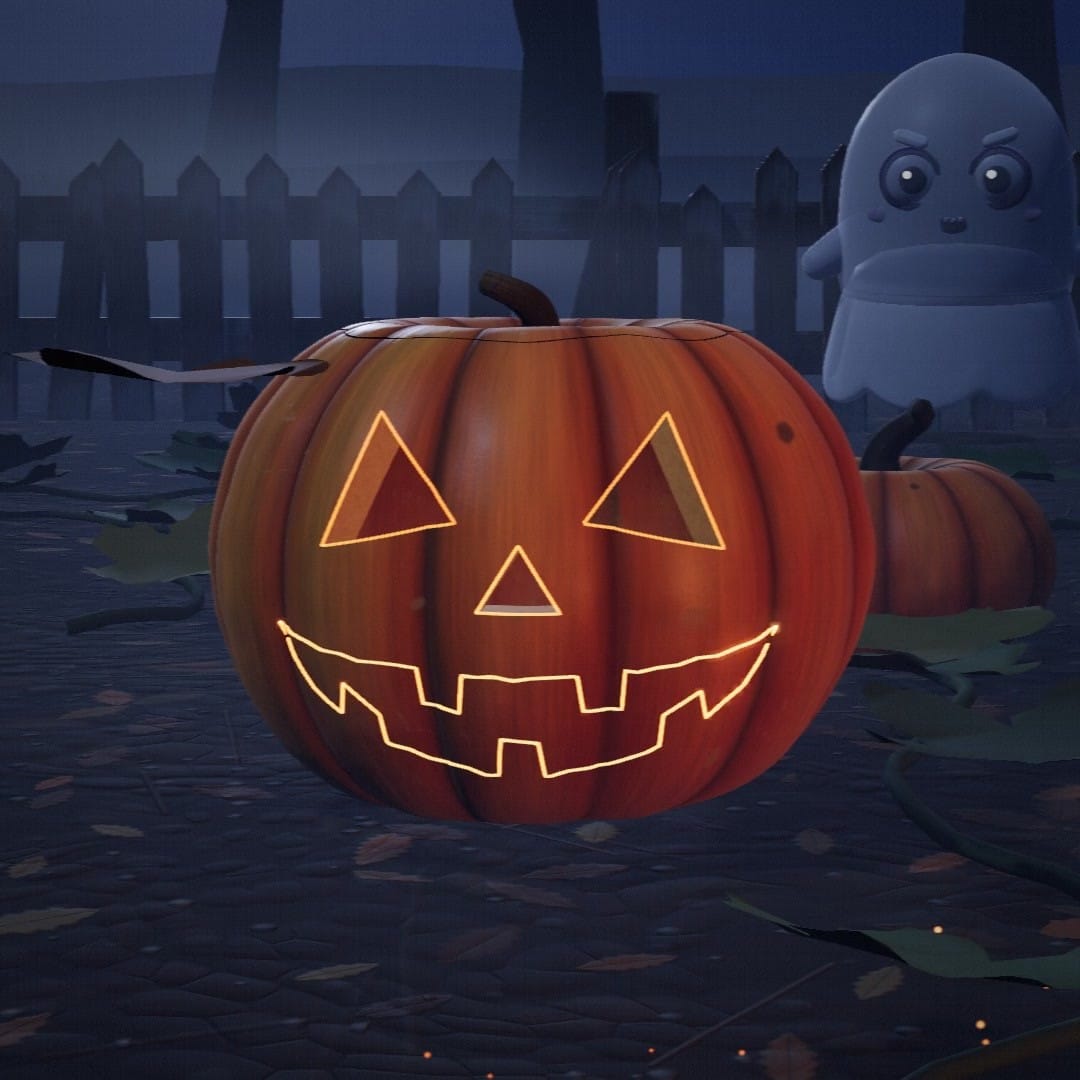
- The pumpkin carving its face while the ghost walks through the fence
- A rack focus from the grin to the candle flame
- Candy raining down around the logo
- A dolly zoom on the witch's face before the stomp, and the stomp itself in 25% slow motion
The numbers
Opus ran on a Claude subscription, so we paid nothing on top of it. The costs below are what the same tokens would cost at the Opus 5.5 API price, counted from the agents' logs.
| Stage | Time | Review rounds | API-equivalent cost |
|---|---|---|---|
| Version 1, 10 seconds | 19m | 3 | $6.36 |
| Textures | 17m | 1 | $3.65 |
| Rats, characters, stomp | 20m | 4 | $4.35 |
| Vinyl-toy characters | 19m | 3 | $3.49 |
| Characters in Blender | 25m | 3 | $3.90 |
| Final 22-second scene | ~50m | 7 | $8.34 |
| Total | ~2h 30m | 21 | ~$34 |
The final scene is 3,723 lines of three.js, the characters are 975 lines of Blender Python. Most of the money is the agent re-reading its own context at every step.
What we did on top
Opus wrote the scene, the characters and the camera. Three things came from us:
- The sound is generated in code too – a synthesized bed, poofs, candy throws and the stomp, no samples, measured at -14.5 lufs
- The ideas for the rats, the characters and the stomp came from us, as follow-ups between versions
Our take
The tutorial works. The first prompt gave a decent clip with a broken logo. The rounds, with fixes pointed at exact frames, turned it into something we would post. Where it ran out was craft, not process. The skill could not make Opus sculpt good characters in three.js, so we moved that part to Blender.
Sources
- Opus 5.5 Motion Lab by Florence on X – the tutorial we tested
- three.js – the 3D library the scene is written in
- Blender Python API – what the characters were modeled with
- Claude Opus 5.5 on OpenRouter – the list price we used for the API-equivalent cost
- Brief, rounds, logs and timings: our test, Oct 27, 2026