 Yana Lialuke
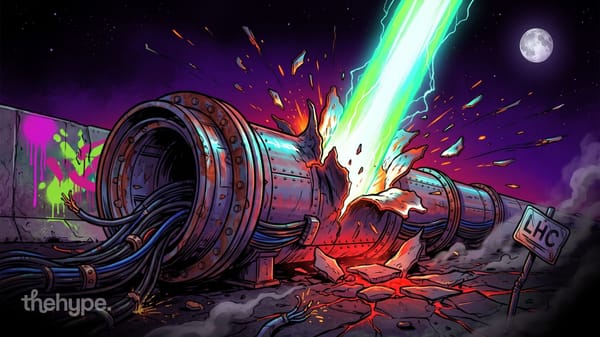
We built a 49-second what-if film about the Large Hadron Collider in three.js code. In it, the beam passes the speed of light, tears out of its pipe, caves in Geneva and hits the Moon. The disaster is fiction: nothing with mass can reach light speed.
The real machine
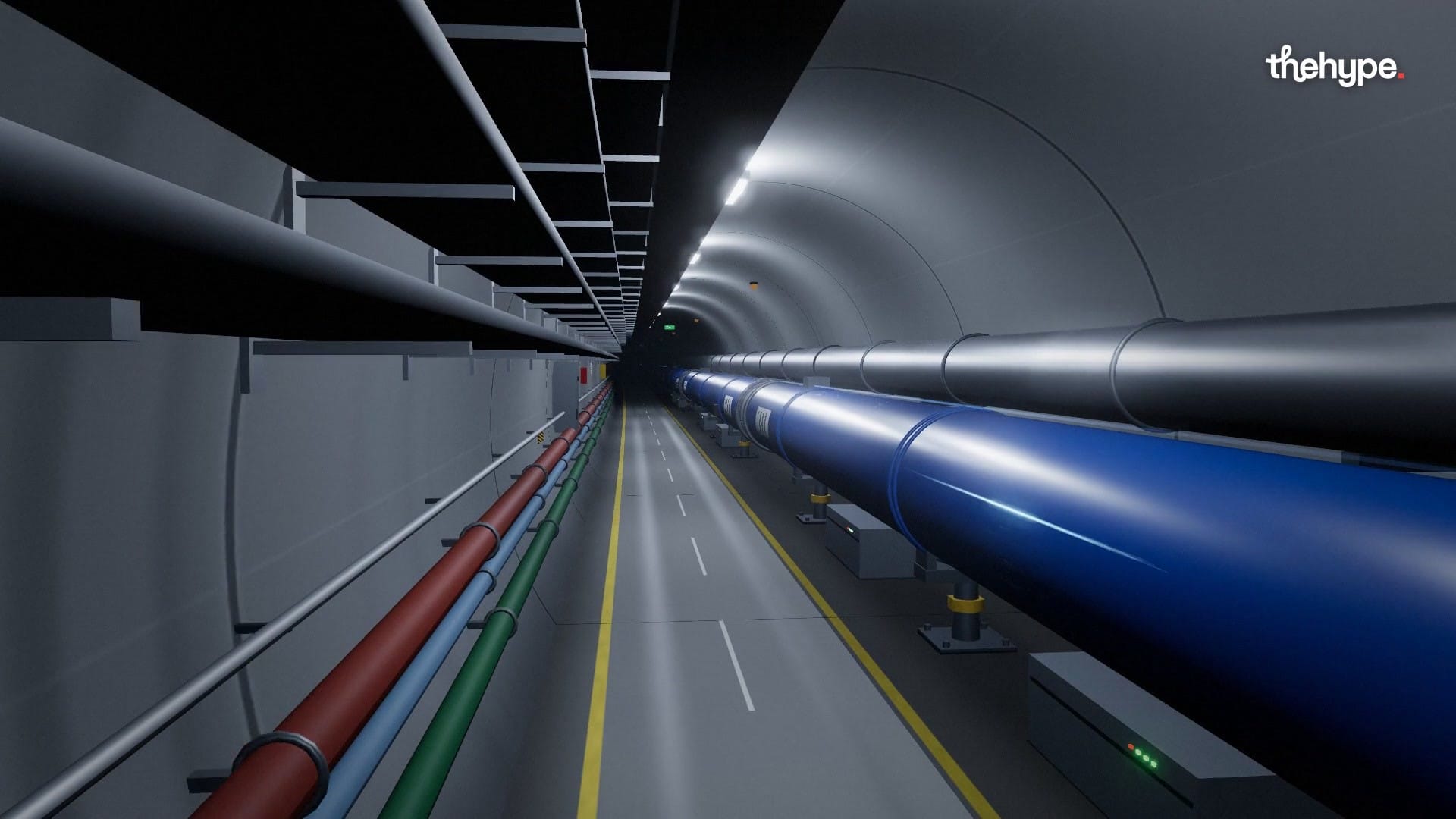
The film starts from the real collider at CERN, on the French-Swiss border near Geneva.
| Large Hadron Collider | |
|---|---|
| Ring | 27 km around |
| Depth | 100 m underground |
| Bending magnets | 1,232 dipoles, 15 m each |
| Magnet temperature | -271.3°C |
| Laps per second | 11,245 |
| Proton speed at 7 TeV | 99.9999991% of light speed |
Two beams run in opposite directions in separate pipes and collide at four points around the ring. The magnets are what keep them on that curve.
Why light speed is a wall
A proton near light speed barely gets faster when it gains energy. The energy goes up, and the speed creeps toward the limit without touching it. Reaching 100% would take infinite energy, so a real proton can never cross that line.
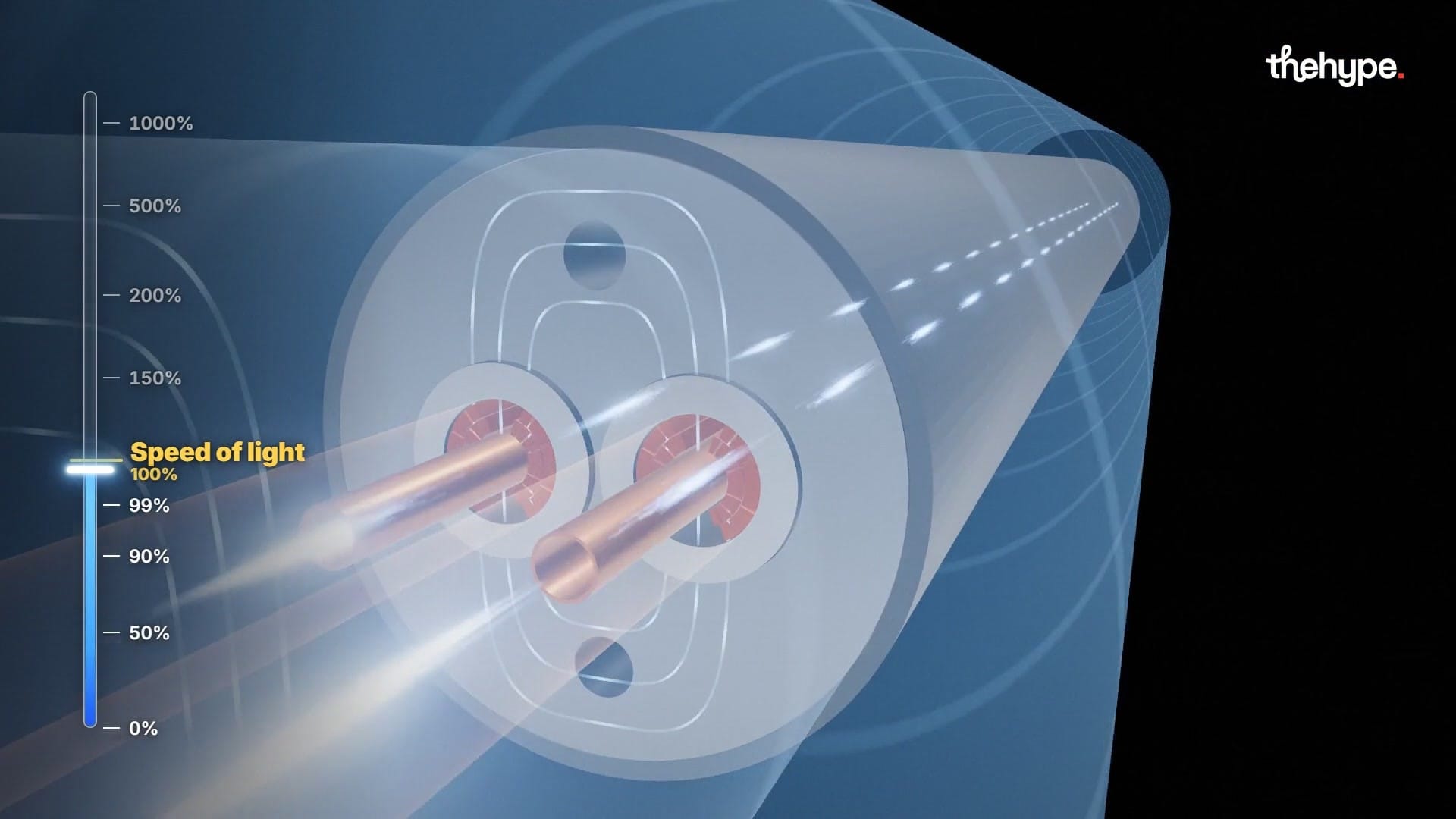
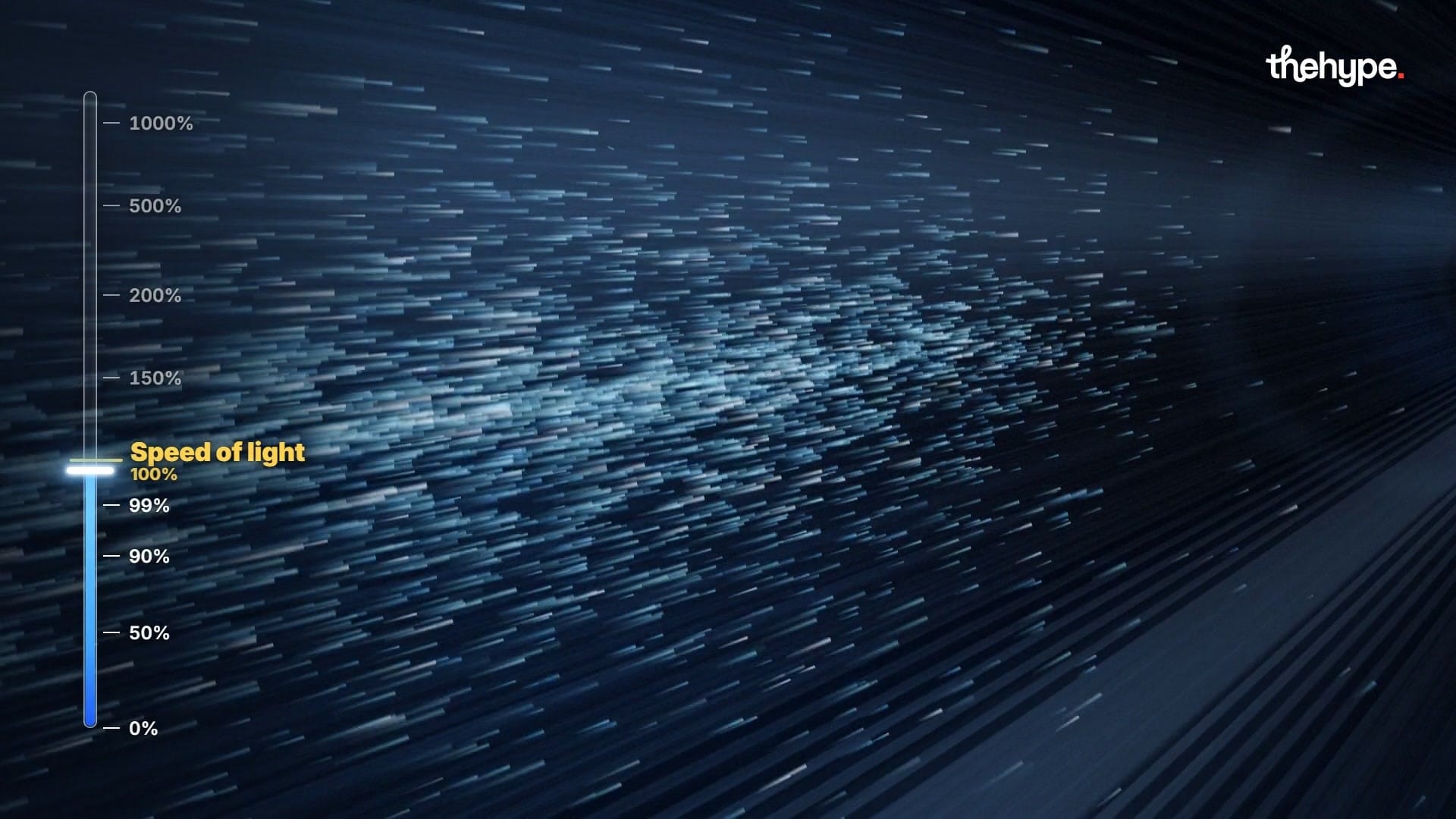
The film ignores that rule on purpose. A bar on the left of the frame climbs from 0% to 1000% of light speed. The story follows from one idea: past the limit, the magnets can no longer bend the beam, so it goes straight.
What happens in the film
The film runs in one line, from a quiet tunnel to the Moon, and each step is caused by the last.
- 0–9 seconds – Geneva from the air, then the tunnel, then the protons up close
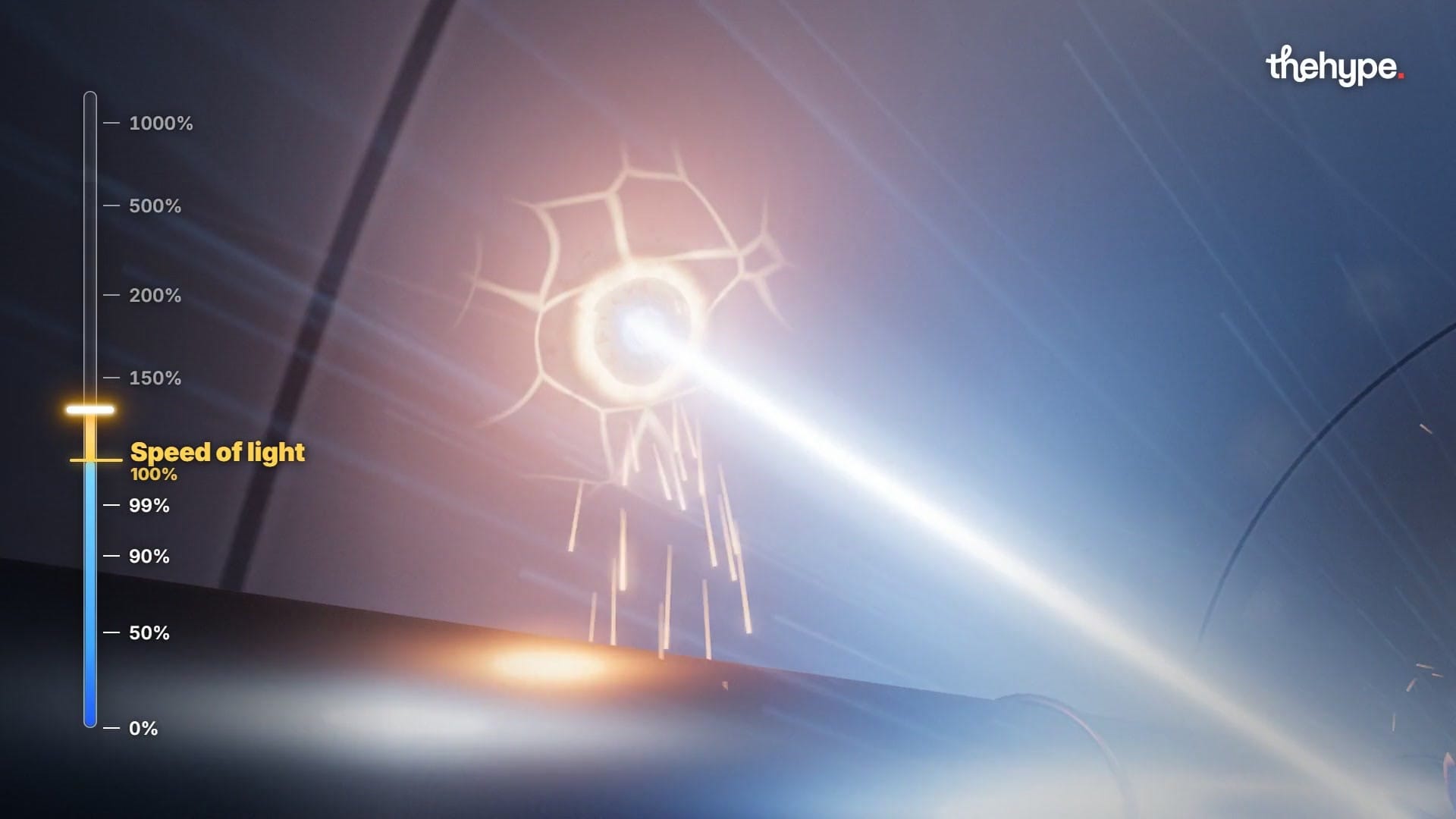
- 9–13 – the beam gets fatter, scrapes the pipe wall and throws sparks
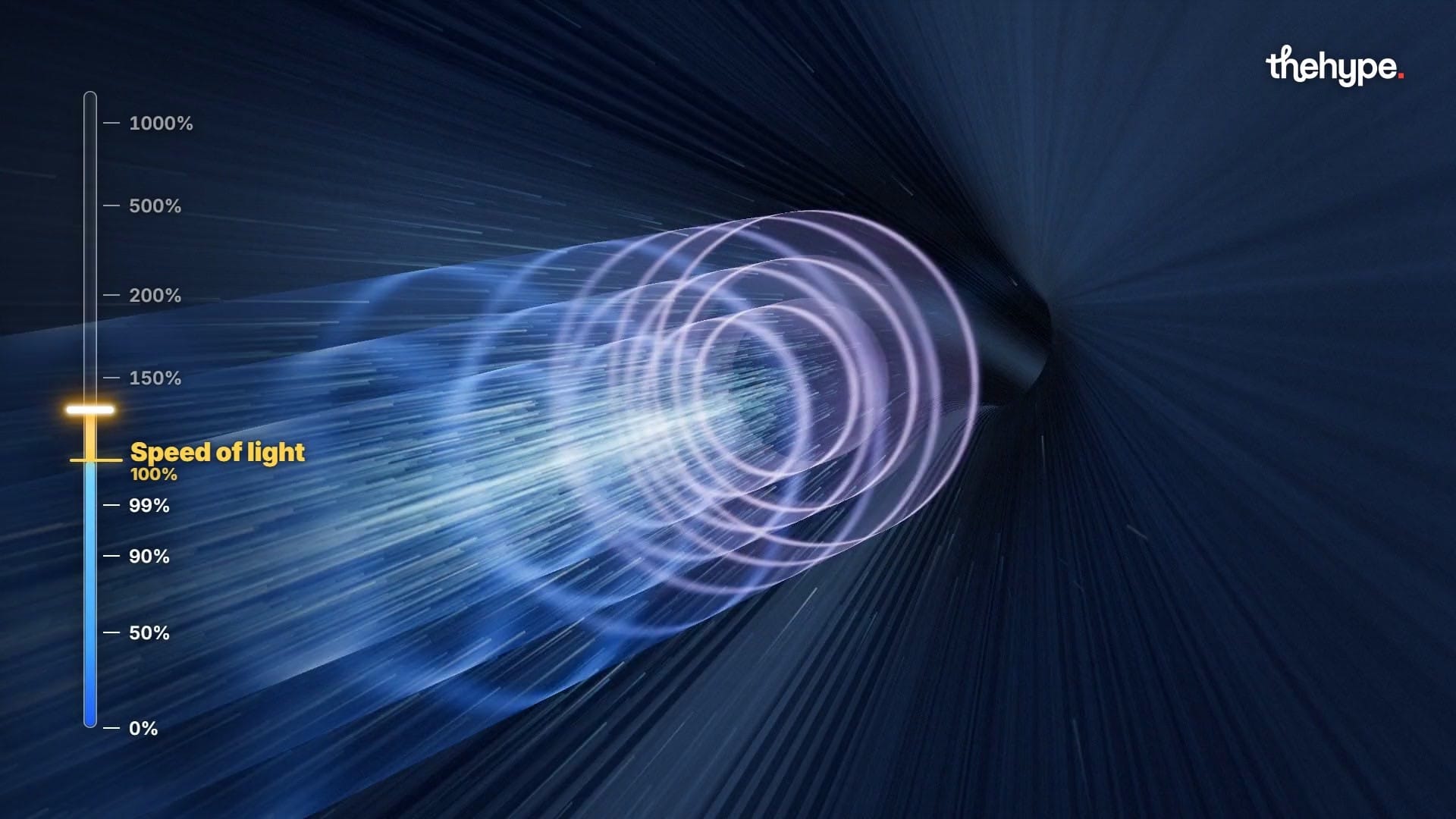
- 13 – the bar crosses 100%, and blue rings snap shut around the bunch
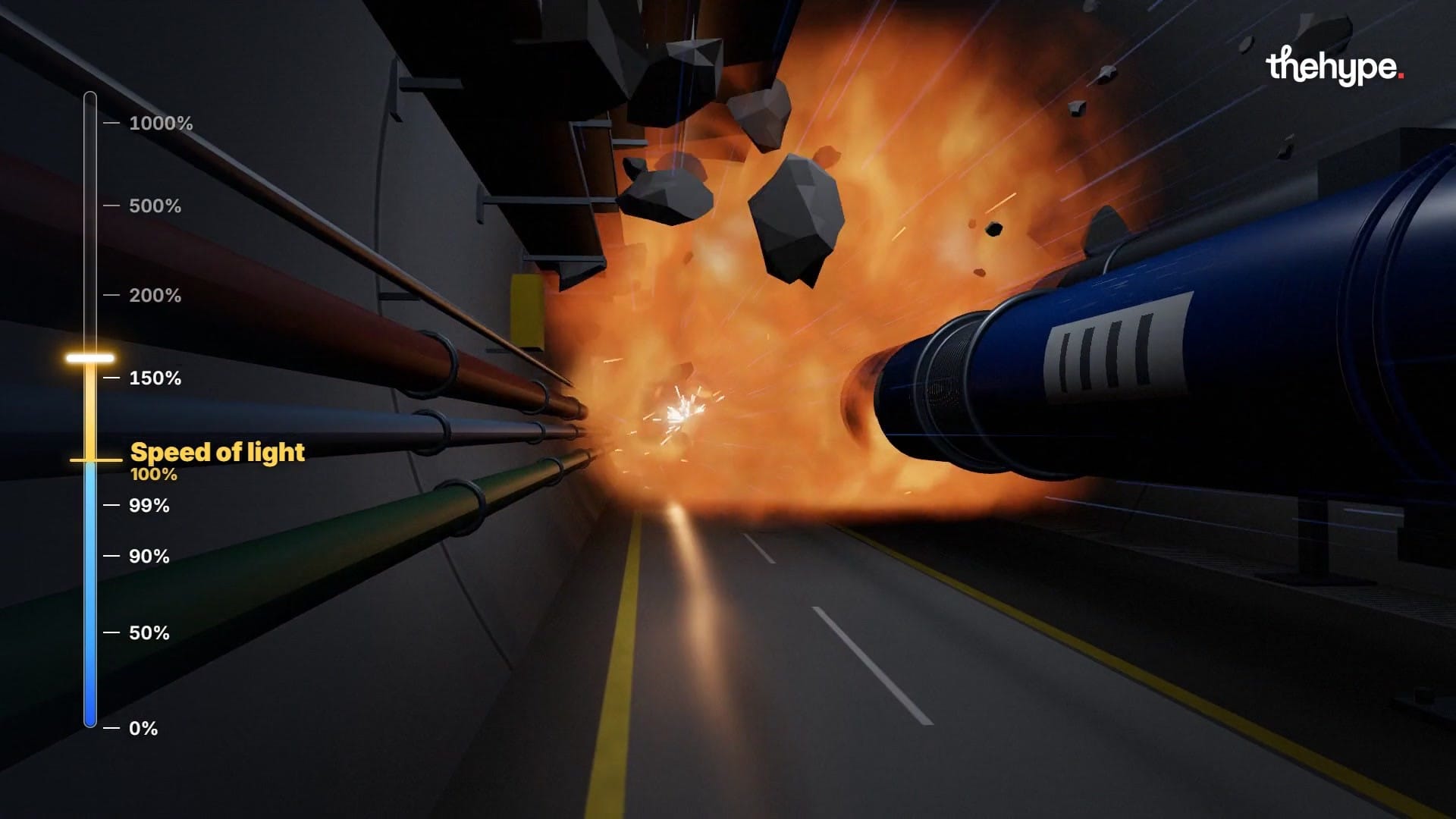
- 14–21 – the pipe curves away, the beam does not, and a fire front rolls down the tunnel
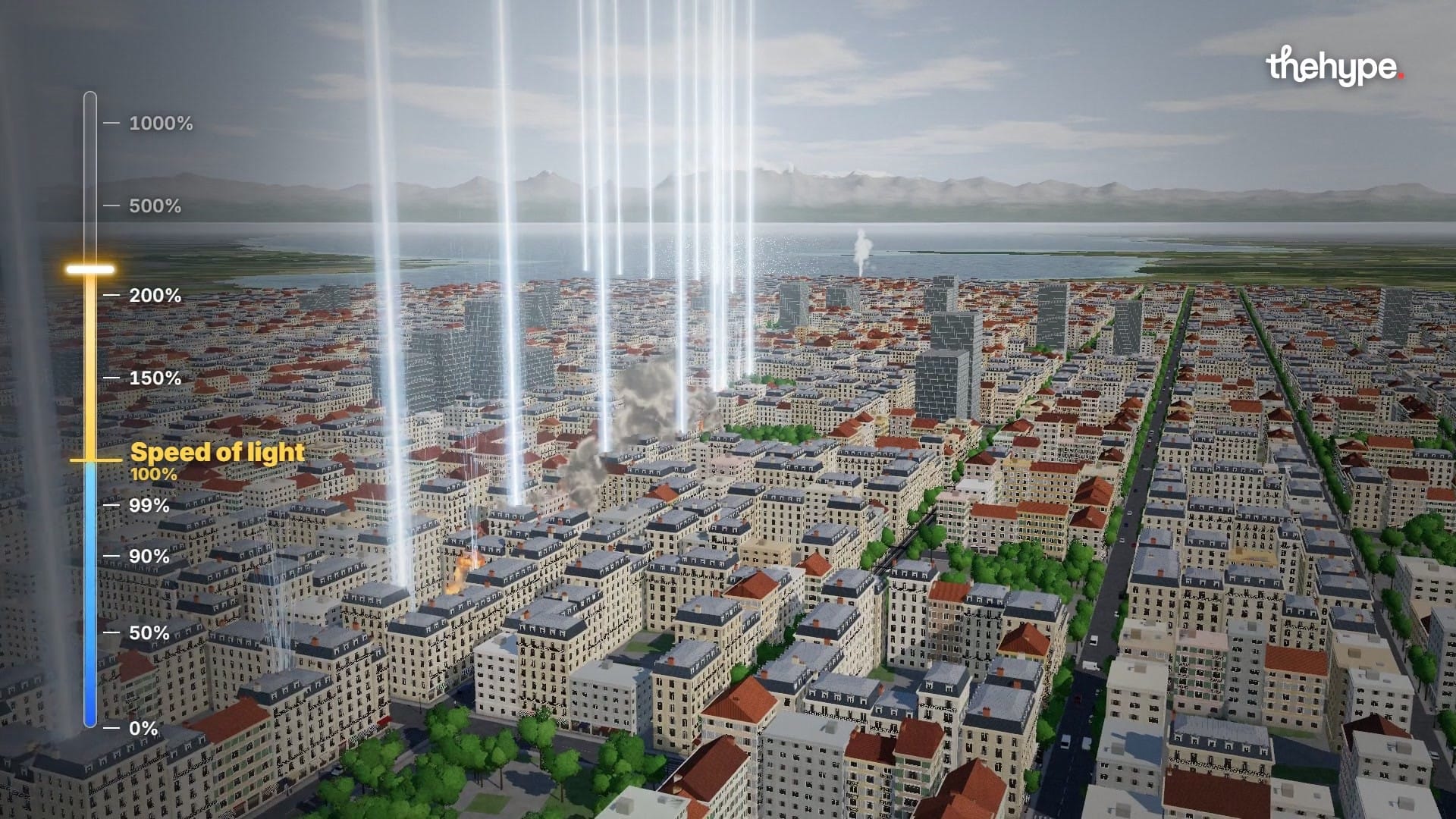
- 21–33 – a calm city, then ripples on the lake, beams out of the ground and an earthquake
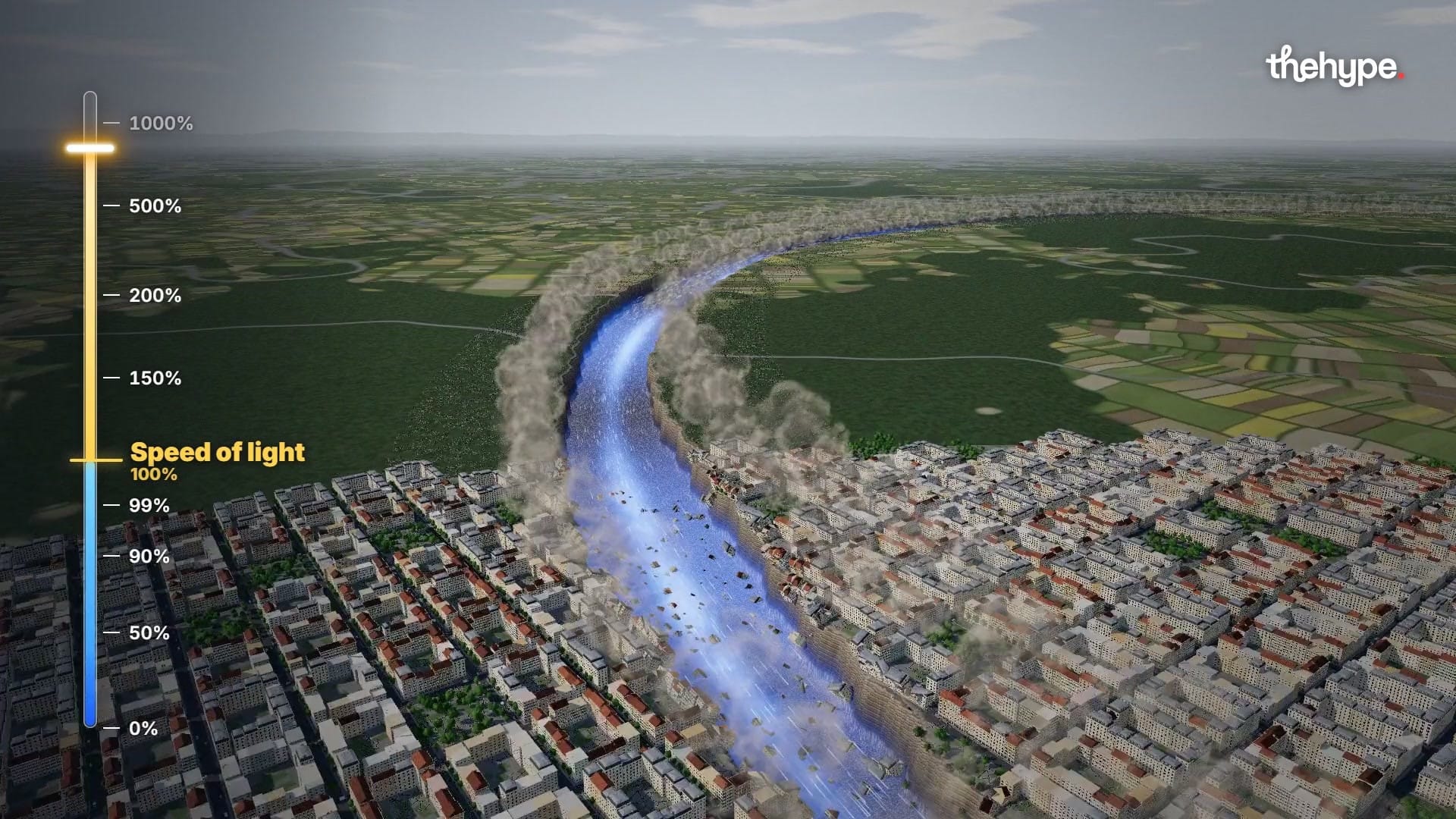
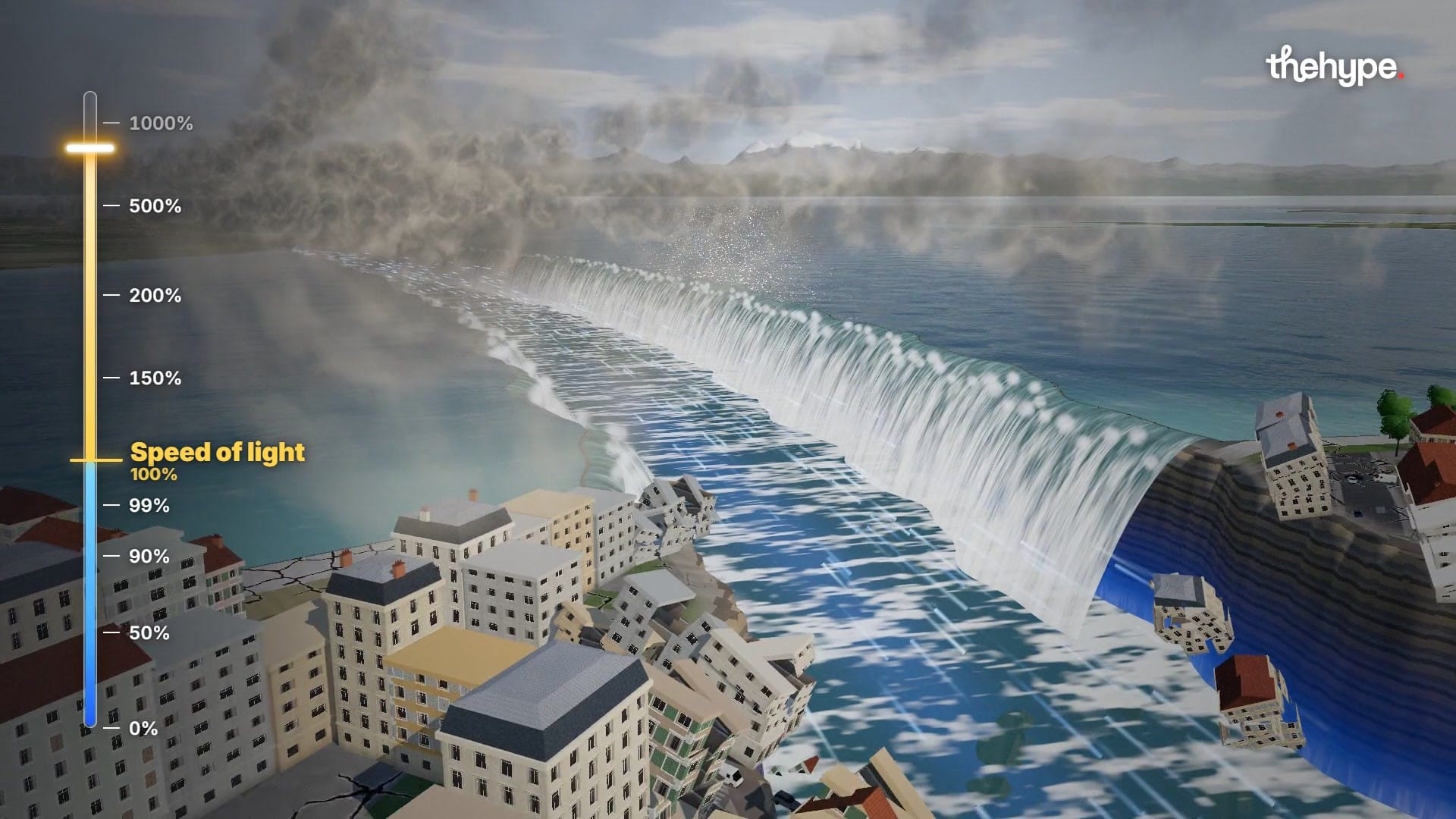
- 33–41 – the ground over the tunnel falls in, leaving a ring canyon, and the lake pours into it
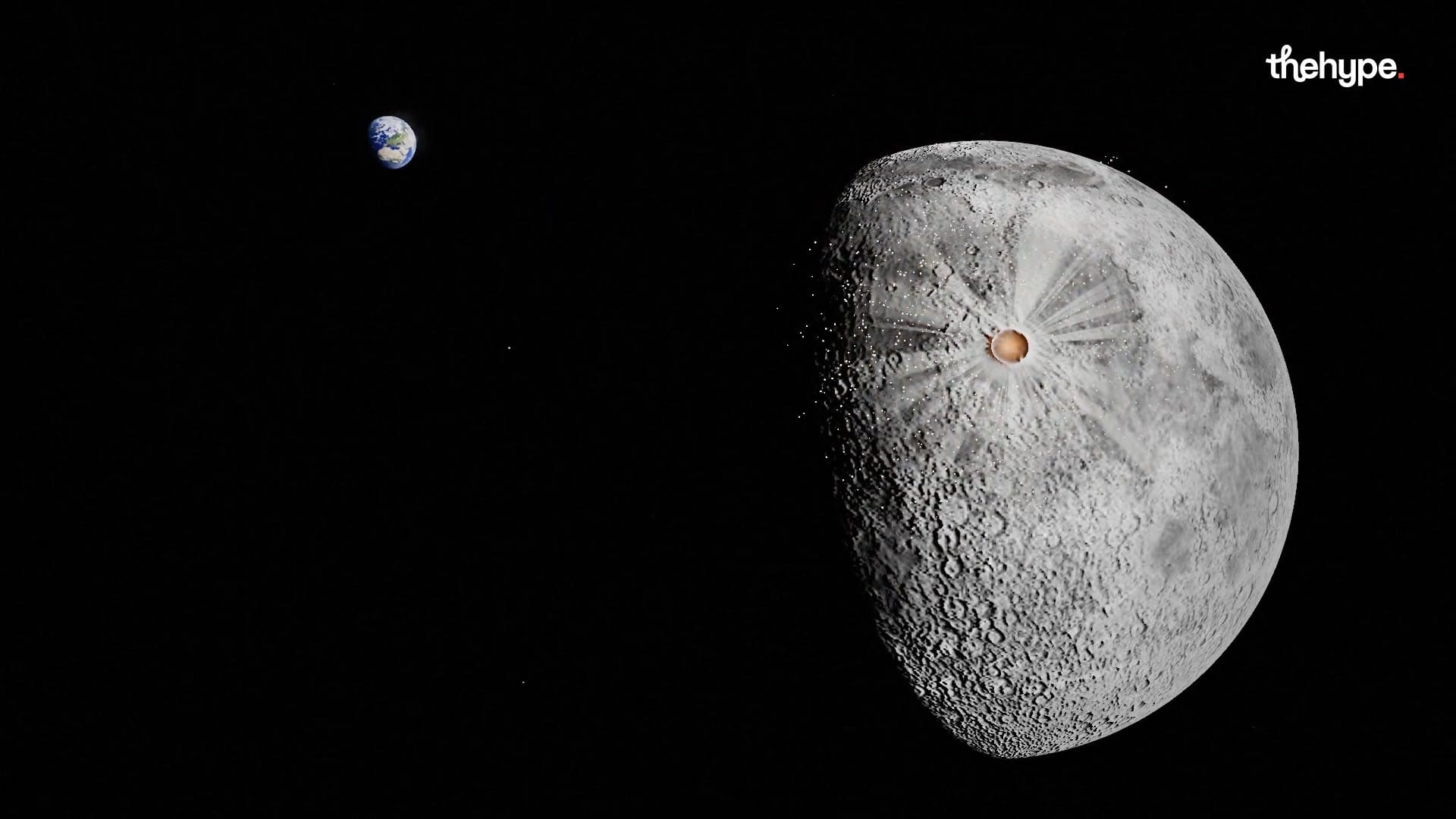
- 41–49 – the ring discharges into space, and the beam hits the Moon
How we built it
We made the film with AI agents, in code, over 12 versions. The final one is 6,191 lines in 45 modules. Each frame depends only on its time, so a render is exact.
- The tunnel, magnets, particles, city, fire and dust are all generated in code, with no 3D models
- Earth and the Moon use real imagery
- Output: 1920x1080 at 24 frames per second, plus a separate vertical cut for Shorts
- The music was made in Suno, and the effects were synthesized and laid over it
Everything past the 100% mark is invented. The real numbers stop at 99.9999991%, and the protons are already almost as fast as anything can go.
Sources
- The Large Hadron Collider – CERN's facts on the ring, magnets and laps
- three.js – the 3D library the film uses
- Earth imagery: Sentinel-2 cloudless by EOX, CC BY 4.0 (contains modified Copernicus Sentinel data 2016 and 2017), and NASA Blue Marble
- Terrain: Terrain Tiles on AWS