 Nick Trenkler
@Kimi_Moonshot just dropped kimi k3 – a 2.8t param native multimodal model, the first open 3t-class release. key facts:
• 1m token context. stable latentmoe activating 16 of 896 experts, built on kimi delta attention (kda) and attention residuals
• quantization-aware training from the sft stage onward – mxfp4 weights, mxfp8 activations. moonshot claims ~2.5x scaling efficiency over k2
• max thinking effort by default. low- and high-effort modes are "coming in updates" – there is no way to turn the thinking down today, and you feel it in every run
• pricing: $0.30/mtok cache-hit input, $3.00/mtok cache-miss, $15.00/mtok output. claims >90% cache hit rate on coding workloads
• benchmarks: swe marathon 42.0 (1st – fable 5: 35.0, sol: 39.0, opus 4.8: 40.0), terminal bench 2.1 88.3, browsecomp 91.2 (1st), program bench 77.8 (1st), gpqa-diamond 93.5. loses frontierswe 81.2 vs fable's 86.6, and deepswe 67.5 vs sol's 73.0
our test – 3 prompts, single-file html, @threejs, fully procedural, no assets:
1. photorealistic european roulette wheel – 37 pockets in the real sequence, mahogany clearcoat bowl, chrome turret, diamond deflectors, flick-to-spin, ball that spirals inward and settles on a mathematically real number
2. las vegas slot machine – 3 reels behind transmissive glass, drag the chrome lever to play, mechanical odometer counters modelled in 3d, coin physics on win
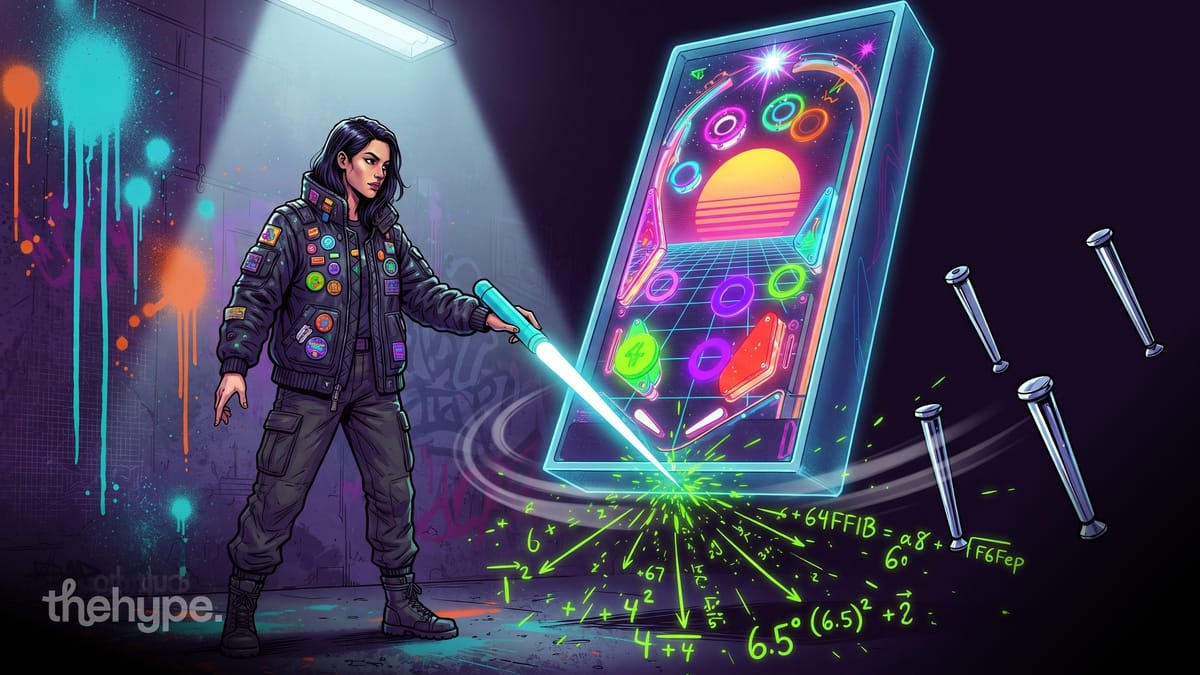
3. full pinball table – 6.5° tilted playfield, flipper impulse physics, spline ramps, drop targets, 6 bumpers, mechanical score reels in the backbox
we ran the test on @aimlapi platform
results:
- cost
#1 grok 4.5 – $0.30
#2 kimi k3 – $0.71
#3 gpt 5.6 sol – $2.05
#4 fable 5 – $7.69
- tokens
#1 grok 4.5 – 34,241
#2 gpt 5.6 sol – 51,748
#3 fable 5 – 144,126
#4 kimi k3 – 157,999
- lines of code
#1 gpt 5.6 sol – 3,054
#2 grok 4.5 – 3,047
#3 kimi k3 – 2,255
#4 fable 5 – 1,950
- generation time
#1 grok 4.5 – 5.1 min
#2 gpt 5.6 sol – 22.0 min
#3 fable 5 – 31.5 min
#4 kimi k3 – 75.6 min
observations:
• kimi k3 is cheap and it is slow. 75.6 minutes across three prompts against grok's 5.1. it is 2.4x grok's price and 15x grok's wall clock. the roulette took 15 min, the slot 18, the pinball 42
• it failed 2 of 3. only the roulette works. the slot machine has reel cutouts on both faces of the cabinet and the symbols face backwards – you can only read your spin by walking around to the rear of the machine. the pinball table stands vertically on its edge with the legs floating detached beside it.
• 81% of kimi's output tokens are reasoning, not code. grok: 22%. you are not paying for a bigger answer, you are paying for a longer argument with itself
• price per 100 shipped lines – grok $0.010, kimi $0.031, sol $0.067, fable $0.394. a 39x spread for the same three files
kimi k3's code quality:
upsides:
• the roulette is genuinely good – procedural wood grain with real specular breakup, correct european sequence (0-32-15-19-4...), chrome turret, diamond deflectors, clean console
• the pinball artwork is the best in the test – a synthwave "nova strike / deep space" field with six individually coloured neon bumper rings, a retro sun on a grid horizon, a nova burst, and a scoring legend printed on the apron. no other model printed the rules on the machine. it is a beautiful texture on a broken object
• physics reasoning is real – it derived a 480hz substep for the collider, worked out ball settle conditions and termination guarantees, and checked every ramp exit vector by hand before writing any of it
• it is the only model that saw the importmap trap coming. sol shipped a blank white page twice because three.js addons import the bare specifier 'three' and die without an import map
downsides:
• it dodged that trap on the slot by loading three.js r128 through classic script tags – a 2021 build with no working transmission. its slot glass rendered fully opaque and buried all three reels behind a white pane. the code asks for transmission: 0.93, ior: 1.5 – correct, and silently ignored by a renderer that predates the feature
• after 42 minutes and 212k characters of reasoning, the pinball cabinet is not assembled. the table stands vertically on its edge like a wardrobe – the prompt asked for 6.5° from horizontal, it delivered 90°. the legs float detached in the void beside it. head-on it photographs beautifully; orbit ten degrees and it is a painted slab with four chrome rods hovering nearby
• the playfield z-fights with the glass – hard black banding across the whole field as soon as you pull the camera back
a note on the pinball, in fairness to kimi: nobody passed it. every model shipped broken ball physics and controls you cannot trust. it is the hardest prompt we have run and the whole field failed it, each in its own way
kimi k3 reasons better than anything else here and it shows exactly where reasoning pays – physics constants, sequences, edge cases, traps the others walked into
Introducing Kimi K3: Open Frontier Intelligence
— Kimi.ai (@Kimi_Moonshot) July 16, 2026
🔹 2.8 Trillion Parameters, 1 Million Context, Native Multimodal
🔹 Kimi Delta Attention enables up to 6.3x faster decoding in million-token contexts
🔹 Attention Residuals deliver ~25% higher training efficiency at <2% additional… pic.twitter.com/eFHEbdxn3P