 Felix Laurent
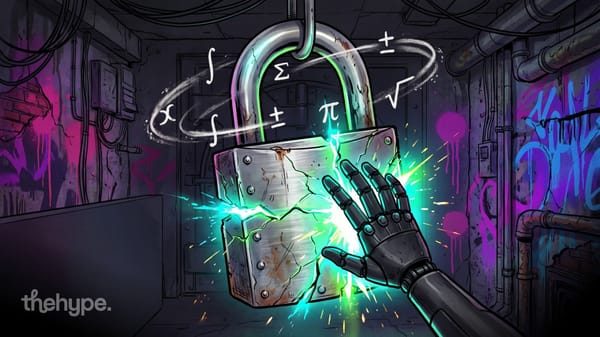
Rumors are spreading that AI labs have made math discoveries too dangerous to publish. The fear is that AI is closing in on P vs NP and could break the encryption behind banking and national security. Axios reported on the speculation on November 28, 2026. It follows a week in which OpenAI and Anthropic released several proofs that mathematicians had considered years away.
The loudest voice is Scott Aaronson, a well-known theoretical computer scientist. On November 25 he wrote that AI labs are sitting on one or more cryptography bombshells. He said he was "virtually certain" of it, citing multiple reliable sources. No lab has confirmed anything, and no AI system has publicly broken a widely used encryption algorithm.
What the rumors claim
The claim is that AI labs have found algorithms that could break cryptosystems in real use. If such a result exists, Axios notes, a lab or the US government could decide it is too risky to release. A public paper would give attackers a head start before banks and governments could replace their encryption.
Aaronson did not name his sources or describe the results. He wrote that he feels "much, much less confident" about their specific nature until he sees details or hears directly from someone at a lab. He also said he did not want to spread unverified rumors. He added that he did not want the cryptography angle to overshadow the math, and sent readers worried about their Bitcoin wallets elsewhere.
The rumors took off because of how much the labs have already shown in public. The past two weeks produced a run of results that would each have been major news on its own.
The AI math results behind the speculation
The run began on November 20. Anthropic mathematician Levent Alpöge presented a proof of the Riemann hypothesis made with Claude, a problem open since 1859. Several more results followed within days:
- VP vs VNP: on November 23, OpenAI and Anthropic each published a proof that VP and VNP are different. This is Valiant's algebraic version of the P vs NP question, which many computer scientists thought was far out of reach.
- Matrix multiplication: on November 24, OpenAI claimed a proof that the matrix multiplication exponent is exactly 9/4. It adds a lower bound to the upper bound OpenAI released on October 6 and answers a question open since the late 1960s.
- Fourier transforms: OpenAI also released a faster bound for computing the Fourier transform with linear gates, plus a matching lower bound.
- Quantum complexity: a recent preprint by Yupan Liu, made with AI help according to Aaronson, proved that QIP(2) equals PSPACE.
On November 24, OpenAI researcher Sébastien Bubeck called one new result something he "never thought I would see" in his lifetime, Axios reported. Aaronson said the labs have repeatedly backed their claims with Lean, software that checks proofs line by line. His working assumption is that proofs coming directly from OpenAI or Anthropic are correct unless shown otherwise.
What shook him most was the lower bound for matrix multiplication. He wrote that he never expected it to be much easier than P vs NP. That is why the speculation has turned to the biggest open problem in computer science.
What P vs NP and VP vs VNP mean
P vs NP asks a simple question: if a computer can quickly check a solution, can it also quickly find one? A Sudoku shows the gap. Solving one takes effort, but checking a filled grid takes seconds.
In formal terms, P is the class of problems a computer can solve quickly, in what mathematicians call polynomial time. NP is the class of problems whose answers it can check quickly. Stephen Cook posed the question in 1971. It is one of the Millennium Prize Problems, with $1 million from the Clay Mathematics Institute for a solution.
VP vs VNP is the same question moved into algebra. Leslie Valiant posed it in 1979. Instead of yes-or-no problems, it deals with polynomials built from addition and multiplication. VP holds polynomials that a small arithmetic circuit can compute, such as the determinant of a matrix. VNP holds polynomials that are easy to write down term by term but may need a huge circuit, such as the permanent. Proving VP ≠ VNP means showing that the permanent really is hard to compute.
Both questions tie directly into the rumors:
- Lower bounds were the missing skill: P vs NP, VP vs VNP and the matrix multiplication result all need a proof that something cannot be done faster. Such proofs have stalled computer scientists for decades, and AI produced several in one week.
- The algebraic version is a warm-up: researchers have long treated VP vs VNP as a cleaner and likely easier cousin of P vs NP. Settling it puts AI one step from the main problem, which is why Aaronson now feels a proof is near.
- Algorithms come along the way: Aaronson expects the same work to turn up shocking new algorithms too. "And yes, some of those algorithms will break currently deployed cryptosystems," he wrote.
That link is what turns a math story into a security story.
Why P vs NP matters for encryption
Modern encryption depends on that gap. Public-key systems assume some problems are easy to verify but practically impossible to solve without a secret key. A proof that P equals NP would suggest those shortcuts exist. Digital signatures used for payments, software updates and identity checks could become open to forgery.
There are important limits:
- A proof is not an attack: even if P equals NP, the proof might not give an algorithm fast enough to use. Nicky Mouha, a former NIST cryptographer, told Axios that cryptography would become theoretically breakable, "though not necessarily broken in practice."
- Most experts expect the opposite: most computer scientists believe P does not equal NP, so hard problems would stay hard
- Specific attacks are still possible: even then, AI could find shortcuts on the particular math problems that today's encryption relies on
Aaronson himself leans toward that outcome. "I now feel in my bones, for the first time ever, that a proof of P ≠ NP is not far," he wrote. A day later he added that AI is "climbing the mountain" toward that proof. The security question is about what the labs may find on the way.
How labs and governments are reacting
The rumors land on top of an earlier Axios report. Some top AI researchers, including people inside frontier labs, question whether some future models should be released publicly or even used internally. Axios links that debate to the speed of the new math results.
Governments and businesses were already replacing vulnerable encryption to prepare for powerful quantum computers. The Bank of England warned on November 26 that AI and quantum computing could put the cryptography of financial systems at risk, Axios reported. In October, its deputy governor Sarah Breeden had already called AI a systemic risk to the financial system.
The migration is slow. Many organizations do not know which cryptographic algorithms they use, and some upgrades require replacing physical equipment, experts told Axios. A sudden math breakthrough would cut the time they have to prepare. AI is also being used on the defensive side: DeepMind recently verified the Signal protocol with AI agents down to machine code.
Is AI close to breaking encryption
There is no public evidence that it is. Every confirmed result so far is pure mathematics, and none of it gives an attack on deployed systems. The cryptography "bombshells" rest on unnamed sources, and the person who relayed them says he is unsure what they are.
The rumors still deserve attention. The labs have produced verified proofs faster than mathematicians expected, and Aaronson now believes AI could settle P vs NP. If the bombshells are real, the right response is a quiet handover to cryptographers before any public paper, as with major software flaws. Until a lab confirms or denies them, the practical advice is the same as before: move to post-quantum encryption faster.
Sources
- Rumors swirl that AI models have cracked dangerous math secrets, Axios – November 28, 2026
- Axios post on X – November 28, 2026
- HOLY SH*T HOLY SH*T HOLY SH*T HOLY SH*T, Shtetl-Optimized – November 25, 2026
- VP and VNP are different, OpenAI – November 23, 2026
- VP vs VNP proof, Anthropic – November 23, 2026
- The matrix multiplication exponent is nine fourths, OpenAI – November 24, 2026
- BoE warns banks to prepare for AI-enabled cyber breaches, Reuters via Cyprus Mail – October 15, 2026