 Nick Trenkler

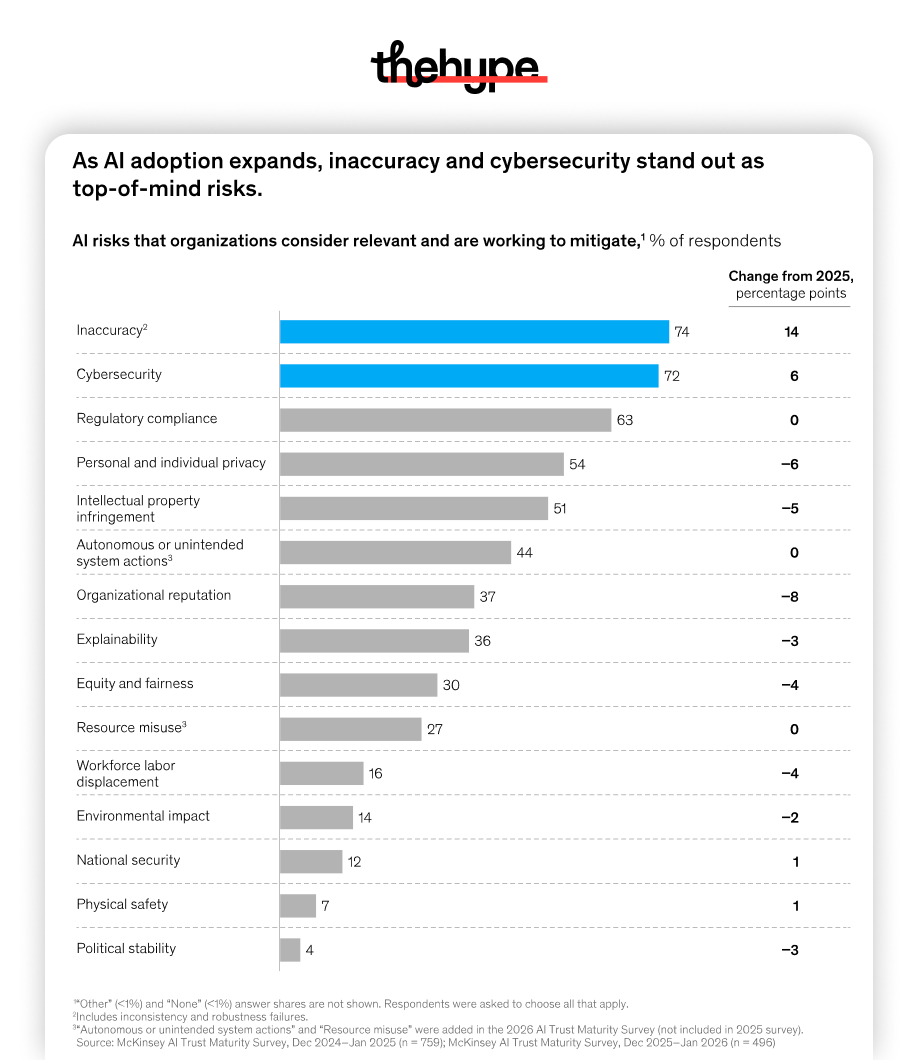
mckinsey’s 2026 trust and ai risk research found that 72% of executives cite cybersecurity as a leading concern in ai deployment, nearly matching concern around model accuracy. meanwhile, citigroup raised its forecast for the global ai economy to $4.2 trillion by 2030, citing enterprise automation and software transformation as major growth drivers. why does all of that matter? the reason is simple: every dollar spent on autonomous systems creates downstream demand for numerous features, from agent identity management to machine-speed response systems.
historically, every major computing shift created a new security giant. while cloud produced zero-trust leaders, and mobile created endpoint winners, agentic ai is likely to create its own category champions.
where agentic cybersecurity is heading next
but before we talk about those possible next champions, let’s first discuss what they will be even championing over.
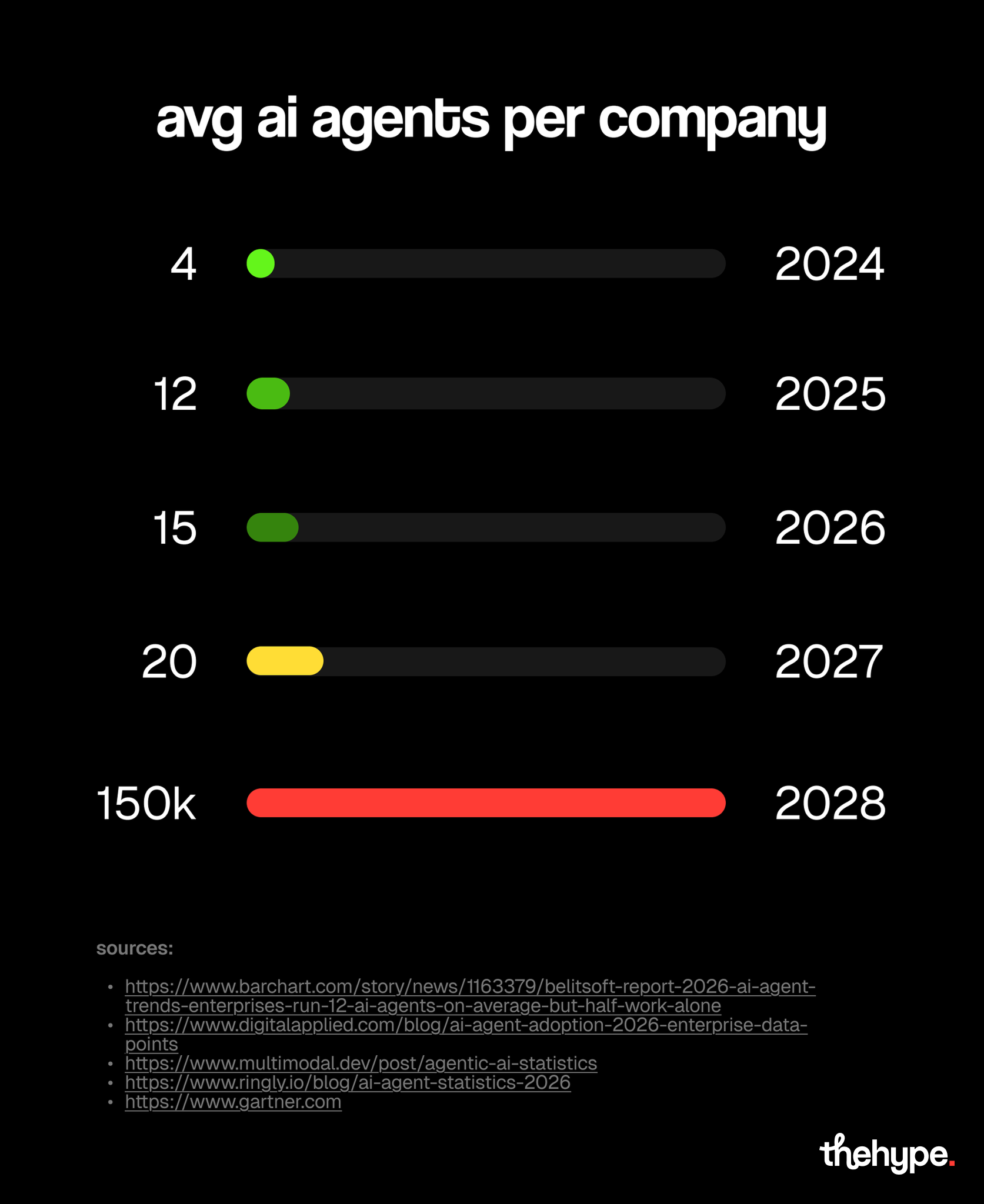
gartner predicts: an autonomous agent will be the next security frontier. the average fortune 500 company will run more than 150,000 ai agents by 2028, and to sustain that pace, enterprises must establish agent identity, permissions, inventories, and behavior monitoring. that is a clear signal that cybersecurity is evolving from human-user governance to machine governance at scale.
google’s 2026 cloud security announcements hint at the future as well. the company’s ai investigation systems reportedly processed more than 5 million alerts and reduced certain triage tasks from 30 minutes to roughly one minute.
the message is clear: ai attackers will always move fast, so defenders must act even faster. soon, many enterprises will run defensive agents supervising operational agents, while humans supervise both.
runtime agent shield
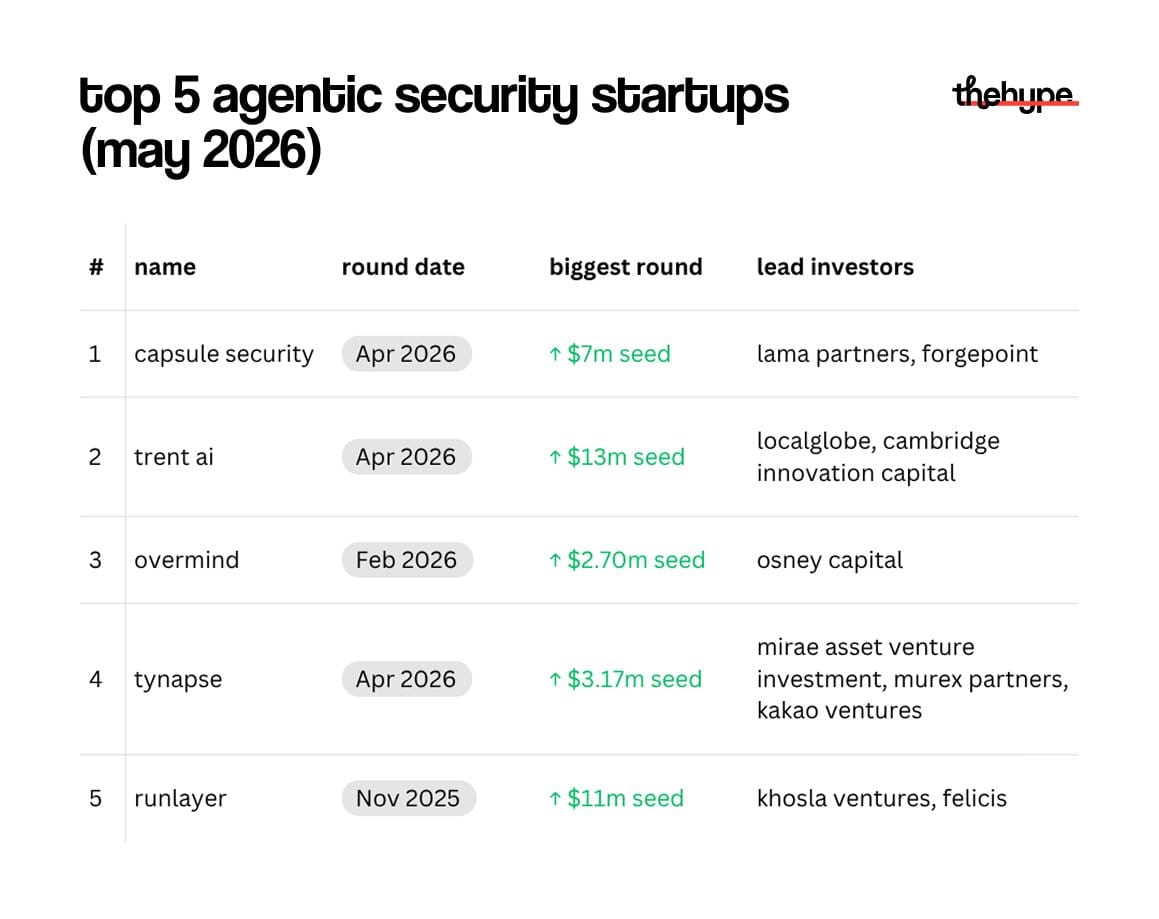
tel-aviv-based capsule security launched in 2026 with a sharp thesis: the greatest risk is not training data, but a live autonomous behavior inside enterprise systems. the company focuses on runtime monitoring, policy enforcement, and real-time controls for ai agents operating in production environments. that makes it relevant precisely where most current ai security tooling is weakest: after deployment.
why does it feel like capsule is underrated? it’s because the company targets infrastructure buyers rather than media attention. but if agent fleets become normal inside enterprises, runtime control layers like that may become mandatory.
adaptive risk guardian
trent ai emerged from stealth in april 2026, arguing that old appsec models are not built for systems that evolve autonomously. today, this platform helps organizations continuously scan, judge risk, and secure ai agents as they change over time.
we’ve picked trent ai because it sits in one of the most underappreciated corners of the ai boom: securing autonomous systems after deployment, when they begin changing behavior in live environments. much of today’s ai security market still focuses on models, prompts, or static code scanning. trent’s thesis is more forward-looking: it treats ai agents as dynamic entities that continuously evolve through new tools, permissions, and workflows.
behavior oversight layer
led by a former mi5 officer, london-based overmind is building what many enterprises will eventually demand: a supervision layer between agent autonomy and real-world consequences. the startup focuses on monitoring, oversight, and safer deployment of ai agents in sensitive environments.
its advantage is strategic timing. many companies will adopt agents before they fully understand governance, but overmind is selling control before panic buying begins.
we think overmind might be underrated because it’s targeting a problem many enterprises still underestimate: what happens after an ai agent is deployed into production. much of the current ai security market remains focused on model safety, prompt filtering, or pre-launch testing, while overmind takes a more strategically important angle by positioning itself as a supervision layer for live agents. this specific security niche may become essential once enterprises realize that governing autonomous behavior is harder than launching it. if agent adoption accelerates, startups focused on continuous oversight could become some of the most valuable infrastructure players in the market.
building trust infrastructure
tynapse positions itself around trust infrastructure: reliability, runtime governance, and safe deployment of ai systems. that may not sound too flashy, but trust layers often become the most durable infrastructure category.
as agentic systems spread globally, regional winners in compliance-heavy markets may matter more than silicon valley assumes. tynapse is worth watching for exactly that reason. the company feels underrated because it’s attacking one of the least glamorous (but potentially most essential) problems in agentic ai: trust at runtime. many ai startups focus on model performance, speed, or flashy automation demos; tynapse instead focuses on what enterprises care about when systems go live: preventing hallucinations, blocking data leakage, enforcing permissions, generating audit trails, and maintaining compliance while ai agents operate inside real workflows.
agent access gatekeeper
2026 became a year of commercial breakout for runlayer, a startup focused on securing model context protocol (mcp), the increasingly important standard used by agents to connect with tools, systems, and external data sources. today, mcp is already showing signs of emerging infrastructure rather than an experimental protocol - which means it will need permissioning, observability, and abuse prevention.
despite operating in a space that is becoming foundational infrastructure for agentic ai, runlayer remains relatively under-discussed outside of technical and early enterprise circles. this is partly because it is a “picks-and-shovels” company: they don’t build consumer-facing ai agents, but instead act as a connective tissue between agents and enterprise systems. historically, these types of infrastructure layers tend to become highly valuable only after adoption scales, which means runlayer arrived early to a problem that is only becoming visible.
valuable doesn’t mean the loudest
while the public still associates ai with chat interfaces and viral demos, enterprises are already thinking several steps ahead. they’re asking harder questions, the important ones: who controls autonomous systems? who audits them? who limits their permissions, and who shuts them down if something goes wrong?
those questions will shape the next decade of software spending more than many hyped launches happening daily. that is why some of the most important ai companies of 2026 may be small, barely known, and building layers most users never see.
history is full of fortunes made in invisible infrastructure. agentic ai will likely be no different.