Felix Laurent
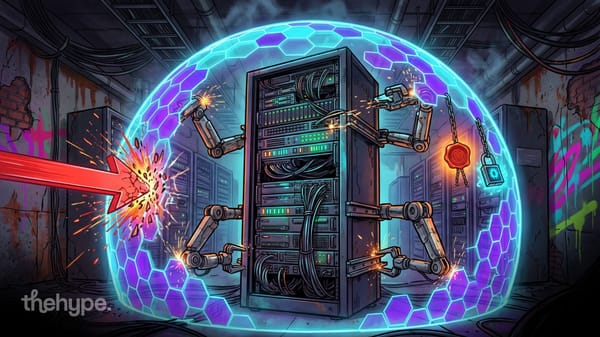
OpenAI and Cisco have released Shirudo, an open-source tool that lets AI agents protect running Linux systems from known exploits before a patch is installed. Agents write small programs called shields that block the dangerous behavior while the service keeps running.
The two companies announced the project on November 23, 2026. In a test, a shield written by OpenAI's Codex blocked an attack on a live Elasticsearch server without a restart. OpenAI president Greg Brockman summed up the problem: "finding a bug today doesn't mean you can patch every system tomorrow."
Why OpenAI and Cisco built Shirudo
AI models now find software flaws much faster than teams can fix them. OpenAI said in June that the bottleneck in security has moved from finding bugs to patching them. Its Codex Security tool alone has scanned more than 30 million code changes.
Attackers are moving faster too. "Bugs and flaws used to unfold over days and weeks. It's now minutes and hours," Cisco president Jeetu Patel wrote. For two recent flaws, he said, attacks began "within a day of disclosure, if not before."
Patching is still slow. Testing and rolling out an update can take days or weeks, and blocking a feature outright can take a service offline. Shirudo, Japanese for "shield," is meant to fill that gap.
The trick is a Linux technology that runs code inside the system itself.
How Shirudo works
Shirudo is built on eBPF, a Linux feature that lets small programs run at specific points inside the operating system. A shield uses it to watch for the exact behavior an exploit needs and stop it, while normal requests pass through.
The process has four steps:
- Reproduce. An agent recreates the exploit in a test environment.
- Pick a point. It chooses where in the system to block the attack.
- Validate. It checks that the shield stops the exploit without breaking the application.
- Roll out. An operator approves the shield, and it is deployed while the service keeps running.
Security is built into the loading process. Each shield is cryptographically signed and checked before it loads, and Linux's own eBPF verifier checks it against safety rules. A security chip on the server, the TPM, keeps a record of every shield loaded or removed, so operators can prove what protections were active.
The Java4Shell demo
OpenAI's main example is Java4Shell, a recent flaw in Java's Base64 decoder that was fixed on November 17. Using Codex, the team wrote a shield that added an input check to the decoder. They attached it to a running Elasticsearch process.
When the team tried the exploit, the shield rejected the malicious input and Elasticsearch kept serving requests. Cisco says agents also built a shield for a recent PHP flaw. That bug was found by security firm Calif using OpenAI's cyber model, as we reported in October.
The engineering comes from a well-known team.
Who built Shirudo
The code was written mostly by Cisco's Isovalent unit, the company behind the popular open-source tools Cilium and Tetragon. Among the main contributors are Daniel Borkmann and John Fastabend, who help maintain eBPF in the Linux kernel. Isovalent calls Shirudo "a rewrite of Tetragon designed for agents."
The team presented the design at the Linux Plumbers Conference in October. There, they explained that Shirudo has no configuration language on purpose, because agents work better with code.
OpenAI's role is the AI side. Codex is the only model named in the project, and the repository includes instruction files and skills for coding agents. Cisco and OpenAI also work together through OpenAI's Daybreak security program, which gives vetted defenders access to its cyber models.
Can you use Shirudo today
Not easily. The project is marked pre-release, and its requirements are steep:
- A development Linux kernel, bpf-next 7.4, plus five patches that are not yet merged.
- A TPM 2.0 chip, measured boot and verified disk images.
- Recent tools, including systemd 256 and clang 23.
- Building the packages from source and installing them as root.
No standard Linux distribution ships a kernel that meets these needs yet. Without the patches, a machine boots without protection. The code is on GitHub under the BSD 2-Clause license, with a virtual machine quickstart and a hands-on lab from Isovalent. A technical webinar follows on December 15.
The overhead in the docs is small. Each new process adds about 3.2 microseconds, loading a shield takes about half a second, and background checks use under 1% of one CPU core.
Not everyone is convinced.
What critics say about Shirudo
On Hacker News, one commenter pointed to the measured boot setup Shirudo needs. That makes it "definitely not a simple 'vibe-code your patch' platform" for emergencies, the commenter wrote. Others were uneasy about AI-written code running inside the kernel. Some predicted that teams would keep adding shields and never remove them.
"A shield with no expiry date is a vulnerability you have decided to keep," security writer Mathew Clark warned. Shirudo's own threat model admits a related risk. A signature proves who wrote a shield, not that it is correct. Whoever holds the signing key can reach the kernel of every server that trusts it.
The docs also do not describe how a faulty shield is rolled back. They say only that shields are retired once the real patch ships.
Is Shirudo the future of patching
It is a serious first step from people who know the Linux kernel well. Shirudo tackles a real gap: AI is finding bugs faster than anyone can patch them, and attackers are moving within hours. Signed shields, operator approval and a hardware-backed record are sensible safeguards for letting agents touch production systems.
For now, it is a research platform for teams with modern kernels, TPM hardware and strong security staff. Most companies cannot run it yet. The kernel patches still have to land, and distributions have to follow. If they do, shields published together with vulnerability disclosures could become a normal way to respond to new flaws.
Sources
- OpenAI on X – November 23, 2026
- OpenAI and Cisco introduce Shirudo, OpenAI – November 23, 2026
- Expanding the defender's window with self-defending infrastructure, Cisco – November 23, 2026
- Cisco and OpenAI launch Shirudo, Isovalent – November 23, 2026
- Shirudo repository, GitHub – accessed November 24, 2026
- Shirudo: BPF live-patching infra for the agentic era, Linux Plumbers Conference – October 6, 2026