Felix Laurent
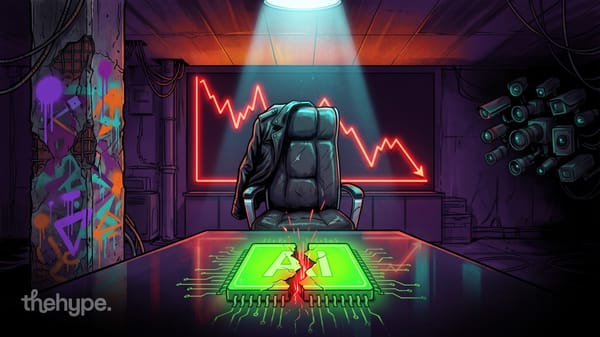
Nvidia stock fell as much as 8.8% at the open on Monday, November 9. It was the first session since the board opened an investigation into CEO Jensen Huang. Shares dropped from Friday's close of $186.64 to $170.24 in the first minutes of trading. By late morning in New York they had recovered to about $179, down roughly 4%.
The Kobeissi Letter flagged the slide before the bell. Its post said Nvidia fell more than 5% in premarket trading and erased $225 billion in market value. That figure matches the premarket move. By our estimate, the drop at the open briefly wiped out close to $400 billion.
Why Nvidia's board opened an investigation
On Sunday Nvidia's board launched an independent investigation. It followed reports that Huang was the target of a "foreign intelligence effort." A committee of independent directors, assisted by outside counsel, will run it. The board said it has no reason to believe national security or Nvidia secrets were compromised.
The trigger was a New York Times report that Huang had acknowledged a personal relationship with a business executive. U.S. intelligence believes she passed information to Beijing. She is a former senior executive at Megaspeed, a Singapore-based data center company and Nvidia customer. We covered the original spy report and Megaspeed's $4.8B Nvidia chip trail in late October.
In an email to staff, Huang said he had fallen short of his responsibilities to colleagues, the board, partners and shareholders. CNBC reports that he fully supports the review and has committed to cooperating with it. Nvidia says he stays on as CEO.
Those assurances did not stop the selling, because the open question is about leadership.
What analysts say about Huang's future as CEO
Dan Ives of Yorkville Ives & Co. called the episode a "black eye moment" for Huang. He told CNBC that the clear worry is whether Huang stays on as CEO. "The Street would say probably likely, but given the board investigation, anything could happen," he said.
Ives also wrote that Huang is "not replaceable," according to the Associated Press. He expects the case to bring more scrutiny in Washington "especially around China and chip restrictions" for Nvidia. He said the risk of Huang's removal will hang over the shares in the near term.
Joachim Klement of Panmure Liberum told CNBC the impact is for now limited to Nvidia. If Huang's position were endangered, he said, Nvidia might cut back on supporting other companies. That is a real concern for an AI sector in which Nvidia invests in many of its own customers.
Others defended him. Sequoia partner Shaun Maguire called Huang "one of the greatest entrepreneurs of this generation" in a post on X. President Trump called him an "honorable guy" on Sunday and said they had not discussed the investigation. China's Foreign Ministry called the spy allegations unsubstantiated.
The reaction also says something about where Nvidia shares stood before the news broke.
Nvidia stock was already under pressure
The stock hit a record of $243.37 in early October. Monday's low left it about 30% below that peak. Part of the decline came before the spy story, as investors questioned the pace of AI spending at the end of October.
Last week added a political shock. Nvidia closed down 9.3% on November 5 in an AI chip stocks selloff after Democrats who campaigned on data center limits won Congress. The S&P 500 fell 2.7% over the week, its worst week since April 2025, according to Investopedia. Nvidia recovered part of its loss on Friday before Monday's drop.
What made Monday unusual was how the rest of the market traded.
Why the market rallied without Nvidia
Monday's drop was Nvidia's alone. Within ten minutes of the open, the U.S. stock market had added $900 billion in value, Bull Theory wrote on X. Its heat map showed almost every large company in the green while Nvidia was down 8.5%.
The rally grew through the morning. By about 11 a.m. in New York, the S&P 500 was up 2.1%, the Nasdaq Composite 2.7% and the Dow more than 900 points. Nvidia was the only member of the Magnificent Seven in the red. Amazon and Meta gained about 5%, and Alphabet, Microsoft and Tesla rose 2% to 3%.
Oil drove much of the move. American crude fell about 4% to near $87 a barrel. President Trump had called further strikes on Iran "highly unlikely" in an interview with CNN. CNBC and Investopedia both named cheaper oil as a main reason Wall Street bounced back from last week's AI selloff.
Chipmakers rebounded the hardest. The PHLX Semiconductor Index rose more than 6%, Broadcom almost 9% and Micron almost 7%. AMD, Nvidia's closest GPU rival, gained nearly 11% after Oppenheimer upgraded it to outperform with a $600 price target. Analyst Rick Schafer wrote that AMD is "emerging as a durable supplier of AI compute."
The split shows the market treating the Huang news as a company problem. Investors kept betting on AI chips, but some of that money went to Nvidia's rivals. Not everyone joined in. Citi strategist Beata Manthey downgraded U.S. and global tech to neutral on Monday, warning that positioning could slide further into net short territory.
Two events in the next ten days could decide whether Nvidia rejoins the rebound.
Can Jensen Huang stay on as Nvidia CEO
For now, yes. The board backs him, the company says he will lead without interruption, and analysts expect him to stay. Monday's trading priced in uncertainty more than an exit. The stock won back about half its opening loss within hours.
The tests come quickly. Nvidia reports quarterly earnings on November 17, and Huang will face questions on the call. A day later, on November 18, three Republican House committee chairs want him at a joint closed-door briefing. They are Brian Mast of Foreign Affairs, John Moolenaar of the China select committee and Rick Crawford of Intelligence. Their request followed the Megaspeed reports and focuses on Nvidia's security procedures. Attendance is voluntary, and the request does not accuse Huang or Nvidia of wrongdoing. If the board's inquiry or Congress finds that company information reached Megaspeed through Huang, the board's confidence will be hard to sustain. Until then, Huang keeps the job, and Nvidia stock carries a Huang risk discount it did not have a week ago.
Sources
- CNBC: Nvidia stock falls 5% as scrutiny turns to Jensen Huang's affair with alleged Chinese spy – November 9, 2026
- Associated Press via CP24: Nvidia shares tumble after investigation into CEO Jensen Huang – November 9, 2026
- CNBC: Nvidia opens probe of CEO Huang being targeted by possible Chinese spy – November 8, 2026
- Bloomberg: Nvidia CEO pressed by US lawmakers over tie to firm in spy probe – November 5, 2026
- CNBC: Dow rallies 900 points as oil slides, tech stocks outside of Nvidia gain – November 9, 2026
- Investopedia via Yahoo Finance: Major indexes rise as market looks to rebound from last week's losses – November 9, 2026
- The Kobeissi Letter on X – November 9, 2026
- Bull Theory on X – November 9, 2026