 Nick Trenkler
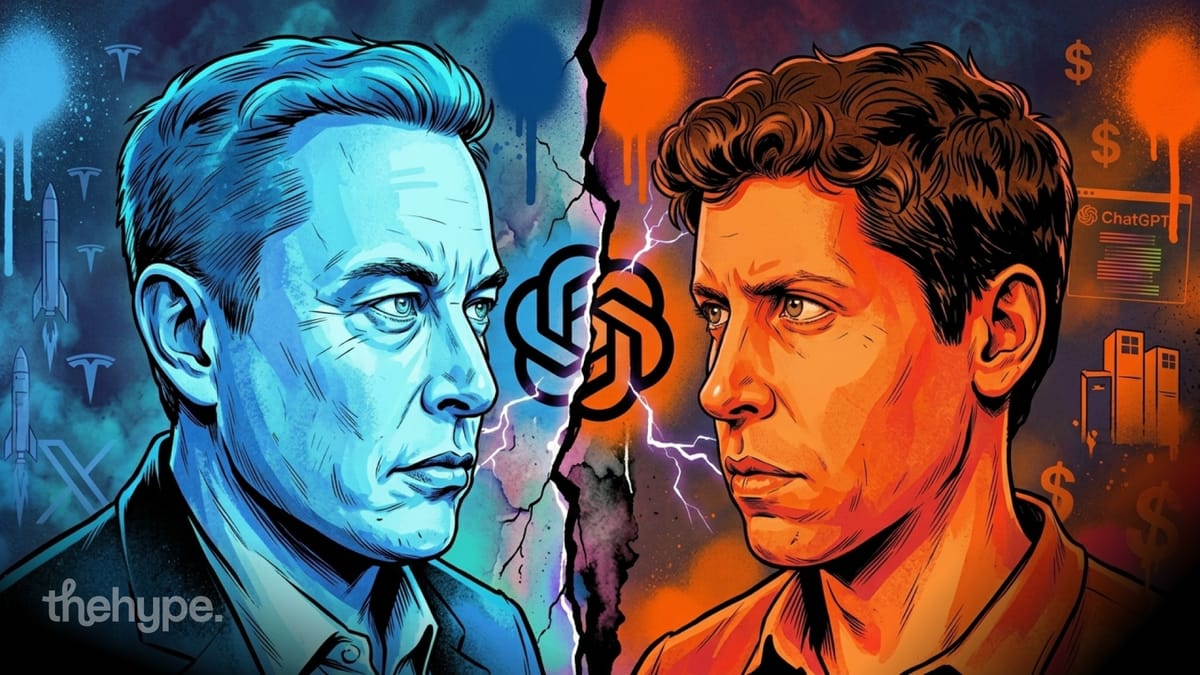
a nine-person jury was seated on monday in a federal courthouse in oakland, california, in one of the most consequential tech trials in history. opening arguments began tuesday.
on one side: elon musk, the world's richest person and ceo of tesla and spacex. on the other: sam altman, ceo of openai, the company behind chatgpt.
the case they're fighting over could reshape the entire artificial intelligence industry.
It's gross seeing so many root against Tesla. Be the person on the side of the climate and innovation, not the person hoping to make money on puts.
— Sam Altman (@sama) May 21, 2019
Also, betting against Elon is historically a mistake...and the best product usually wins.
why this trial matters
the numbers at stake are staggering. musk is suing for more than $130 billion, alleging that altman and openai cofounder greg brockman swindled him and betrayed the company's founding charitable mission. openai is currently valued at $852 billion. the trial also lands as musk prepares to take spacex public in what's likely to be a record ipo, and as openai gears up for its own expected public offering.
if musk wins, the consequences would be seismic:
the court could rule on whether openai is allowed to exist as a for-profit enterprise and might even oust its current executive leadership, including altman. musk is also demanding that openai revert entirely to a nonprofit – which would effectively dismantle the corporate structure that made it one of the most valuable ai startup in history and call into question microsoft's $13 billion investment in the company.
the two companies combined are valued at over $2 trillion on the private market.
of the 26 claims that musk originally filed in 2024, only two remain: unjust enrichment and breach of charitable trust. a narrow case, but the remedies could be anything but narrow.
the prehistory: from dinner table to courtroom
early 2010s. a shared fear
it didn't start as a rivalry. it started as a friendship built on a shared anxiety.
altman, the former president of startup accelerator y combinator, first met musk in the early 2010s. the two reportedly began meeting regularly for dinner, and discovered a shared concern about the future of ai – particularly the unchecked dominance of google's deepmind. they worried that safety wasn't being prioritized as the technology inched closer toward artificial general intelligence (agi).
Also dig Mass Effect. It's all fun & games until the AI decides people suck. Maybe we can be their limbic system.
— Elon Musk (@elonmusk) April 3, 2012
anyone know what the best early stage AI companies in the world are? i'd love to meet them.
— Sam Altman (@sama) August 22, 2014
Reading The Culture series by Banks. Compelling picture of a grand, semi-utopian galactic future. Hopefully not too optimistic about AI.
— Elon Musk (@elonmusk) December 26, 2014
we're very interested in funding more AI companies at @ycombinator. if you know good ones, please send them our way!
— Sam Altman (@sama) September 10, 2014
their solution: build a counterweight. a nonprofit, open-source ai lab that would answer to humanity rather than shareholders.
december 2015. openai is born
openai was founded as a nonprofit in december 2015 by sam altman, elon musk, ilya sutskever, greg brockman, and others, with altman and musk as co-chairs.
Hello, world: https://t.co/XrT0zxMBCD
— OpenAI (@OpenAI) December 11, 2015
the founding idea was to pursue agi not for crass profit but for the benefit of humanity, with its technology open source so the whole world would have access.
2016–2017. the money problem
beginning in may 2016, musk donated $38 million to openai and helped recruit world-class engineers. but the idealism was running into a hard physical reality.
OpenAI first ever to defeat world's best players in competitive eSports. Vastly more complex than traditional board games like chess & Go.
— Elon Musk (@elonmusk) August 12, 2017
by march 2017, openai's leadership recognized the need for more focus. as they analyzed trends in the field, they realized that maintaining nonprofit status was financially unsustainable – the computational resources required to achieve breakthrough results doubled every 3.4 months, necessitating a new model that could rapidly accumulate capital.
Happy to announce the first-ever official vertical at YC: https://t.co/LyFzp3Itif
— Sam Altman (@sama) March 19, 2017
I interviewed @elonmusk and it's really interesting: https://t.co/hsQDValWT6
— Sam Altman (@sama) September 15, 2016
everyone agreed something had to change. what they disagreed on was who should be in charge of that change.
september 2017. the power grab
this is the moment everything broke.
by mid-2017, musk began questioning openai's viability, at one point holding back promised funds after clashing with altman, brockman, and sutskever.
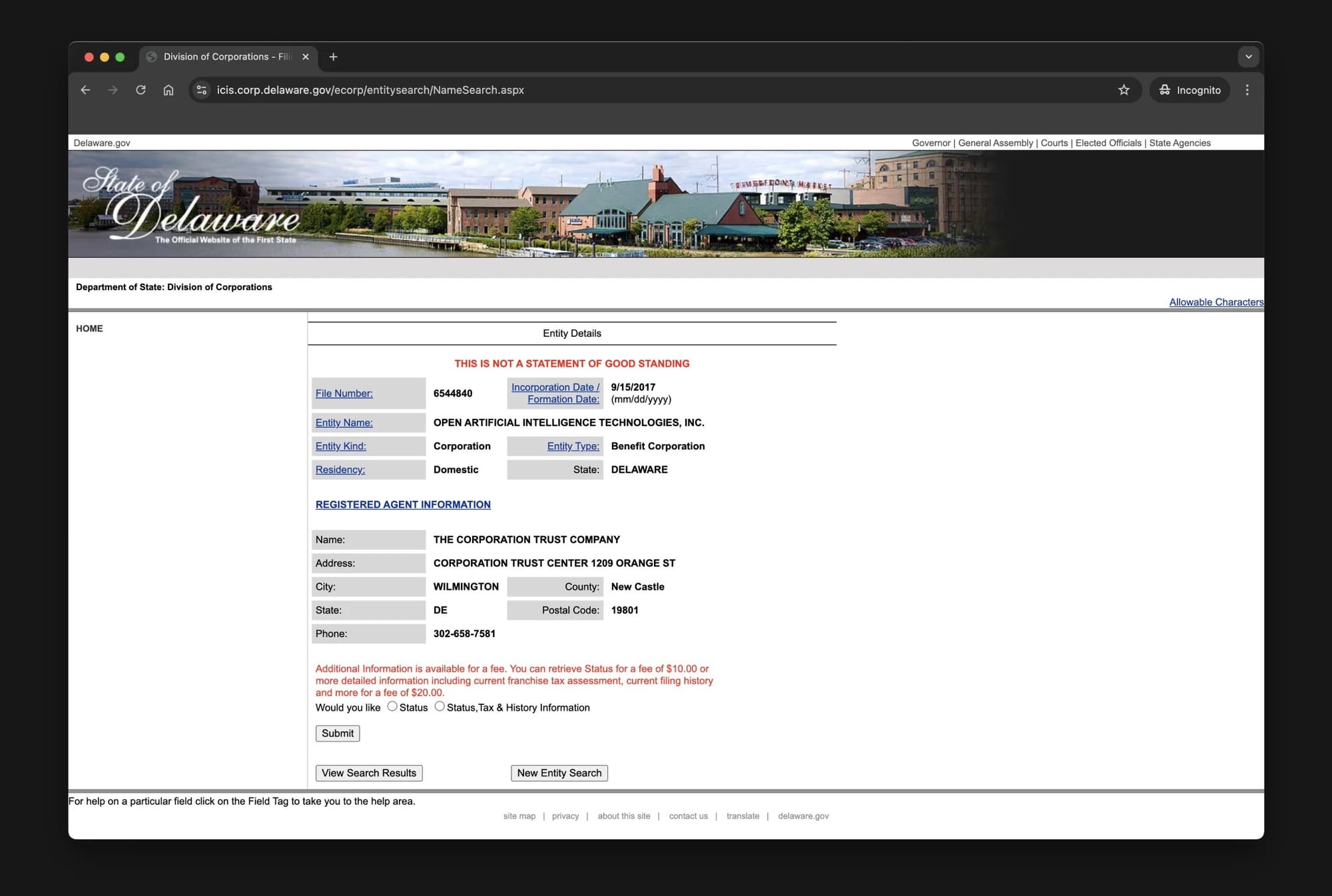
musk had already gone so far as to register a public benefit corporation called "open artificial intelligence technologies, inc." – essentially a shell company ready to absorb openai under his control. in september 2017, openai rejected his terms.
according to openai, musk wanted to merge the company with tesla or have full control. when they refused, he left, saying he'd be supportive of them "finding their own path."
inside openai, the relief was palpable – and revealing. brockman wrote in his private diary: "this is the only chance we have to get out from elon. is he the 'glorious leader' that i would pick?" he also noted his own financial ambitions: "financially, what will take me to $1b?"
january-february 2018. musk walks
in january 2018, musk told openai it was "on a path of certain failure relative to google" and that there needed to be "immediate and dramatic action." in february 2018, he resigned as co-chair.
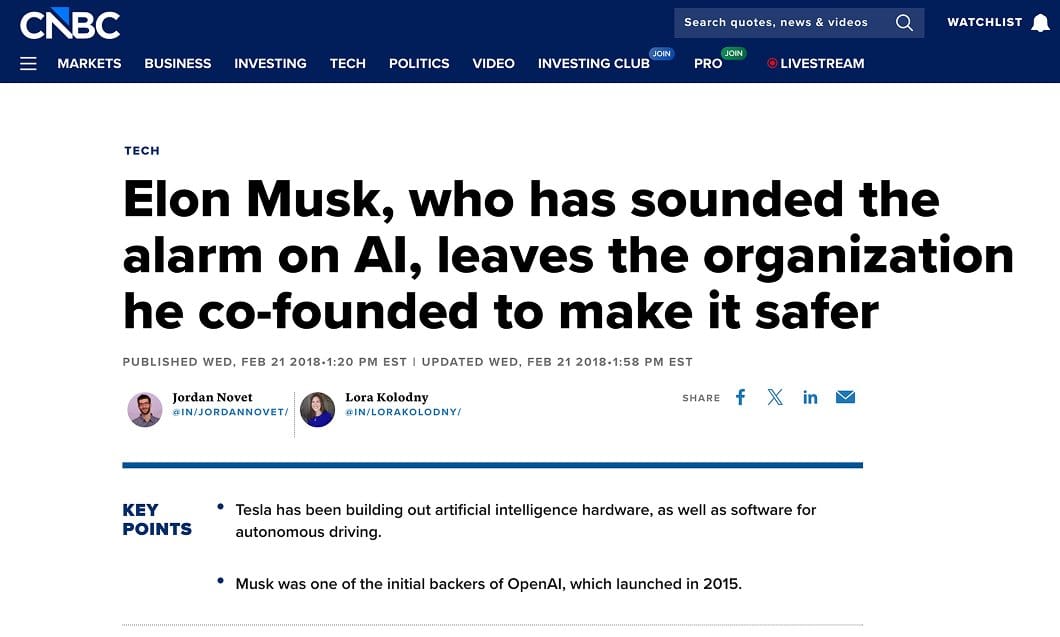
publicly, musk and openai cited a conflict of interest – tesla was competing for ai talent with openai. there was some truth to that.
march 2019. openai goes for-profit
thirteen months after musk left, openai created a "capped profit" subsidiary governed by the original nonprofit board. this allowed outside investment, and they quickly secured a massive partnership with microsoft.
.@Microsoft is investing $1 billion in and partnering with OpenAI to support us building beneficial AGI: https://t.co/ueiPKAiXfa pic.twitter.com/8Ebu9knHAk
— OpenAI (@OpenAI) July 22, 2019
altman made an unusual decision for a tech boss: he took no equity in the new for-profit entity. he told people the project was not designed to make money.
2022–2023. chatgpt explodes
after raising $1 billion from microsoft in 2019, openai launched chatgpt in 2022 and within five days reached 1 million users. the following year, microsoft invested another $10 billion.
Try talking with ChatGPT, our new AI system which is optimized for dialogue. Your feedback will help us improve it. https://t.co/sHDm57g3Kr
— OpenAI (@OpenAI) November 30, 2022
in 2023, elon launched xai – his own ai competitor.
.@xAI
— Elon Musk (@elonmusk) July 14, 2023
2024–2025. lawsuits and a hostile takeover bid
in february 2024, musk filed a lawsuit accusing openai of shifting focus from public benefit to profit. in april 2024, openai countersued musk, alleging he had engaged in "bad-faith tactics" to slow the company's progress and seize its innovations for personal benefit.
The new OpenAI logo is really on point pic.twitter.com/CXBqdBer4s
— Elon Musk (@elonmusk) March 12, 2024
in february 2025, a consortium of investors led by musk submitted a $97.4 billion unsolicited bid to buy the nonprofit that controls openai. the offer was rejected, with openai stating it was not for sale.
no thank you but we will buy twitter for $9.74 billion if you want
— Sam Altman (@sama) February 10, 2025
Swindler
— Elon Musk (@elonmusk) February 10, 2025
now: the trial
the trial is scheduled to run for four weeks. witnesses are expected to include not only musk and altman, but possibly also microsoft ceo satya nadella and current and former openai board members.
what started over dinner in silicon valley, with two men worrying about google's stranglehold on the future of intelligence, has become one of the most nakedly personal and financially enormous legal battles in the history of tech. and it's only just begun.