Felix Laurent
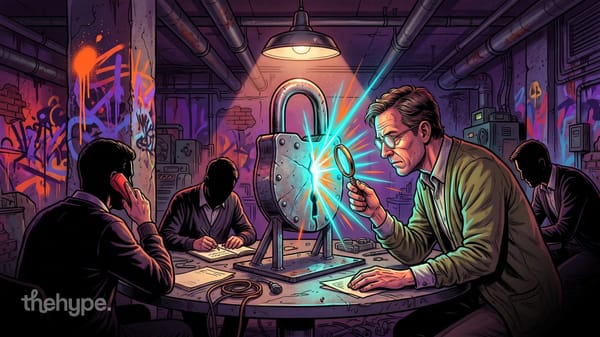
Twenty-one well-known cryptographers have formed the Cryptography Incident Review Group, or CIRG, to prepare for a possible break in encryption. Its website drew wide attention on November 29, 2026, although the page itself carries no launch date. The group says CIRG will help decide how to disclose a break in cryptography, how to inform those affected and how to plan for resilience.
The timing is what made it news. For a week, rumors have spread that AI labs hold math results strong enough to threaten encryption. The CIRG site lists its first statement as forthcoming, but it does not name any incident.
What the Cryptography Incident Review Group is
CIRG says its goal is to "review and help navigate cryptanalytic advances" in the field. Cryptanalysis is the study of how to break encryption. The site lists three tasks: advising on how to disclose a break, communicating with those affected and planning for cryptographic resilience.
The members include some of the best-known names in the field:
- Dan Boneh of Stanford University
- Matthew Green of Johns Hopkins University
- Yael Tauman Kalai, Vinod Vaikuntanathan and Ryan Williams of MIT
- Chris Peikert of the University of Michigan
- Nadia Heninger of UC San Diego and Inria
- Vadim Lyubashevsky of IBM Research
The other members come from EPFL, Carnegie Mellon, Cornell, Georgetown, Boston University, Ruhr University Bochum, Inria and other institutions, plus the company QEDIT. Members serve in a personal capacity, and no AI lab is listed as a member or sponsor.
So far, the site holds only the member list and a contact address. The page for the first statement reads "This statement has not been published yet." The way the group came to light added to the confusion.
How CIRG appeared and why people linked it to AI
The link spread through a post on X by Steve Weis, a software engineer at Anthropic. He shared only the group's name and the address, and the post drew more than 2 million views. Many readers took it as a hint that a break was coming.
Hours later, Weis clarified that CIRG is an independent review group for cryptography work. "Not an Anthropic group," he wrote. He added that his post was not an announcement and that he should have given more context. Weis is not a CIRG member.
The second link was Scott Aaronson, the theoretical computer scientist behind the Shtetl-Optimized blog. In a November 27 post, he wrote that he has specific information that AI labs will soon release a major breakthrough in theoretical cryptanalysis. He said that result will not put any deployed cryptosystem in imminent danger.
Aaronson also said he has heard many rumors of bigger breaks, but has no specific, actionable information about them. He wrote the post as a satirical phone call with a financial reporter, and later complained that people on X turned it into breaking news.
Those rumors grew out of a very real run of results.
The AI math results behind the rumors
In the past two weeks, AI labs have published proofs that mathematicians had expected to take years. They include a Claude-assisted proof of the Riemann hypothesis and proofs from OpenAI and Anthropic that VP and VNP are different. That is an algebraic cousin of the P vs NP problem, which underpins much of modern encryption. We covered the rumors around AI and P vs NP in detail.
None of the published results is an attack on encryption in use. As Aaronson notes, a proof that P ≠ NP would even open the first path to proving modern cryptography secure. It would not be enough on its own, though. The fear is about what the labs might find along the way, such as a faster algorithm for a problem that today's encryption relies on.
Companies that depend on cryptography have started to respond.
What Coinbase and others say about the risk
Coinbase published a statement on November 28 to reassure its users. Its cryptography team is led by Yehuda Lindell. The company said it sees no AI breakthrough that poses an immediate and practical threat. That covers the cryptography modern systems rely on today.
Coinbase also listed what is real. AI-assisted researchers recently published a mild improvement to factoring that affects RSA, which blockchains do not use. AI also helped find weaknesses in a candidate post-quantum signature scheme before it was deployed. As of November 28, no one has publicly shown a practical break of a major blockchain's signature scheme.
The broader fix is the same as for quantum computers. Systems need to move to new signature schemes and be able to switch algorithms quickly, a property called cryptographic agility. Coinbase says it is building custody support for post-quantum signatures.
Is a cryptography break coming
There is no public evidence of one yet. CIRG has not published a statement or named an incident. Aaronson says the result he knows about is theoretical and poses no imminent danger, and Coinbase has seen nothing actionable.
What CIRG shows is that leading cryptographers are preparing for the possibility. If an AI lab does find a real break, the field will need a trusted group. It would check the result, warn the right people and time the disclosure. That is how serious software flaws are handled today. For companies, the practical advice has not changed: plan the move to post-quantum cryptography and make it easy to swap algorithms.
Sources
- Cryptography Incident Review Group – November 29, 2026
- Steve Weis on X – November 29, 2026
- Steve Weis on X, clarification – November 29, 2026
- Every call, Shtetl-Optimized – November 27, 2026
- AI and cryptography: What we know and how we protect client assets, Coinbase – November 28, 2026
- Chubby on X – November 29, 2026