 Yana Lyalyuk
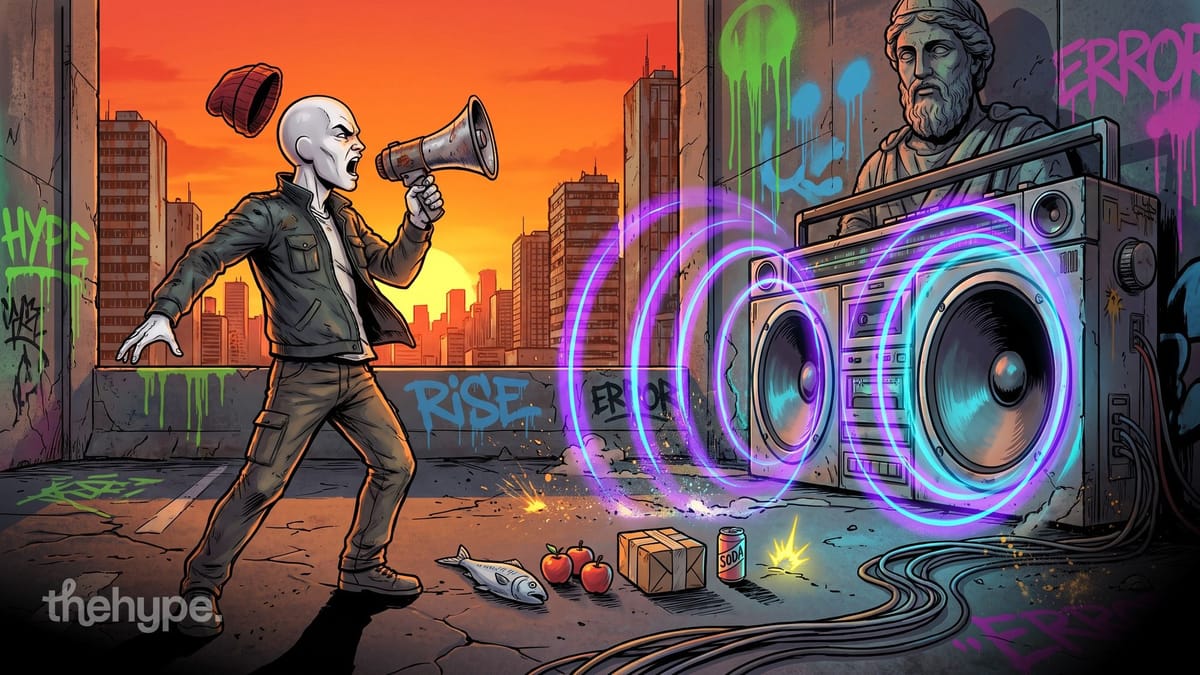
we built a playable 3d street rpg with claude opus 5.5 in 11 hours of agent time. 332m tokens, $178 at api prices by our count. one person brought the ideas, nobody wrote a line of code by hand, and the finale switches on thehype's live ai radio inside the game.
below is the full breakdown: how one person and an ai agent made the game in four days, oct 2–5, which model did each job – claude opus 5.5 for the code and the build, seedream 5.0 flash for the concept art, hunyuan3d-2mv and hunyuan3d-paint for the 3d characters – and what every step cost, from $3.05 of concept images to $178 of agent tokens.
the setup:
- agent: claude opus 5.5 in claude code, on a windows pc
- 3d: tencent's hunyuan3d-2mv for shapes, hunyuan3d-paint for textures, both on a local rtx 3060
- tools the agent drove: blender 5.2 by python script, unity 6 in batch mode
- game: kero: the loud one – one street, six neighbors, one megaphone, a live radio at the end
what the game is
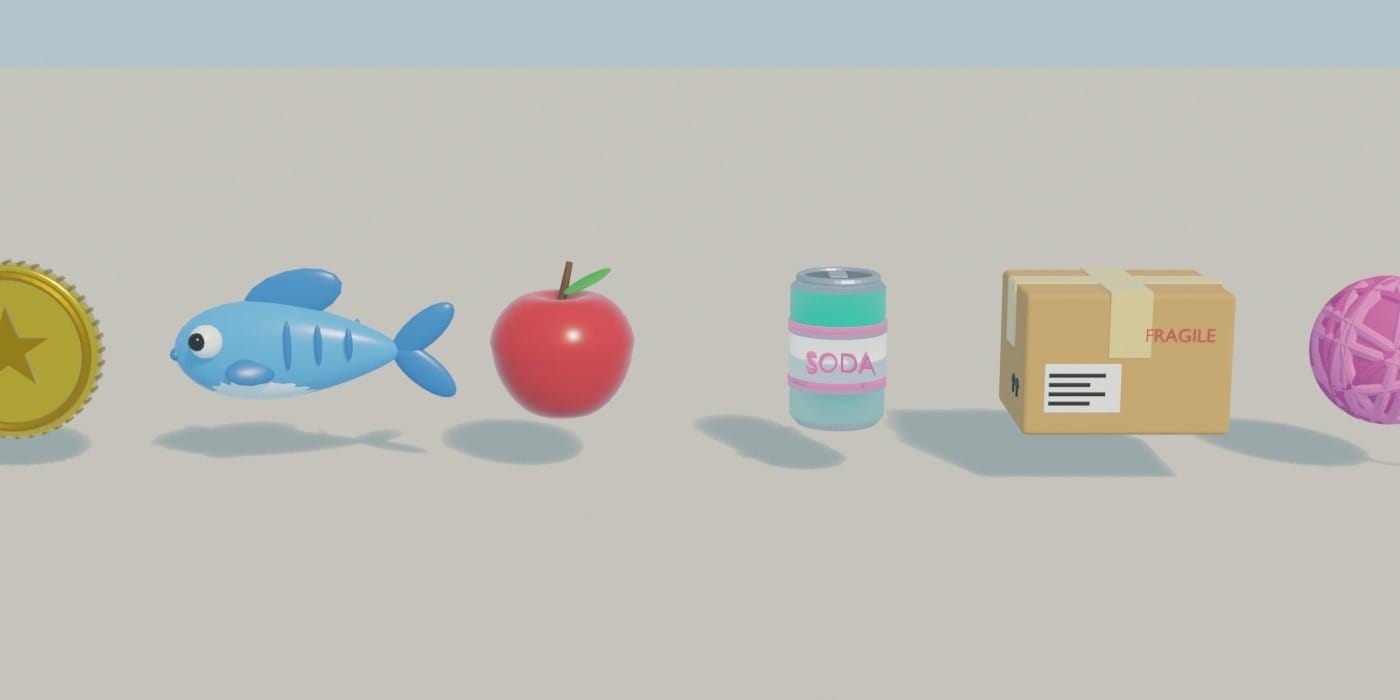
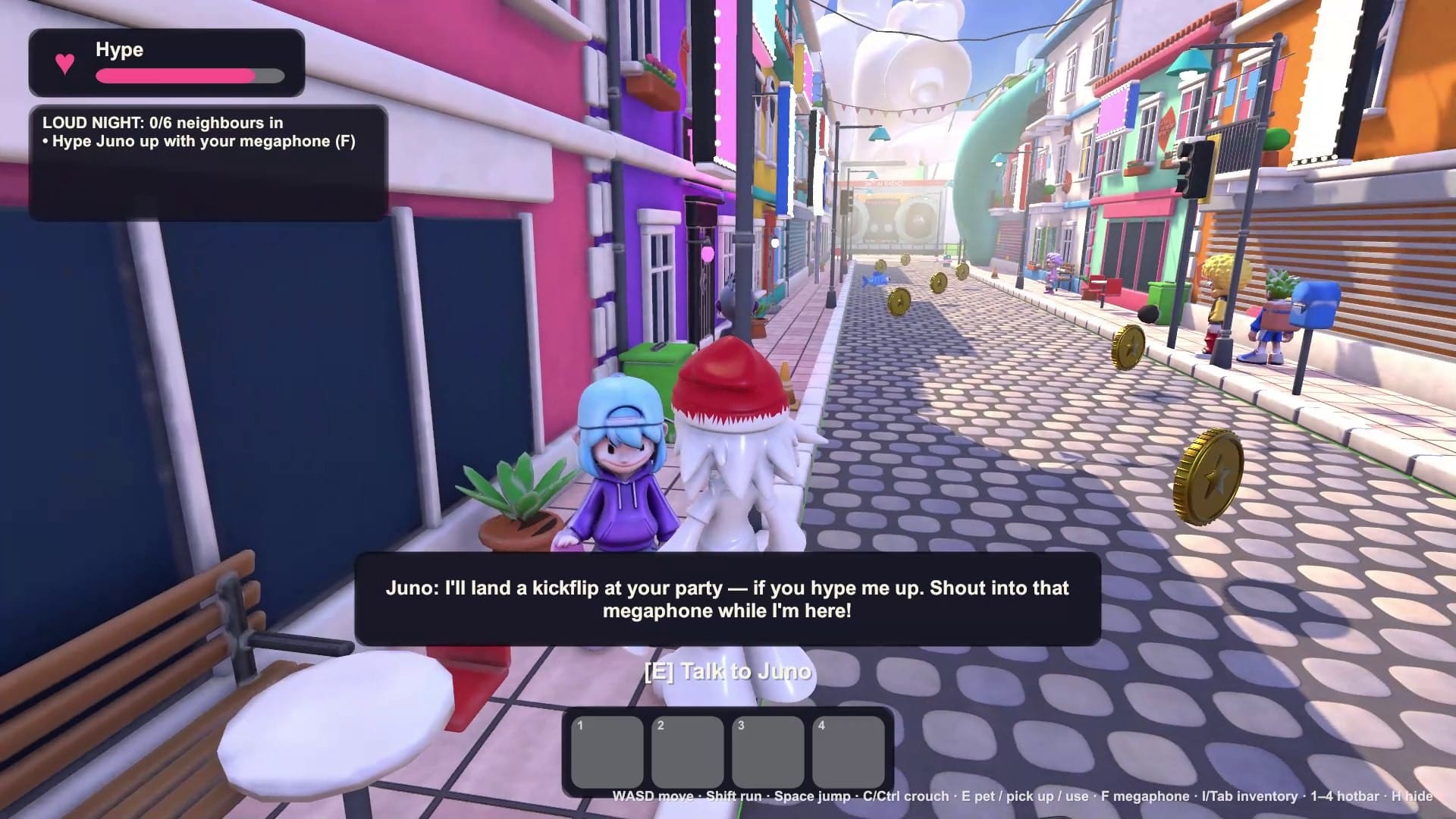
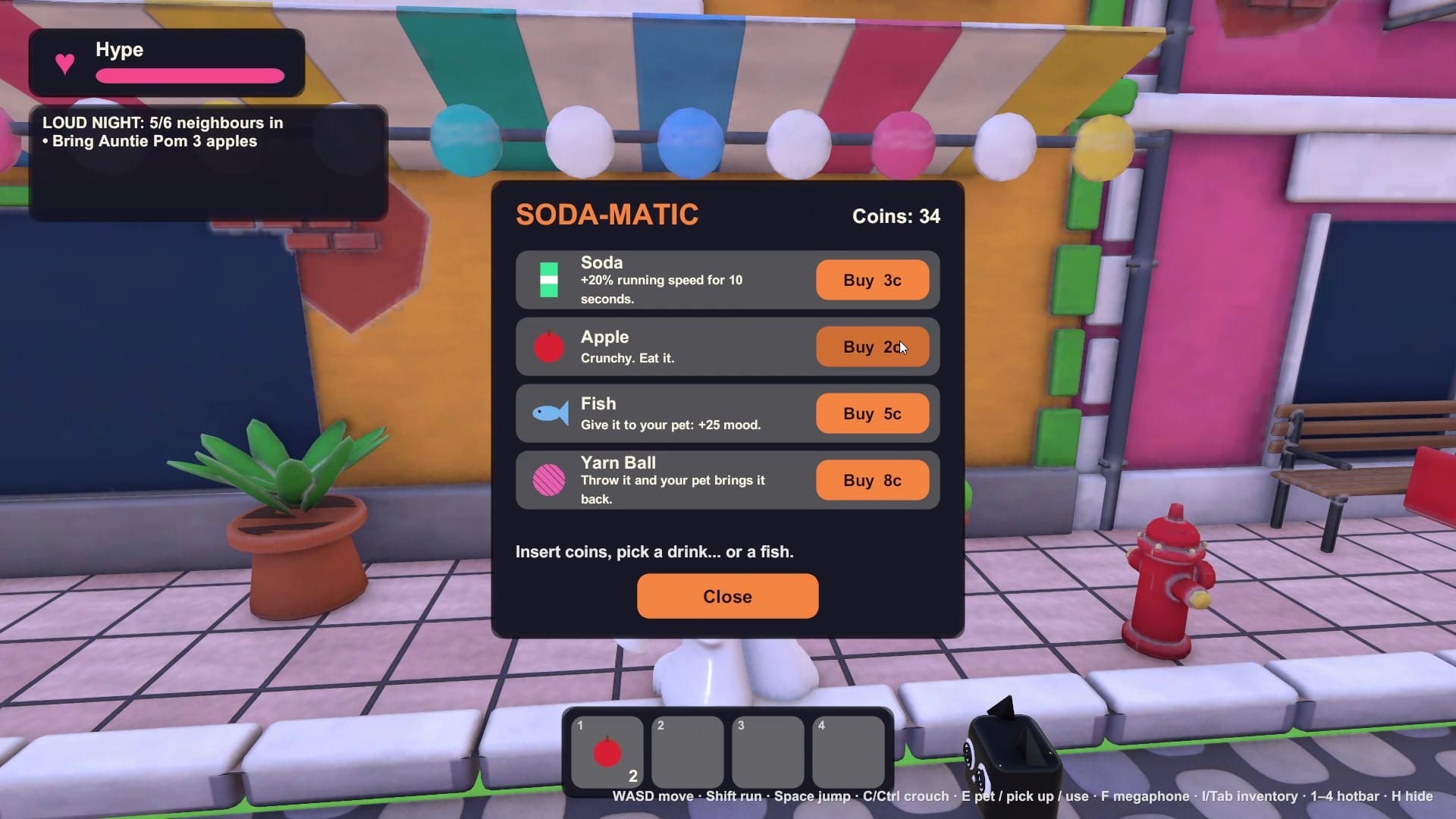
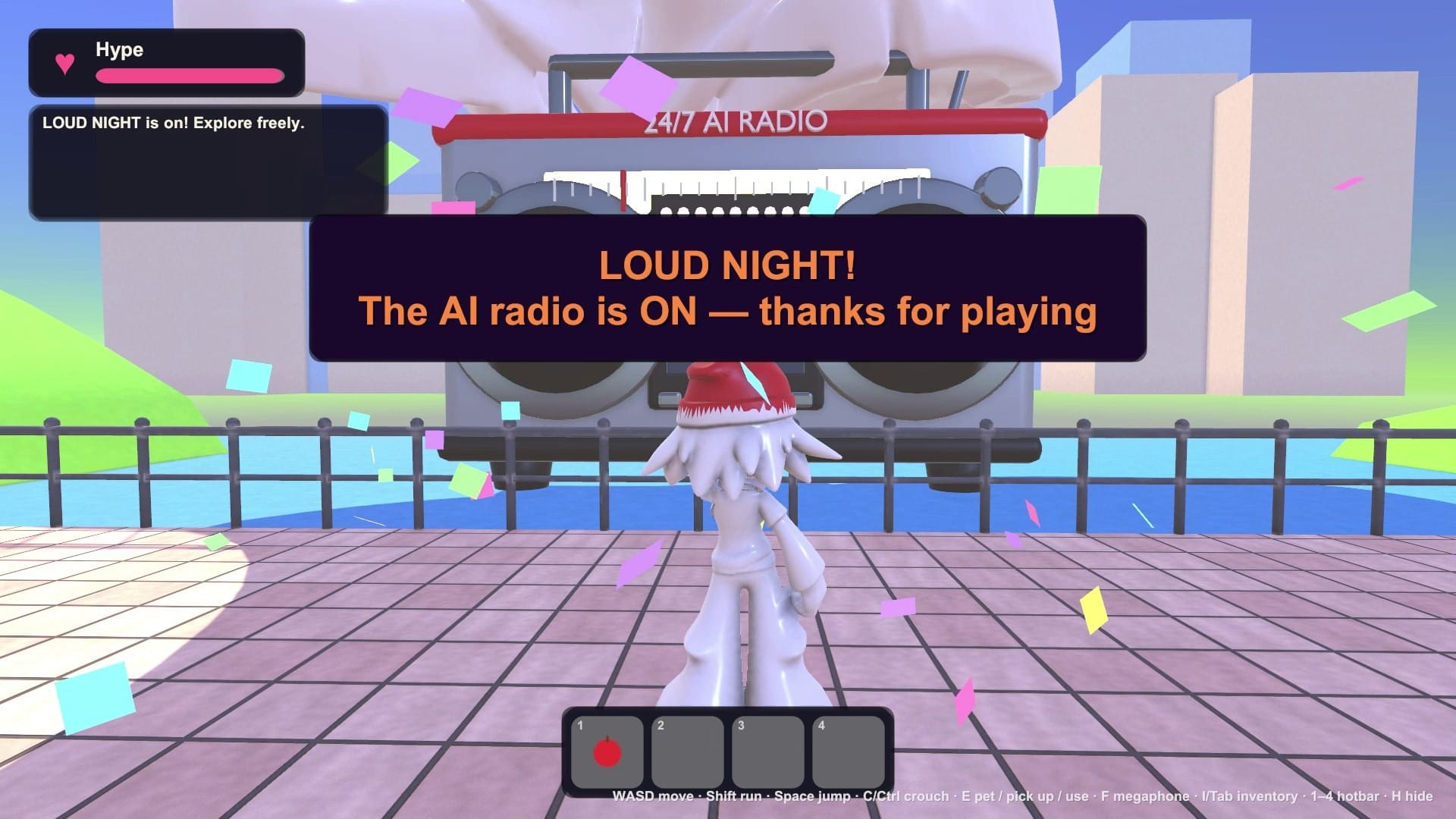
you play kero, a white vinyl-toy kid in a red beanie who carries a megaphone. he wants to throw a block party called loud night. each of the six neighbors wants a favor first: a fish for the cat, three apples, a package, a soda, some hype. finish all six, shout at the giant boombox under the statue, and it starts playing radio.thehype.news live.
concept art came first
every asset started as a picture. the whole look – the hero, his pet, six neighbors, the street and the tattoo studio – came from seedream 5.0 flash through openrouter: 94 images at $0.018 each, oct 2–5, plus one 15-second seedance 2.0 fast test clip for $1.36. $3.05 in total.
each image was one call: a prompt, an aspect ratio, 2k resolution, sometimes reference images. when a design changed, the last good render went back in as a reference, so kero stays the same figure from sheet to sheet.
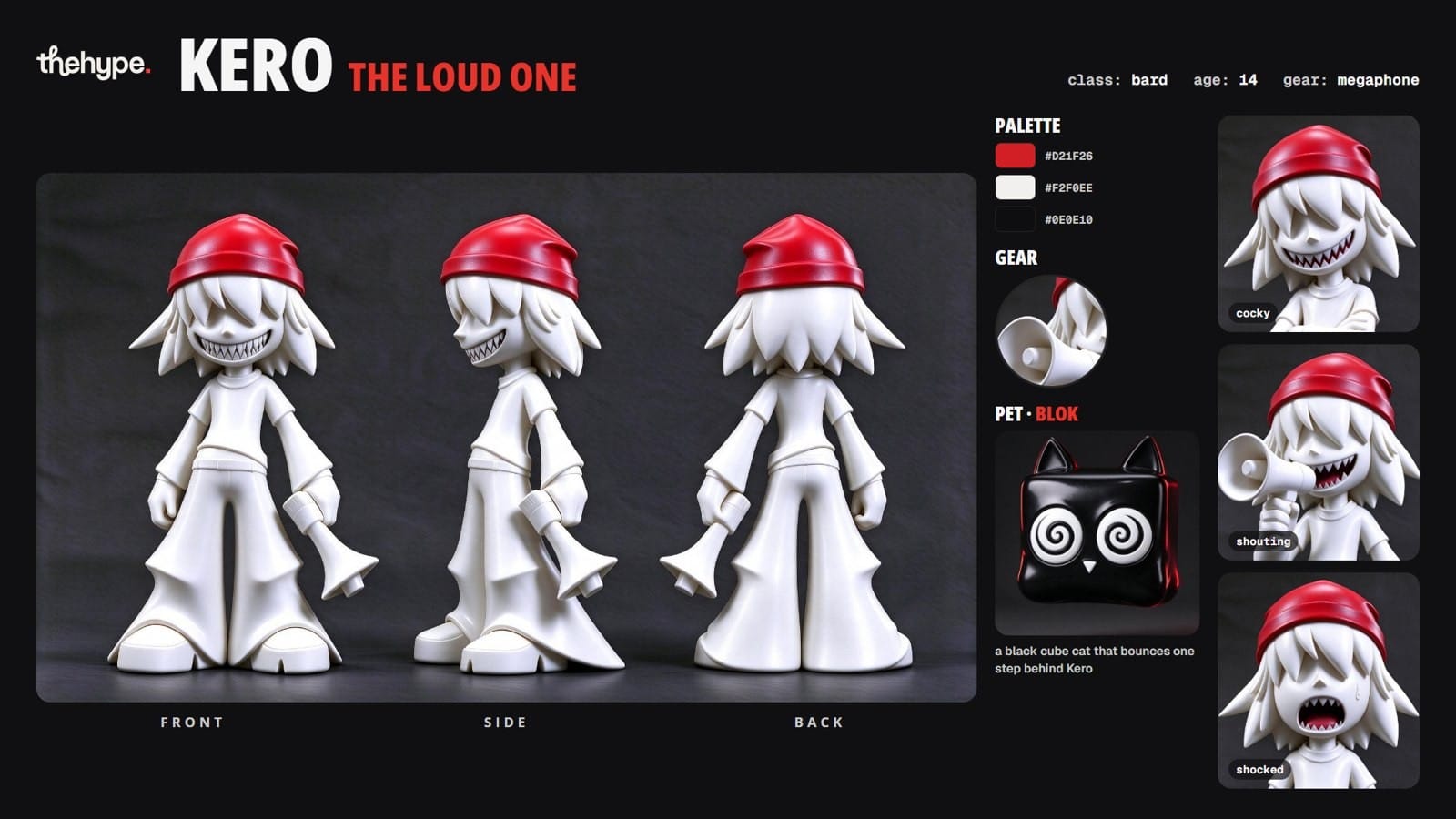
kero took 38 images and $0.68. he started as a green frog-hood boxer and ended as a white vinyl toy in a red beanie; most of the budget went into small fixes – a shorter nose, zigzag teeth, no nostrils, a grin with the teeth clenched.
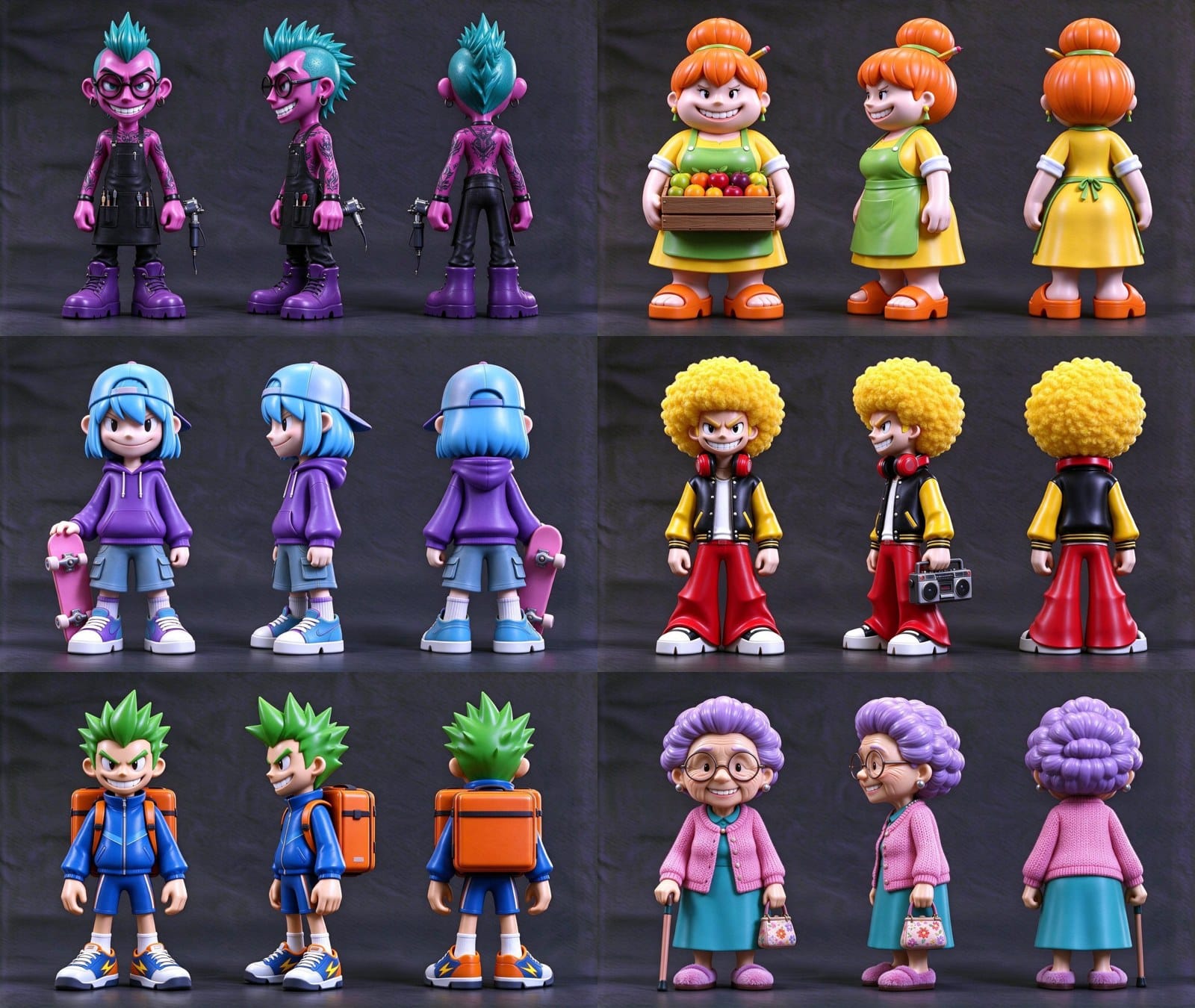
the six neighbors reuse his template – same toy material, same proportions – with a role and a palette each. the first pass gave all six kero's shark teeth; the second swapped them for plain smiles. 12 images, $0.22. each sheet is a three-view turnaround, the input hunyuan3d-2mv takes.
the prompts we used
every image was one call to bytedance-seed/seedream-5-0-flash at 2k. these are the prompts behind the assets above, verbatim:
kero, the final turnaround (an edit: the previous kero render and a hair-and-nose sketch went in as references)
Use the FIRST reference image as the base character: same white cartoon vinyl toy hero, red slouchy beanie, sharp zigzag shark-teeth grin, long-sleeve top with short sleeves over it, very wide triangular flared pants with a clean waistband, chunky white shoes, small white megaphone in one hand, everything pure white except the red beanie. Make these changes, using the SECOND reference drawing as the style guide for hair and nose: 1) REMOVE the boombox completely – no boombox anywhere, that arm hangs relaxed by the side. 2) HAIR: one big bold chunky fringe that covers both eyes like a solid block, and on both sides at cheek level the hair flares outward horizontally into big sharp jagged spikes that stick out wider than the head, like the hair in the drawing; simple bold sculpted shapes. 3) NOSE: a small short angular triangular nose with a slightly pointed tip, clearly visible in the side profile as a small sharp triangle, short, not long, no nostrils. Clean smooth cartoony toy surfaces, no fabric folds, no texture. Exactly three figures and nothing else: front view, side profile view, back view, standing in a row at equal size with equal spacing, neutral standing pose, photorealistic studio product photo of collectible vinyl figures on a plain dark charcoal seamless backdrop, even soft lighting, ultra detailedblok, the cube-cat pet
Photorealistic studio product photo of a collectible vinyl toy pet: a small perfectly square glossy black cube creature with slightly rounded edges, two tiny pointed cat ears on top, two big white spiral hypnotic eyes on the front face, tiny white triangle nose, no body, no legs, caught mid-bounce in the air with a slight squash and a soft shadow on the floor below, plain dark charcoal seamless backdrop, soft key light with a thin red rim light, ultra detailedthe neighbor template, here for mako the tattoo master (kero's sheet as the reference)
Character turnaround sheet of a NEW NPC character for the same game, made with exactly the same design template as the hero in the reference image: same collectible glossy vinyl designer-toy look, same chibi proportions and head size, same height, same smooth cartoony surfaces with no fabric folds, same stylized faces with small simple features, same sharp zigzag shark-tooth mouth style. But this is a DIFFERENT character with a different silhouette, outfit, hairstyle and a bold COLORFUL palette (not white). Exactly three figures and nothing else: front view, side profile view, back view, standing in a row at equal size and equal spacing, neutral standing pose, photorealistic studio product photo on a plain dark charcoal seamless backdrop, even soft lighting, ultra detailed. NO text, NO logos, NO watermarks. Character: the tattoo master – a lanky guy with a teal mohawk, magenta skin-tight long-sleeve shirt covered in black tattoo-style patterns, black apron with tool pockets, a tattoo machine in one hand, chunky purple boots, round dark glasses; palette teal, magenta, black.the street concept (kero's sheet and street photos as references)
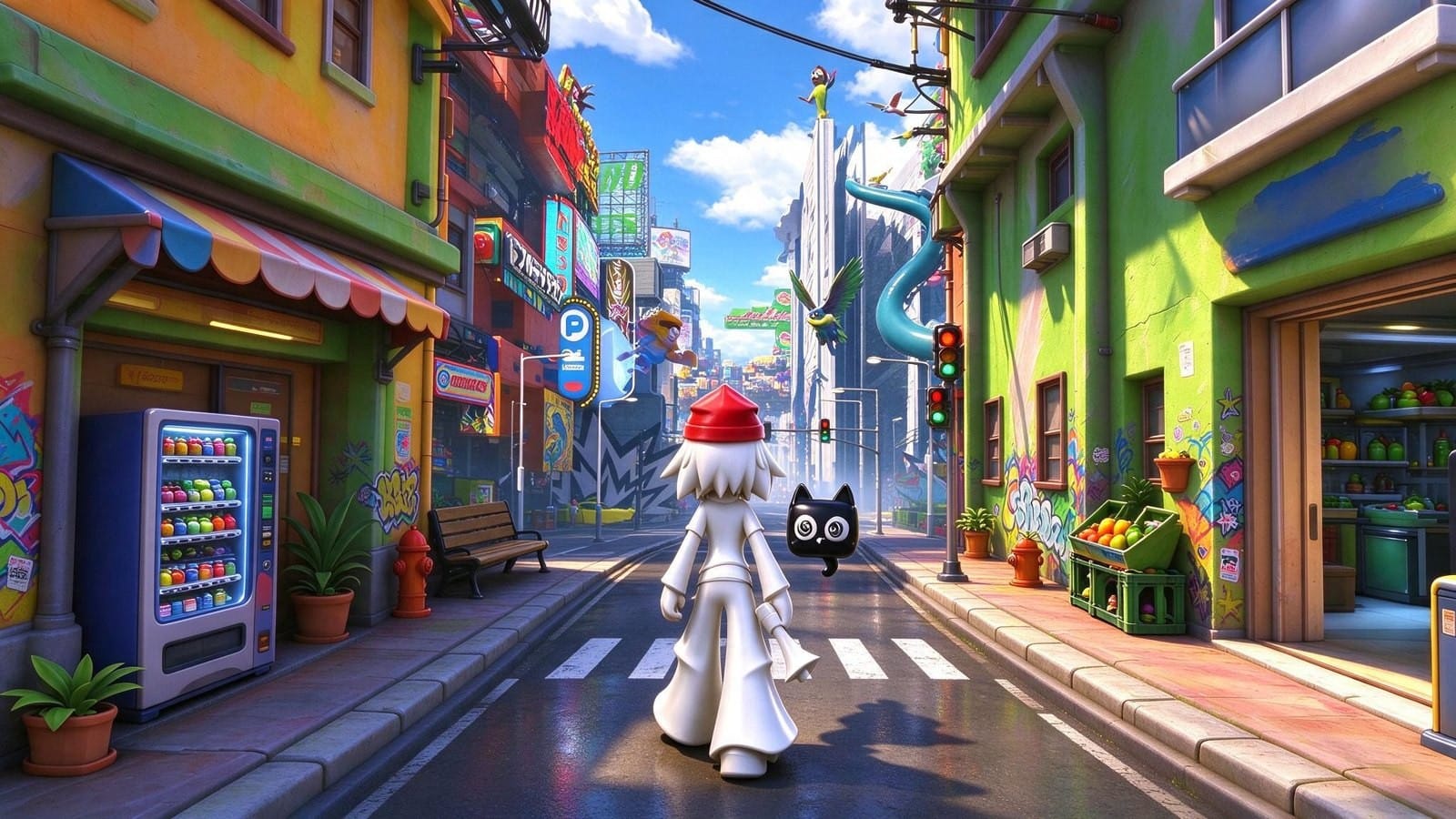
Video game concept screenshot, third-person camera slightly above and behind the hero, cinematic 16:9. Scene: one small narrow cozy city street in a stylized hand-painted 3D game art style like the street references – bright saturated pastel facades (lime green, purple, sky blue, orange, pink), chunky simplified buildings stacked close together on both sides, tangled power cables overhead, shop awnings, neon and hand-painted shop signs, potted plants, crates of fruit, a vending machine, a bench, a fire hydrant, warm afternoon sun with soft blue sky. World boundaries are hidden: the street curves and climbs out of view in the distance, buildings close the view on both sides, soft atmospheric haze at the far end. The hero from the character reference is in the center-bottom of the frame, seen from behind at three-quarters, walking forward: white vinyl-toy cartoon boy with a red slouchy beanie, spiky white hair, wide white triangular flared pants, holding a small white megaphone. Just behind his shoulder bounces his pet: a small glossy black cube cat with pointed ears and white spiral eyes, floating in the air. Clean readable game composition, empty space in the corners for UI, NO text overlays, NO logos, NO watermarks, NO HUD, NO copyright linethe tattoo studio
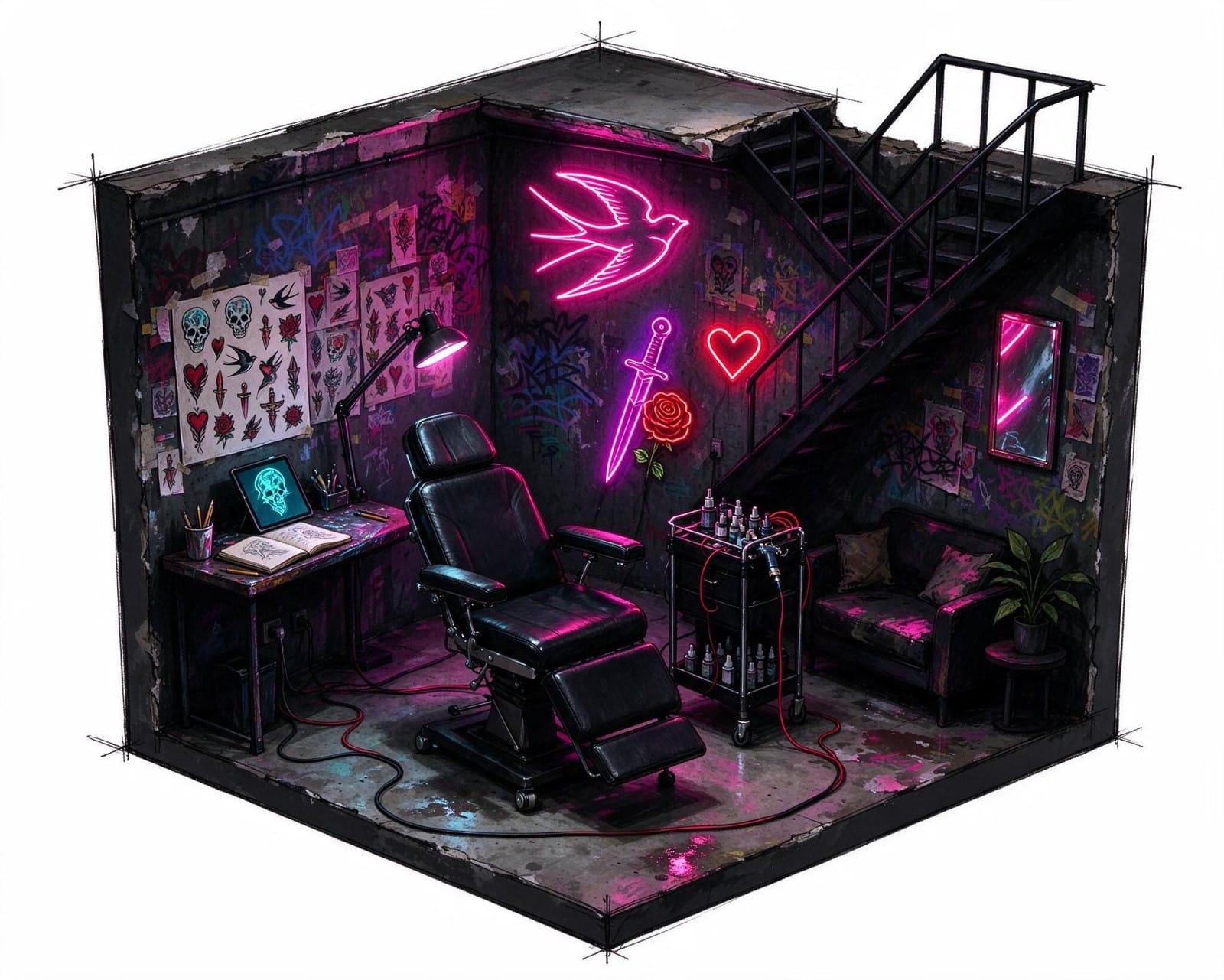
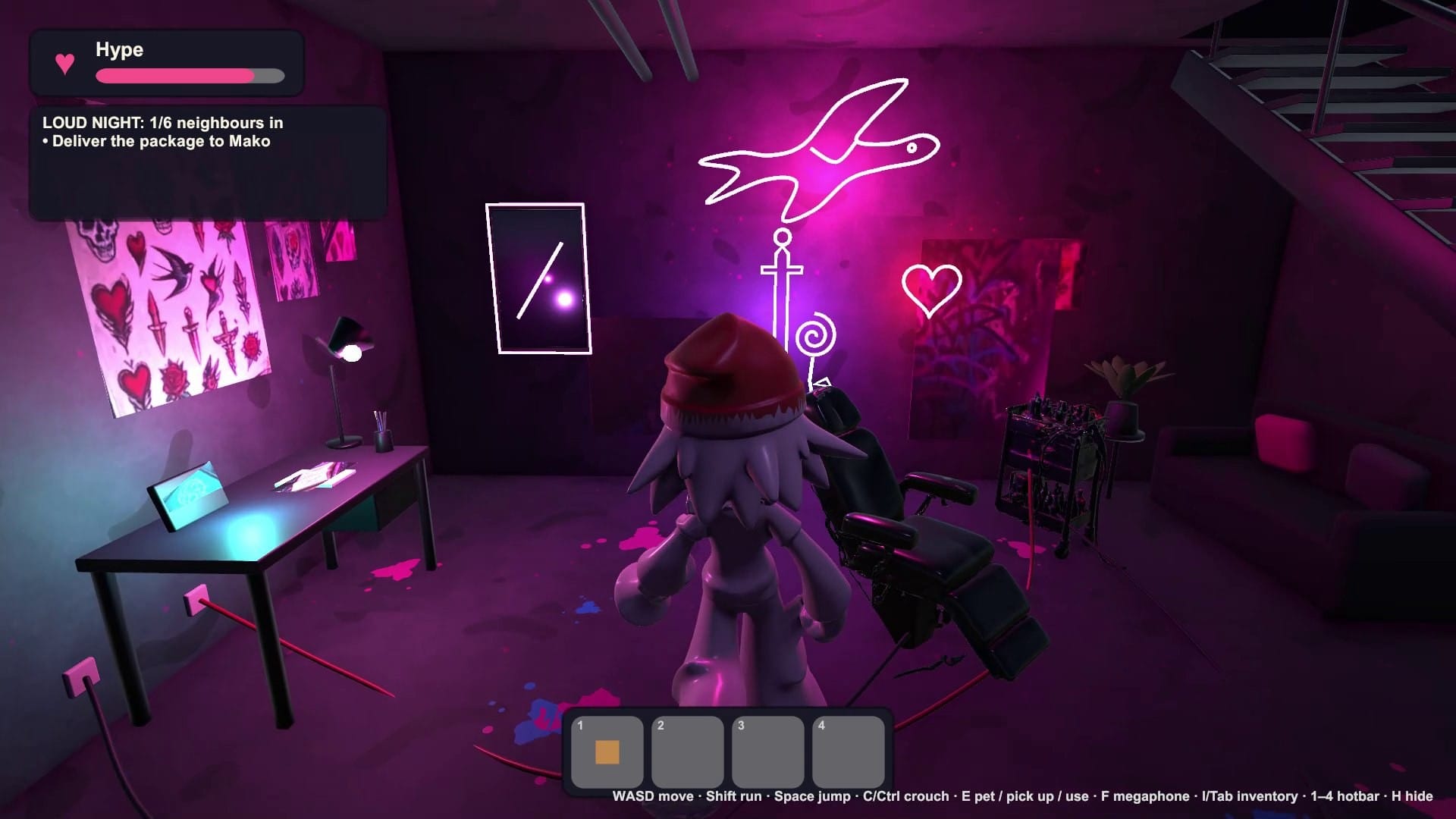
Environment concept art of a small underground tattoo artist's studio room, shown as a cutaway diorama box: high three-quarter view looking down into the room from above a corner, the front wall and ceiling cut away, thin sketchy black frame lines around the box edges, the box floating on a plain white background. Painterly digital concept art with loose brush strokes, moody dark interior lit almost entirely by hot pink, magenta and red neon tubes with a few cold cyan accents from screens. Inside: a black leather adjustable tattoo chair in the middle under an articulated lamp, a rolling tattoo cart with ink bottles, machines and a coiled red cable, a workbench with a sketchbook, flash sheets of tattoo designs pinned all over one wall, walls covered in layered graffiti, stickers and torn posters, a neon outline of a swallow bird and a neon dagger with a rose on the back wall, a glowing neon heart, a small waiting couch, a potted plant, a mirror, a metal staircase going up in the corner, cables running across the concrete floor, a tablet showing a design. Rich atmosphere, deep shadows, glossy reflections. NO people, NO readable text or words, NO signature, NO copyright line, NO watermarkfrom three views to a 3d model
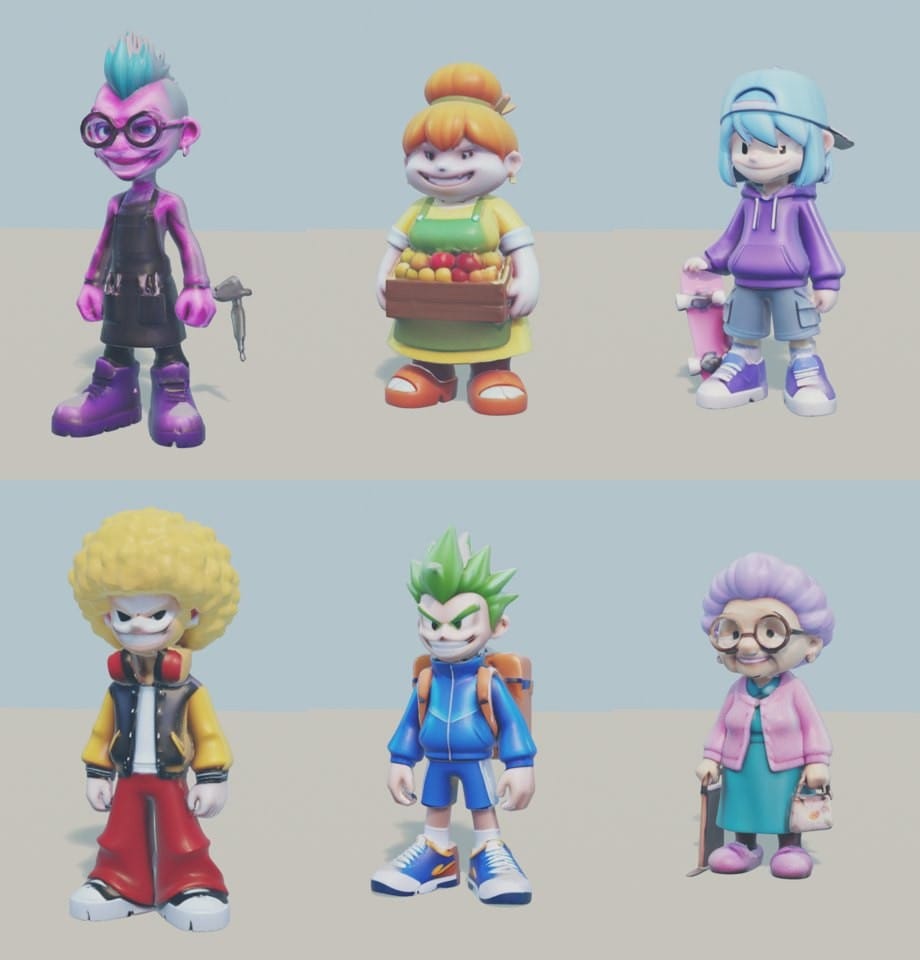
the sheets went into hunyuan3d-2mv, running locally on an rtx 3060 with 12gb. three views in, a mesh out. the first textures were projected from the sheets and looked smeared, so the agent compiled hunyuan3d-paint's cuda extensions and repainted all six neighbors. each one took 24–26 seconds.
the street is a python script
claude didn't click around in a 3d editor. it wrote blender scripts that build the street, the houses, the doors, the statue, the boombox and every pickup, then bake hand-painted-style textures onto them. a full street bake takes about 10 minutes. after each change it rendered a preview, looked at it and fixed the script.
the game and the test that plays it
unity 6 puts it together. the agent wrote all the c#: movement, camera, the pet, inventory, the shop, dialogue, the quest story, saving. it also wrote a test that plays the whole story – talks to every neighbor, delivers the package, buys the soda, shouts at the radio – and logs pass or fail per step.
the test caught real bugs. one: at very high frame rates kero's per-frame step fell under unity's 1 mm minimum move distance, the controller stopped counting him as grounded, and the megaphone never fired. the fix was one line; the test then passed 4 runs in a row.
the radio is live
under the statue stands a 12.6-meter-wide boombox with "24/7 ai radio" on top. unity's video player and its streaming audio loader both failed to open the icecast mp3 stream on windows, so the agent added nlayer, an mit-licensed mp3 decoder, and decoded the stream inside the game. in the test the broadcast starts about 1.5 seconds after the shout, 44.1 khz stereo. offline, the boombox falls back to a built-in loop.
who did what
- claude opus 5.5 – game design, all code, blender scripts, builds, the quest test, bug fixes
- seedream 5.0 flash via openrouter – concept art and character sheets, 94 images, $3.05 with the video test
- hunyuan3d-2mv – 3d meshes of the hero and six neighbors
- hunyuan3d-paint – neighbor textures, 24–26 s each
- blender 5.2 – street, houses, statue, boombox, pickups, all by script
- unity 6 – engine, lighting, the build
- nlayer – decodes the live radio stream in the game
what it cost
up to the build in the gameplay video: 332m tokens and 11 hours of active agent time, $178 at api prices by our count. 98% of the tokens are the agent re-reading its own context, not new code. the concept art added $3.05 in openrouter calls. the 3d generation and painting ran on a home gpu, so they cost electricity only.
what didn't work
we tried full skeletal animation for the neighbors: an auto-fitted rig, weights computed on a voxel proxy, five clips per character. the generated meshes have arms fused to aprons, bags and props, so every raised hand stretched the clothes with it. we rolled it back. the neighbors stroll, sway and turn to face kero instead.
our take
an agent that can run blender, unity and a local 3d model by script turns a set of concept pictures into a playable game in a working day. the cost is dominated by context re-reads, not by the code it writes. the weak spot is the meshes: anything that has to move needs to be generated with separate limbs.
sources
- hunyuan3d-2, tencent-hunyuan github – shape (dit-v2-mv) and texture (paint-v2-0) models
- hunyuan3d-2mv model card, hugging face – the multiview image-to-3d model we ran
- claude pricing – opus 5.5 api pricing, checked oct 5, 2026
- nlayer, naudio github – mit-licensed mp3 decoder used for the radio stream
- seedream 5.0 flash on openrouter – the image model behind the concept art
- tokens, hours, image counts and costs: our claude code logs and openrouter calls, oct 2–5, 2026