Felix Laurent

Amazon and Meta are negotiating a deal that would let Meta's Muse AI agent shop on Amazon again, Fortune reported on November 25, 2026. Amazon has blocked the agent from its store since September. According to people familiar with the talks, the two sides have met several times, and advertising and search results are the main open issues.
The talks are described as fluid, and it is unclear whether or when a deal will come. Any agreement would likely need sign-off from both CEOs, Andy Jassy and Mark Zuckerberg. Meta and Amazon declined to comment. If a deal happens, Muse would be the first major outside AI agent known to shop on Amazon.com with the company's consent.
Why Amazon blocked Muse
Meta launched Muse in the US on September 8 as a personal agent that carries out tasks for users. It reads email, manages calendars, books tables and shops. When a service has no public API, Muse opens it in its own browser and acts the way a person would.
Amazon cut it off less than two weeks later. From the night of September 20, Muse users who tried to shop on Amazon saw a pop-up, GeekWire reported. It said that "continued access by an unauthorized AI agent" breaks Amazon's Conditions of Use. Amazon said it had first asked Meta to remove Amazon from Muse voluntarily.
The company gave several reasons. Meta never told Amazon that Muse would use its store. The agent does not identify itself while it browses. Amazon also said Muse appears to capture and store customer credentials, and that it can reach account pages and order history when a user asks. At launch, Muse "has no visibility into people's passwords or payment methods," Meta said.
The block came without a lawsuit, and the legal background explains why.
The Perplexity case behind the block
Amazon has tried for a year to keep outside agents off its site. It moved against shopping agents from Google and OpenAI, and in November 2025 it sued Perplexity over its Comet browser. We covered that case in our piece on how sites fight AI agents.
Amazon won a preliminary injunction against Perplexity in March 2026. On August 4, the Ninth Circuit lifted it. The court ruled that under federal anti-hacking law, the user, not the AI company, is the one accessing Amazon's computers. Amazon's request for a rehearing was denied on September 10.
That ruling left Amazon one tool: its terms of service. The Muse pop-up does not accuse Meta of hacking. It cites the Conditions of Use that every Amazon customer has accepted. A deal would let both sides avoid testing that argument in court.
The bigger stakes are commercial.
What Amazon and Meta are negotiating
Advertising is the core of the dispute. Amazon's ad business is worth $68.6 billion a year, nearly 10% of its revenue, according to Fortune. Those ads depend on shoppers browsing Amazon's pages and seeing sponsored products. An agent that searches and buys for the user can skip all of them.
Amazon also worries about the quality of the search results Muse would show. Executives fear that agents like Muse will weaken Amazon's direct link with its customers, people familiar with the matter told Fortune. How Muse would technically connect to the store is another open question.
Jassy has sent mixed signals. In October, without naming Muse, he said outside shopping agents are "still not great, nor more convenient" than shopping at a retailer directly. This month, at a Semafor conference, he said Amazon had not ruled out letting them in. They would have to offer "a fair exchange of value," he said.
Meta has its own reasons to want a deal, and Muse's numbers show why.
How big Muse has become
Muse is Meta's biggest consumer AI hit so far. More than 10 million people in the US and Canada set up an agent in its first six weeks, Zuckerberg said in October. Shopping is its most common use, at over 25% of weekly active users. The average purchase is above $200, as we reported in our story on Muse shopping.
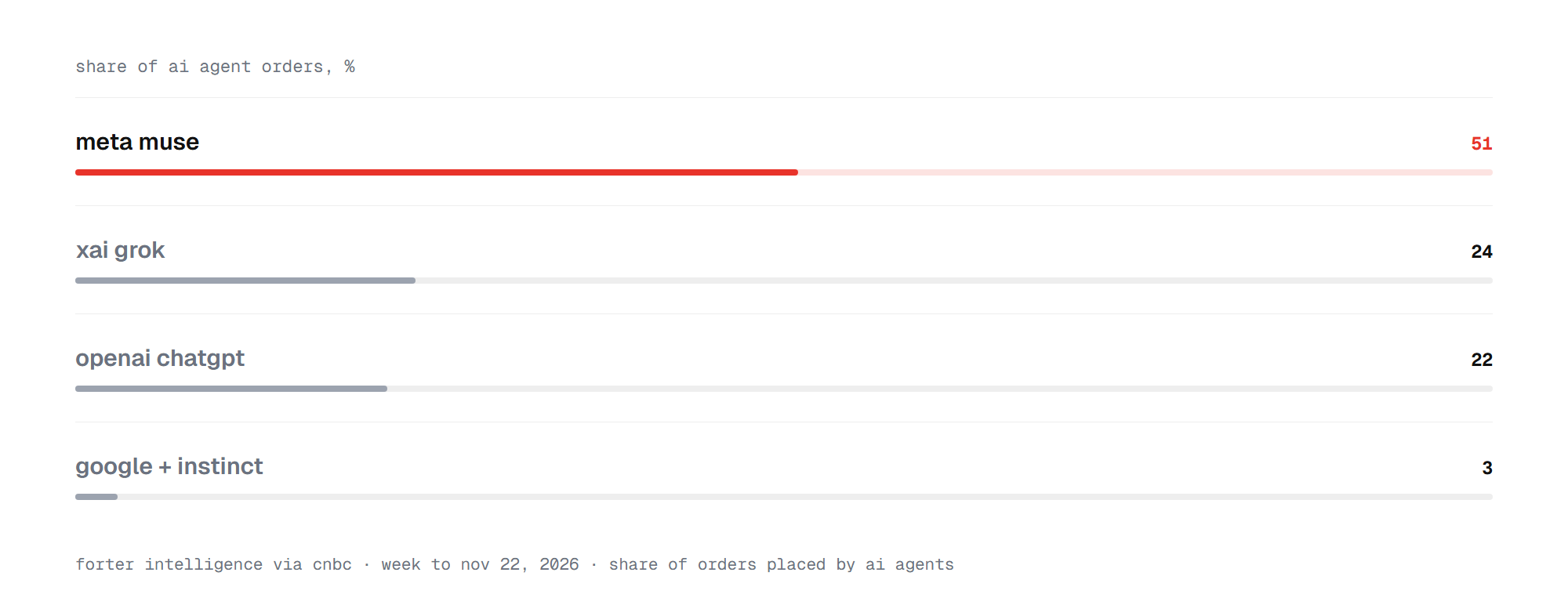
Muse also leads the young market for agent shopping. It placed 51% of all orders made by AI agents in the week to November 22, according to Forter data cited by CNBC. xAI's Grok had 24% and ChatGPT 22%.
Muse carries no ads yet. Meta plans to earn a small fee on the transactions the agent completes, paid by businesses. It already lists Amazon rivals Shopify, Walmart and Best Buy as partners. People familiar with Meta's plans told CNBC that ads in Muse will likely come in time, but Meta is under no pressure to add them.
The two companies are not strangers in commerce.
Amazon and Meta are already partners
Since 2023, Facebook and Instagram users can buy Amazon products without leaving Meta's apps. Meta earns from the ads, and Amazon earns from the sale. In April 2026, Meta also signed a multibillion-dollar deal to run AI workloads on Amazon's Graviton chips.
Amazon has its own agent to protect. Alexa for Shopping has been used by more than 400 million customers in the past year, Jassy said. Letting Muse in would mean competing with Meta's agent inside its own store.
The timing adds pressure. The talks come just before Black Friday and Cyber Monday. Roughly half of holiday shoppers plan to use AI in some way this year, a National Retail Federation survey found.
Will Amazon let Muse back in
Probably, but on Amazon's terms. Muse has too many users to ignore, and the Perplexity ruling weakened Amazon's legal hand against agents. Jassy's "fair exchange of value" points to a paid arrangement that protects Amazon's ad income. That could mean sponsored results inside Muse or a share of revenue.
For Meta, access to the largest US online store would make Muse far more useful. For the rest of the industry, the deal would set the first price for an AI agent to shop on Amazon. OpenAI, Google and xAI would likely face the same terms. Until the two CEOs sign, though, Muse users still cannot buy on Amazon.
Sources
- TechCrunch on X – November 25, 2026
- Exclusive: Meta and Amazon discuss ending Muse shopping bot blockade, Fortune – November 25, 2026
- Amazon and Meta reportedly in talks to lift blockade on AI agent Muse, TechCrunch – November 25, 2026
- Amazon and Meta in talks to end the Muse blockade, The Next Web – November 25, 2026
- Amazon blocks Meta's Muse AI assistant, GeekWire – September 20, 2026
- Amazon CEO says shopping agents like Meta's Muse 'not great', Fortune – October 29, 2026