Felix Laurent

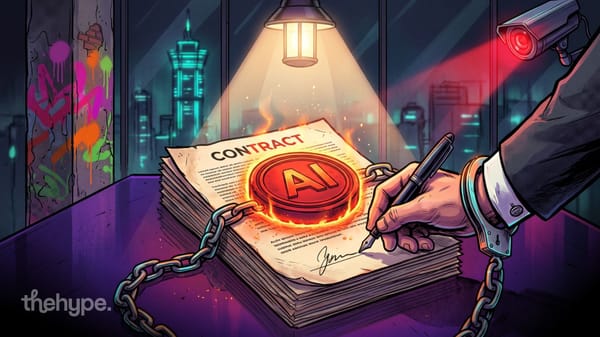
Dell, HPE, Lenovo and Supermicro are asking buyers to pay up to 45% more for Nvidia-powered AI servers, months after the contracts were signed. The Financial Times reported the price hikes on November 22, 2026. The server makers blame soaring costs for memory and circuit boards, as demand for AI computing power keeps outrunning supply.
The increases hit buyers that thought their prices were fixed. One of them, the trading firm XTX, is already fighting Dell in court.
How much AI server prices are rising
According to the FT, the four vendors want 25% to 45% more at delivery than the prices agreed in signed contracts. Buyers named in the reporting include large financial trading firms that run their own GPU clusters. The price changes come between order and delivery, often months after the deal was closed.
The vendors point to two shortages. Memory is the bigger one. AI data centers buy huge amounts of DRAM and high-bandwidth memory, and chipmakers such as Samsung and SK Hynix have shifted production toward AI products. Prices for ordinary server memory have risen sharply as a result. AI labs now negotiate for memory directly, as Sam Altman's meeting with Samsung showed. Circuit boards are the second bottleneck, as board makers struggle to keep up with AI server orders.
Not every part of a server is affected the same way. One source cited by the FT said prices for GPU servers rose at least 20% to 30%, while prices for CPU nodes tripled or more. CPU servers likely feel the crunch harder because ordinary memory makes up a bigger share of their cost.
HPE and Supermicro declined to comment to the FT. Dell and Lenovo did not respond.
HPE wrote repricing into its contracts
HPE made the practice official earlier this year. CEO Antonio Neri spoke about it on the earnings call in March 2026. He said the company had "amended our quoting terms with a right to reprice existing orders for commodity cost increases between quoting and shipment." He said memory and storage prices would stay elevated well into 2027.
The change drew pushback, and HPE has since softened it. HPE now guarantees price quotes for compute and storage deals below $1 million net. SDxCentral reported this, citing a CRN interview with HPE executive Simon Ewington. The guarantee covers most of HPE's transactions, but large AI server orders usually run well above that line.
Other suppliers have taken similar steps. Cisco revised its contract terms to account for changing component prices, and Extreme Networks raised prices by 7%, citing memory and supply-chain pressure.
The most detailed example so far comes from an Irish court.
XTX vs Dell: a $549 million test case
XTX Finland, part of the algorithmic trading group XTX, sued Dell Products in Ireland's High Court in June 2026. The case concerns 1,680 servers for a 15,000-square-meter data center. XTX says the two sides agreed a fixed price of about $549 million when the deal was signed in November 2025. It also paid an extra $5 million on top of the quote to avoid exposure to future price increases.
According to XTX, delivery slipped by two months. Dell then said that rising component costs meant XTX would have to pay another $62 million to $70 million, or about 11% to 13% more. Some $70 million was placed in escrow while the companies argue.
Dell's court filings say it was "not willing to lose tens of millions of dollars" on the deal. It said it could not deliver on the terms it thought valid when the agreement was signed. Dell also argued that other customers facing price increases had tried other suppliers and then come back and accepted the adjustments. XTX director Cameron Scott Hill said in an affidavit that the company was shocked, and that Dell had said it was "embarrassed" by the situation. The judge admitted the case to the fast-track Commercial Court and adjourned it to December.
The XTX dispute shows what the FT's wider reporting suggests: fixed prices in AI hardware deals are no longer fixed.
What higher AI server prices mean for buyers
Big cloud providers can absorb a 25% to 45% increase or negotiate their way out of it. Smaller buyers cannot. Trading firms, neoclouds and companies building their own AI clusters often sign server deals long before delivery and plan their budgets around the agreed price. If that price can move at delivery, every AI infrastructure plan carries a new risk that sits outside the buyer's control.
The memory shortage behind the increases is not expected to ease before 2027. Until then, buyers will need price locks they can enforce, larger budget buffers or both. The XTX ruling in Dublin could show how much a signed price is still worth.
Sources
- Tech suppliers hike AI server prices up to 45% months after deals are signed, Financial Times – November 22, 2026
- Dell, HPE, Lenovo, Supermicro repricing signed AI server deals, AI Weekly – November 22, 2026
- Dell sued over $70m price increase for data centre servers, Irish Examiner – June 15, 2026
- HPE to guarantee all compute and storage price quotes below $1M, SDxCentral
- HPE Q1 2026 earnings call transcript, HPE – March 2026
- FT on X – November 22, 2026