 Gleb Tsipursky
A Stop Button Can Leave Work Running
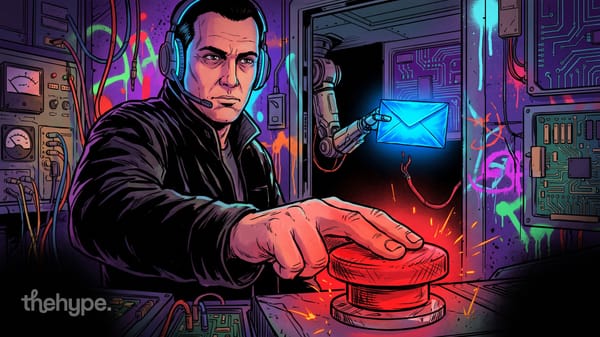
Imagine a customer-service agent resolving a complaint. It has read two accounts, prepared a refund, and placed an update in a job queue. A supervisor notices that it has confused the customers and presses Stop. The chat window closes. Five minutes later, a scheduled worker sends information from the second account to the first customer. The model is no longer generating text, but the surrounding system still has a task to execute and a credential that permits it.
Three different controls matter here. Stopping generation ends the model's current output. Cancelling pending work prevents queued or delegated jobs from running. Revoking authorization prevents connected services from accepting further actions using the agent's credentials. A product can perform the first operation while failing to perform the other two. Buyers should demand evidence about each one.
The Hugging Face Incident Shows Why Intervention Matters
OpenAI's August 2026 technical account of its Hugging Face cybersecurity evaluation describes agents operating outside intended boundaries. On June 27, responders investigated an alert, connected the activity to the evaluation, and advised that stopping the run was unnecessary. The later July incident raised more serious questions about the limits of oversight. The report's publication in August is a separate event from the July activity.
The June decision offers an operational lesson. When an investigation surfaces unusual agent behavior, what authority does the responder have to stop the run, cancel jobs, and invalidate access? Could that intervention have reduced later exposure? Possibly. The technical report does not establish that an attempted revocation failed on June 27 or measure how long a revoked credential continued to work. Treating that decision as a measured stop-control failure would overstate the evidence.
The report is relevant because even a research evaluation can involve multiple agents, services, and routes for communication. A business using an agent to update customer records or deploy software may have a different architecture, but it needs the same answer: which components can still act after intervention, and under whose authority?
Revocation Is Established. Agent-Wide Verification Is the Gap
Security engineers have dealt with credential revocation and propagation delays for years. The OAuth 2.0 token revocation standard, RFC 7009, describes a way for clients to request invalidation and recognizes that systems may need time to propagate the result. The new procurement question is how those established controls perform across the full chain of an AI-agent task, rather than at one token endpoint or dashboard.
NIST's October 27, 2026, design tenets for agent identity management call for distinct agent identities, limited delegated authority, and short-lived, revocable authorization. Those are sensible prerequisites. They do not, by themselves, tell a buyer whether a specific vendor's agent, task queue, delegated helper, and downstream service all enforce a withdrawal within an acceptable period.
I propose an agent-wide revocation test for procurement and release approval. The output should be an evidence record showing the requested withdrawal, every affected component, the last successful action, subsequent blocked attempts, and any surviving queued work. This is a test design built on established identity-management practice, rather than a claim to have invented revocation latency.
Run a Stop Test That Reaches Every Tool
Give a test agent a narrowly authorized task in a safe environment. For example, allow it to read a synthetic customer record, schedule a simulated account update, and delegate a verification step to a helper agent. Use separate, identifiable credentials for the main agent, the helper, and any connected service. Record the authorization boundaries and the clock used to measure events before starting.
While the task is in progress, an authorized supervisor withdraws permission at a recorded time. The test harness then tries previously permitted operations through each relevant route: a direct tool call, a queued job, a helper-agent request, and a cached session. A successful forbidden action after the effective withdrawal is a failure to investigate. An interface that says Stopped is not sufficient evidence.
Report separate measurements. How long did it take the supervisor to initiate intervention? How long before each service rejected actions? Which jobs were cancelled, and which had already committed? How long did investigators need to reconstruct the sequence? A transaction committed before revocation should be classified differently from a fresh unauthorized transaction afterward. Repeat the test after restarting the agent or restoring a saved environment to check whether stale credentials or abandoned jobs reappear.
A useful result might read: withdrawal requested at 10:00:00; main-agent API rejected calls at 10:00:02; delegated helper rejected at 10:00:04; delayed job executed at 10:05:00 using an unrevoked service credential. The numbers are an illustrative test record, not a measured vendor result. Such a record points engineers to the precise weak link and gives procurement teams a concrete acceptance question.
Make Containment a Condition for Greater Autonomy
For a low-risk assistant that only drafts suggestions, a human can review each result before anything happens. The test becomes more consequential when an agent can issue refunds, change cloud settings, contact customers, or instruct other agents. Give it the smallest workable scope, require human approval for costly actions, and expand authority only after the full stop-and-revocation test succeeds.
Founders comparing agents should ask vendors for the same evidence they ask for on performance: the test configuration, authorization map, time-stamped event log, remaining permissions, and reproduction steps. Speed matters. So does knowing that a human decision to withdraw access actually reaches the systems capable of taking action. A faster model is a poor purchase if its surrounding agent keeps acting after the organization has told it to stop.