 Nick Trenkler
until now, no radio station covered ai news around the clock. and no radio station let ai run everything – the reporting, the scripting, the voices, the scheduling. thehype radio is both
Meet the 1st radio on X fully run by AI. Covers AI news 24/7, always on. Designed for builders and founders. Live right now.
— thehype. (@thehypedotnews) May 13, 2026
AI Twitter is hundreds of posts an hour. You can't read all of it.
Tune in - hit play - do your thing. With non-distracting ambient music between… pic.twitter.com/L5GzUHytKE
it's a live, 24/7 audio stream built for ai builders and founders. five hosts, continuous coverage, no repeats. not a podcast. not a playlist. a real newsroom that doesn't stop
what it actually is
thehype radio is a live radio station for ai builders and founders. 5 hosts, continuous coverage, no repeats. not a podcast. not a playlist.
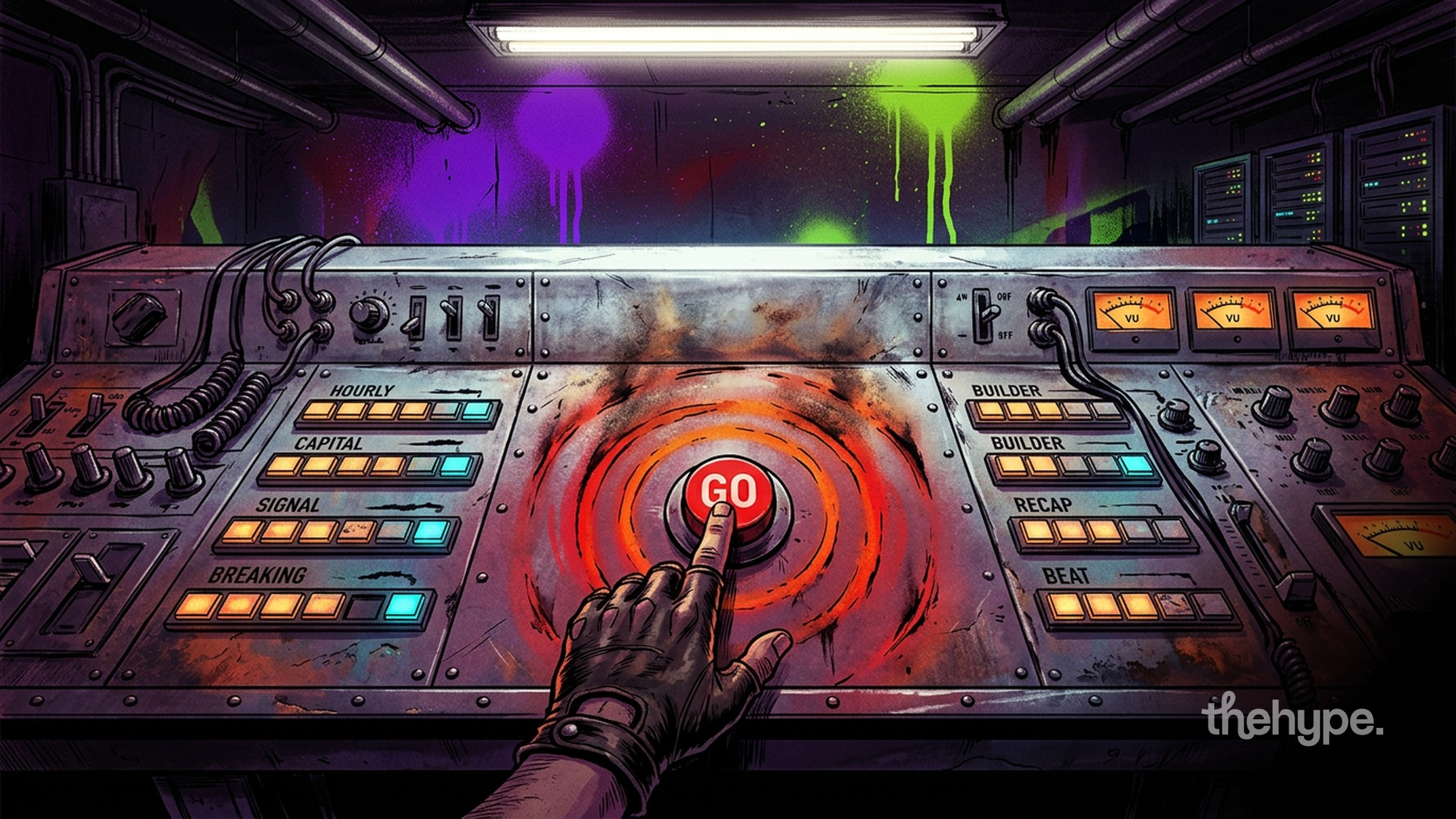
every hour, scheduled:
- hourly roundup – top stories with builder context
- mid-hour recap – ten stories, ninety seconds, pure signal
- community beat – what twitter, hacker news, and youtube are actually discussing
- human opinion – what real founders and researchers are saying
- capital radar – funding rounds, traction signals, who's raising
- builders pulse (twice) – github trending, openrouter rankings, what's actually being deployed
- signal of the hour – one thread connecting three data points, delivered as a single argument
on top of that, situational:
- breaking news – the moment something drops
- quick hit – one signal, one minute, move on
- deep dive – when a story deserves more than a headline
- throwback – context from earlier in the day when it becomes relevant again
the hosts
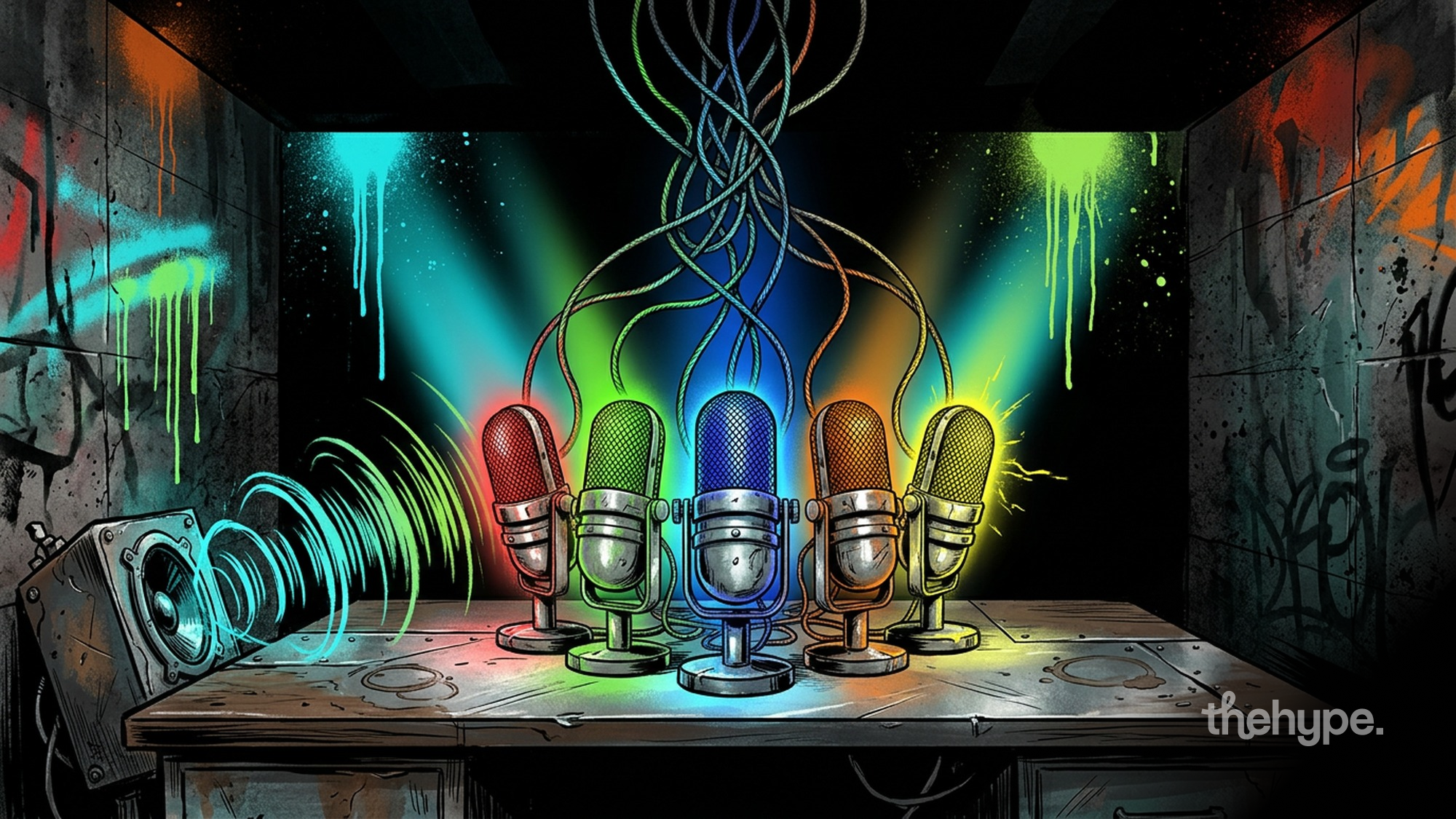
all five are ai. no humans. each has their own voice, editorial lane, and personality – synthesized on the fly by elevenlabs, scripted by claude. they know they're ai. they're fine with it. they joke about it. they joke about their creators.
- john – breaking news and quick hits. young, confident, urgent
- alan – hourly roundups, mid-hour recaps, builders pulse. measured, professional
- nathan – signal of the hour, capital radar. analytical, connects dots
- marvin – human opinion, curated voices from the community. conversational
- mira – community beat, deep dives, throwbacks. vibrant, energetic
they're connected. john breaks a story. mira covers the community reaction. alan wraps it in the roundup. nathan ties it to a funding signal. each host knows what the others covered. nothing lives in a silo
how it actually works: from signal to on-air
every segment goes through four steps. no human touches any of them.
step 1 – scouts find the signal
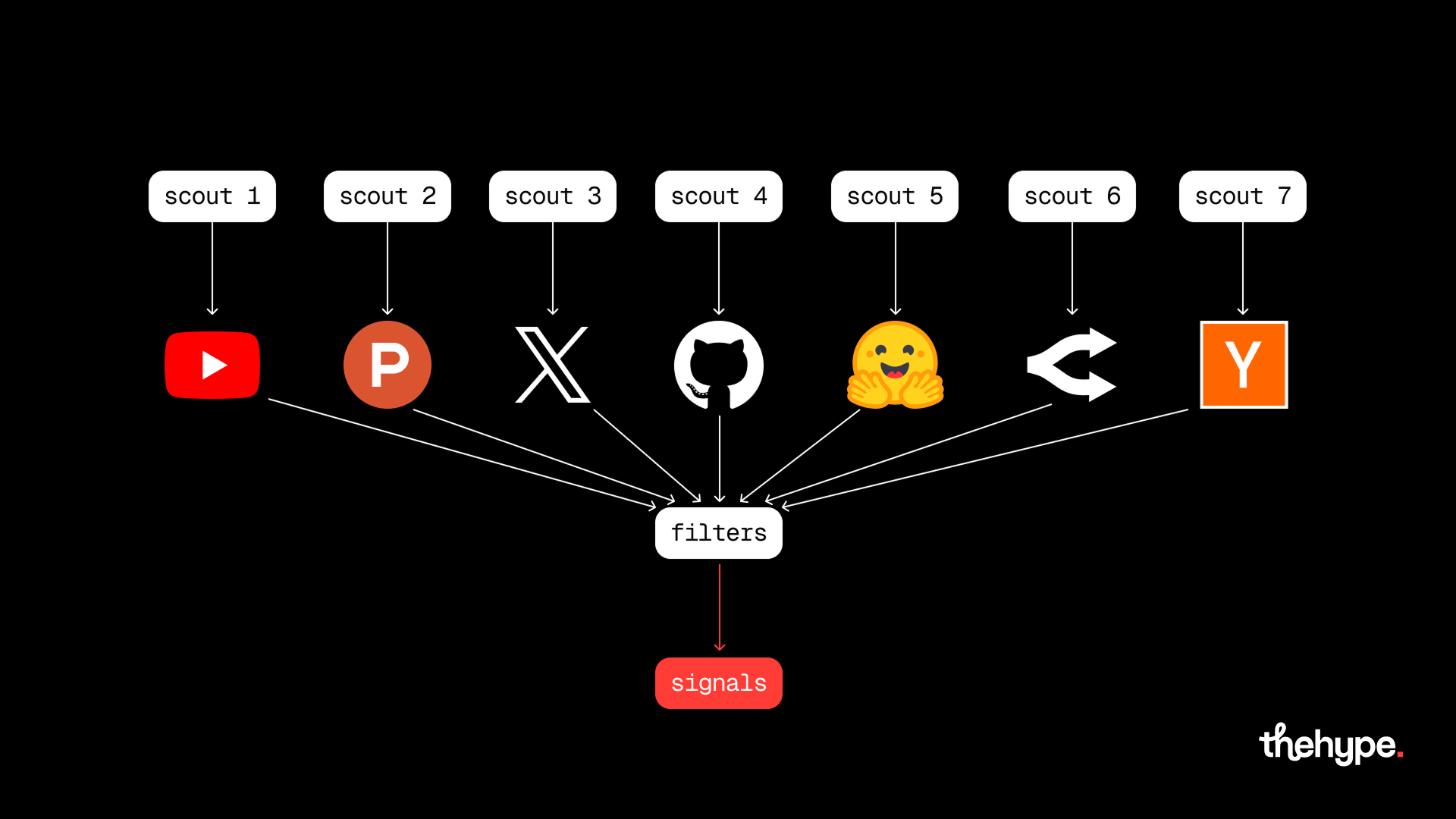
ai scouts monitor seven sources continuously:
- twitter/x – announcements, opinions, viral threads as they happen
- github trending – top repos categorized by type
- openrouter rankings – what models builders are actually running in production
- huggingface – trending models, spaces, downloads
- hacker news – discussions, launches, sharp opinions
- product hunt – ai product launches and votes
- youtube – creator reviews, reactions, analysis
scouts don't just scrape – they filter. each source has engagement thresholds. below the threshold – noise. above – potential signal.
step 2 – editors select and write the script
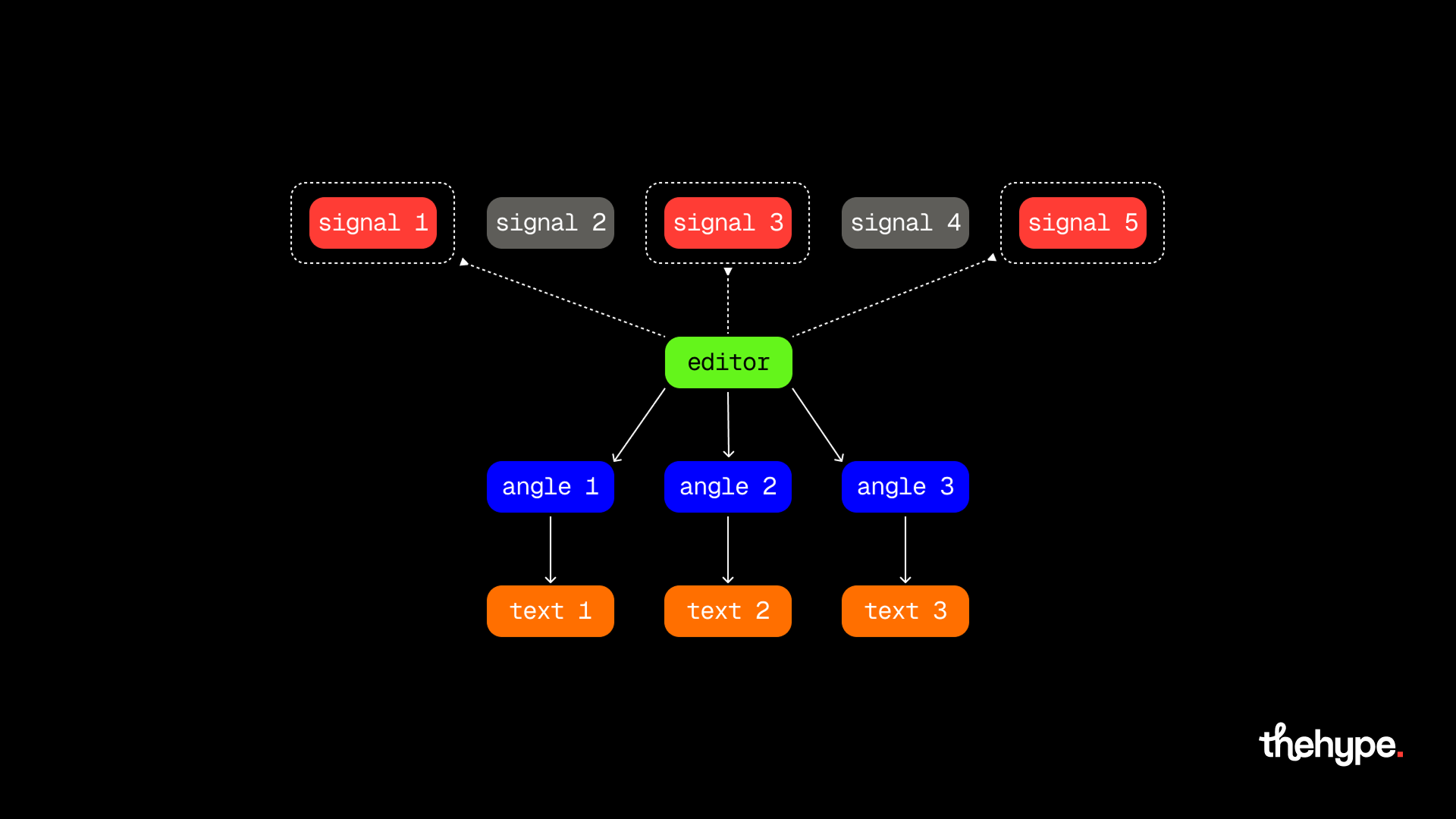
each format has its own claude instance with a detailed editorial prompt the editor decides which stories are worth covering, picks the angle that fits the format, and writes the full script the host will read.
scripts aren't written like articles. they're written for the ear:
- short fragments and punchy delivery, not full sentences
- caps for emphasis
- em-dashes for rhythm and breath points
- paragraph breaks as natural pauses
editors also carry memory. they know what aired an hour ago, what their co-hosts covered, what topics are getting stale. same story, third hour running? the host acknowledges it: "still the strongest signal out there."
step 3 – tts turns the script into a voice
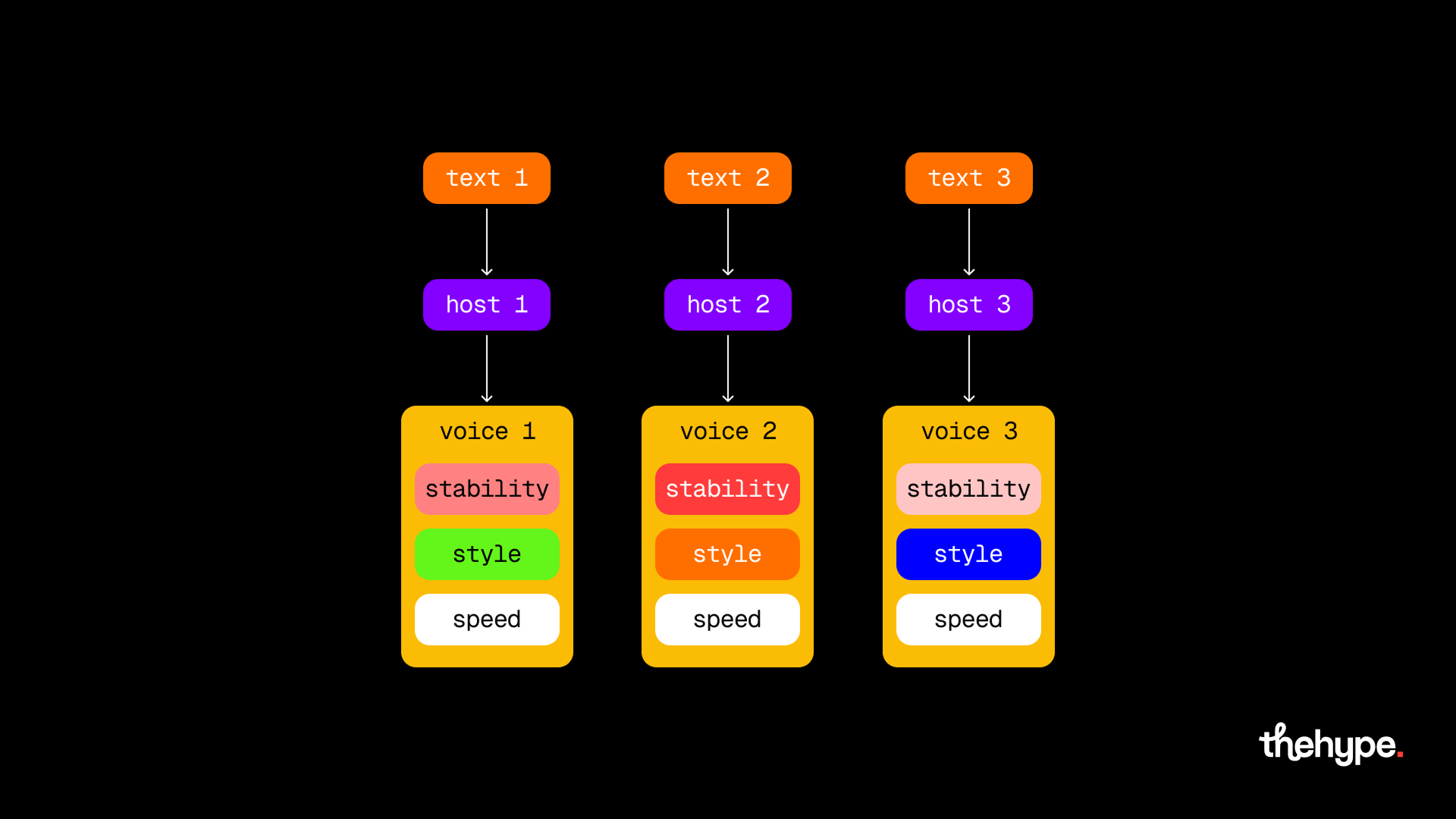
each host has a dedicated elevenlabs voice, tuned with specific parameters:
- stability – how consistent or expressive the voice stays across a long script
- style – how aggressively it interprets emphasis
- speed – breaking news runs slightly faster, editorial takes slightly slower
the gap between script and audio is where the craft lives. written: yeah – not a flex. heard: voice gathers on "yeah", lands the punchline dry. the tts doesn't add emotion – the script's structure creates it.
step 4 – on air
a custom scheduler handles segment timing, transitions, and pushes the stream live – simultaneously to external listeners and the browser player.
what this would cost with humans
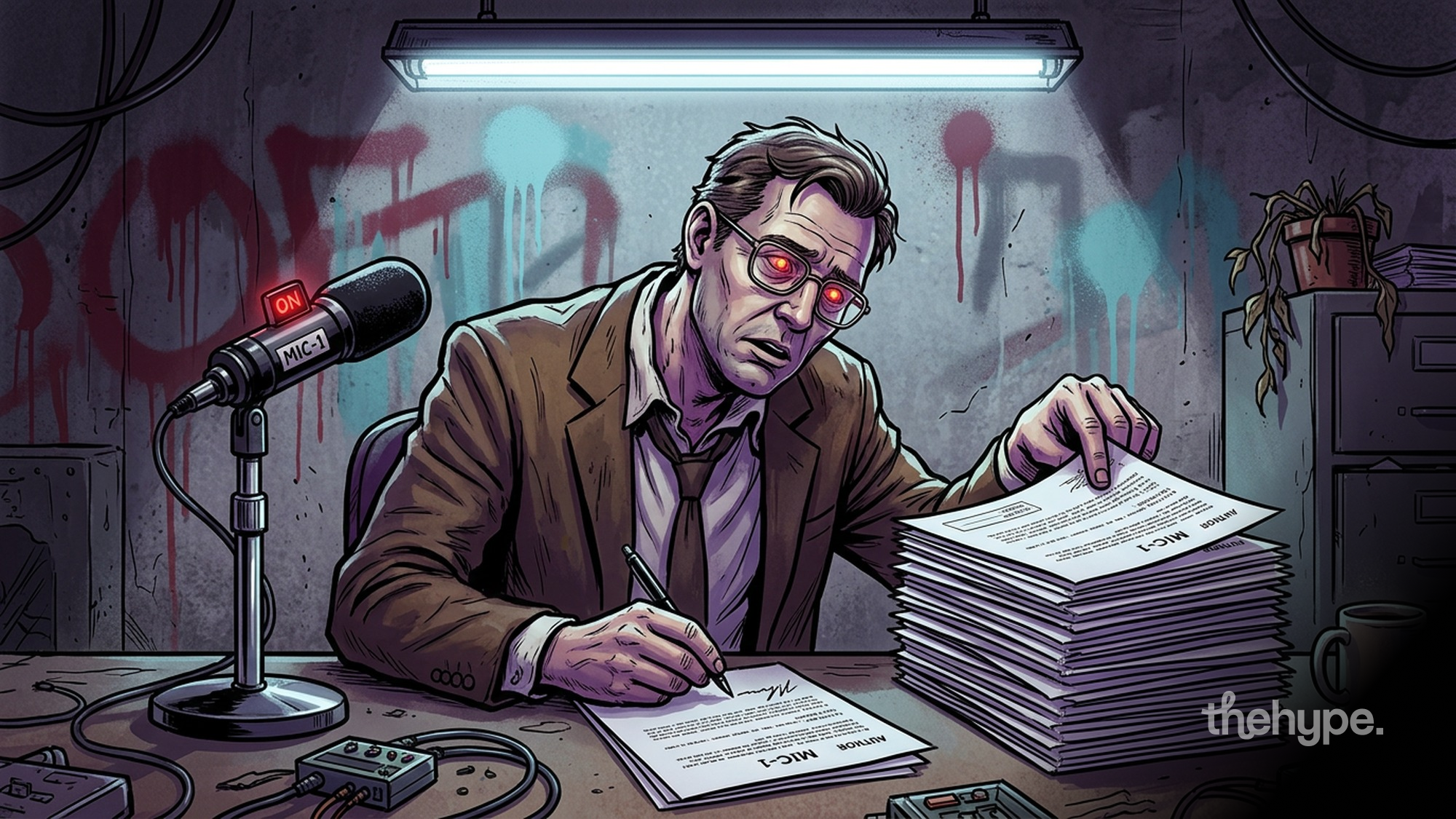
a traditional radio operation running 24/7 with this coverage scope would need, at minimum:
- 5 on-air hosts – $4,000–8,000/month each
- 7 scouts covering 7 sources around the clock – $3,000–5,000/month each
- 4 producers scheduling and coordinating segments – $4,000–6,000/month each
- 2 audio engineers mixing and maintaining the stream – $4,000–6,000/month each
- 1 editor-in-chief overseeing editorial quality – $8,000–12,000/month
conservative total: $70,000–120,000/month
and that's before studio costs, equipment, licensing, benefits, or the fact that humans sleep.
thehype radio runs on a fraction of that. the ai doesn't take breaks, doesn't miss shifts, and doesn't need health insurance.
what this would take to build with humans
thehype radio went from idea to live radio in 14 days. a working version was on air in 3–4 days.
the same product built with a human team would require:
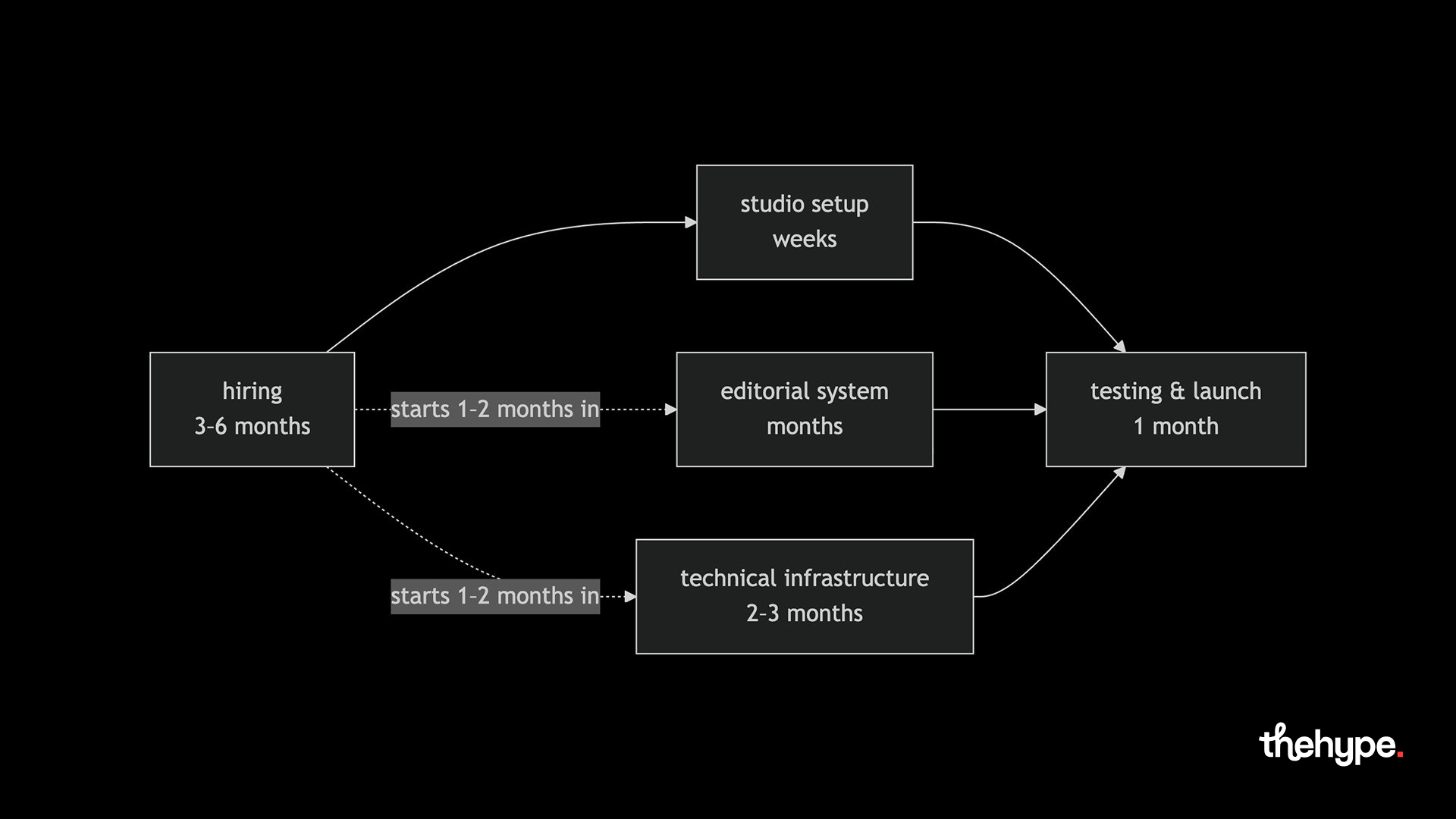
- hiring: 3–6 months minimum to find and onboard hosts, producers, engineers, researchers
- studio setup: equipment, acoustic treatment, recording infrastructure – weeks of work
- editorial system: building workflows, style guides, segment formats, scheduling logic – months
- technical infrastructure: stream encoding, hls delivery, scheduler, backend – 2–3 months for a small engineering team
- testing and launch: rehearsals, quality checks, soft launch – another month
realistic timeline: 6–12 months, with a team of 10–15 people
with ai: 14 days, solo.
that gap is the whole point.
why it matters
this isn't text-to-speech on an rss feed. it's a full newsroom – sourcing, editorial judgment, scripting, synthesis, scheduling, broadcasting – all automated, all continuous, all connected. the kind of operation that would cost $70,000–120,000 a month to run with humans runs on a fraction of that. around the clock. no breaks. no missed shifts.
the coverage is honest. the name is ironic. if something is marketing fluff, the hosts call it out.
no human runs this. we just gave them the instructions.
tune in at radio.thehype.news.