
 Nick Trenkler
mainstream ai discourse seems to be slightly stuck in a loop, obsessing over model parameter counts and benchmark scores. if you want to know where ai engineering is actually heading, you always look at what developers are starring, forking, and integrating into their daily workflows on github
taste-skill is the fastest-growing repo this week with 37.86% growth, while ecc by affaan mustafa leads the pack with over 207k total stars and 10,008 new ones this week
— thehype. (@thehypedotnews) June 5, 2026
here are the highest-starred repos of the week:
• moneyprinterturbo by harry0703
• understand anything by… pic.twitter.com/bUBhlCGBAY
this week’s trending repositories reveal a violent rejection of the "vibes-based" era of stateless prompting. developers are no longer trying to make ai agents freer or more creative; instead, they are demoting the llm to a commoditized logic processor and burying it beneath rigid, deterministic scaffolding. by isolating the fastest-growing repos this week, we can identify five distinct solution-sector trends, each mapping directly to a single repository, that illustrate exactly how the architecture of ai is changing
the death of ai "grep"
for the past two years, ai coding agents have operated like highly intelligent but profoundly amnesiac interns. dropped into a new repository, they waste massive amounts of tokens, api calls, and wall-clock time blindly running ‘grep’ and ‘find’ to map the architecture. it is a wildly inefficient loop
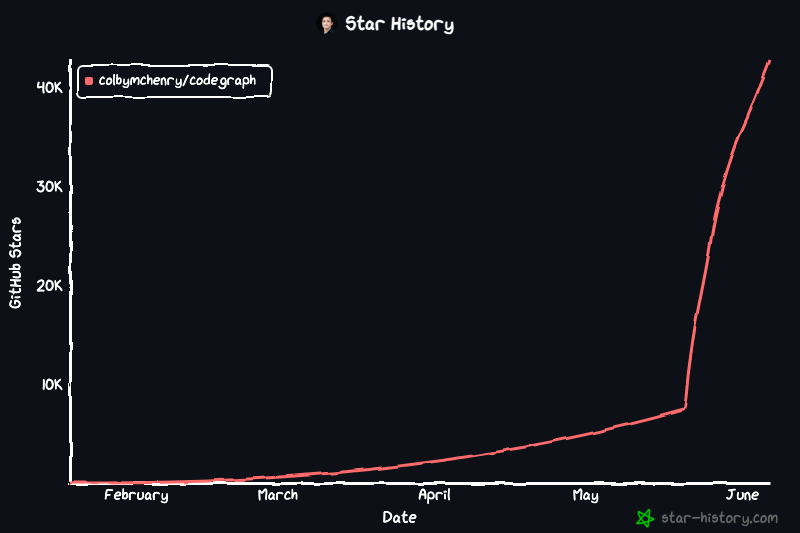
codegraph by colby mchenry (40,816 total stars, 9,796 weekly stars) shifts this paradigm. rather than letting the agent search on the fly, codegraph uses tree-sitter to parse the codebase ahead of time, storing symbols, call graphs, and file edges in a local sqlite/fts5 database. it then exposes this graph to the agent via an mcp server
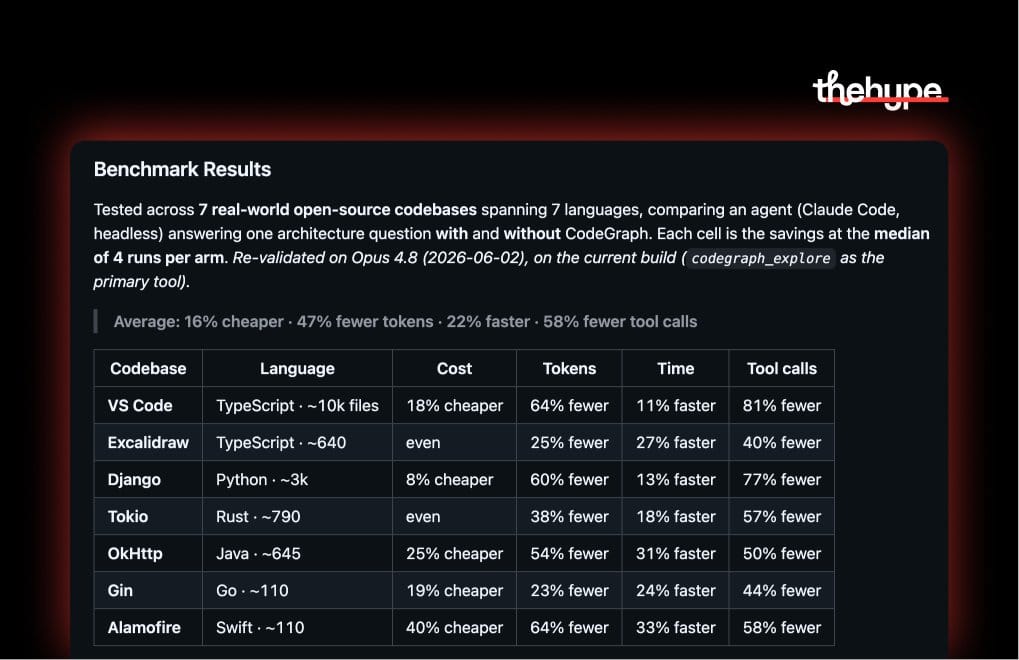
as a result, context is no longer dynamically gathered; it is a permanent, queryable infrastructure asset. developers are optimizing for wall-clock latency and tool-call reduction. by removing the agent's need to "explore," they are forcing ai systems to operate deterministically against pre-computed structural state.
shared human-agent state
while codegraph optimizes the agent’s internal context, understand-anything by @yuxianglin_lum (51,955 total stars, 12,726 weekly stars) addresses the friction between the human and the agent. it replaces static readme files and wikis with a five-agent pipeline that scans a codebase and outputs a structured json knowledge graph, visualized via an interactive dashboard. it maps not just files, but business domains, architectural layers, and dependency flows
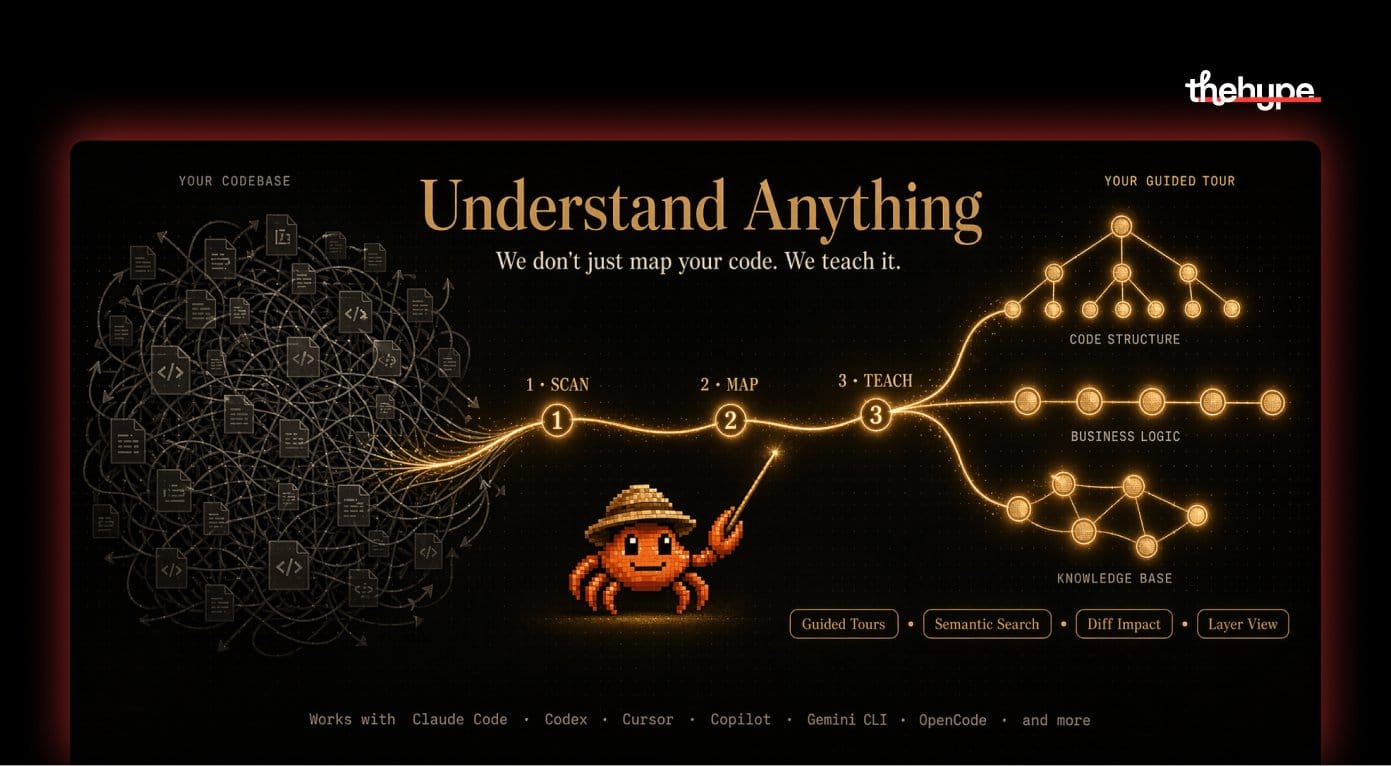
developers are treating codebase comprehension as a compile step: when a human and an ai agent look at a repository, they must operate from the same spatial map. by extracting structural and business logic into a standalone, persona-adaptive ui, the industry is standardizing on visual abstraction layers. the graph becomes the canonical truth, while the llm merely routes the logic
the anti-slop heuristic
we used to assume that, as models scale, they would naturally develop better design aesthetics. that didn't happen; left to their own devices, llms aggressively regress, generating slop - boring, templated saas uis and predictable layouts
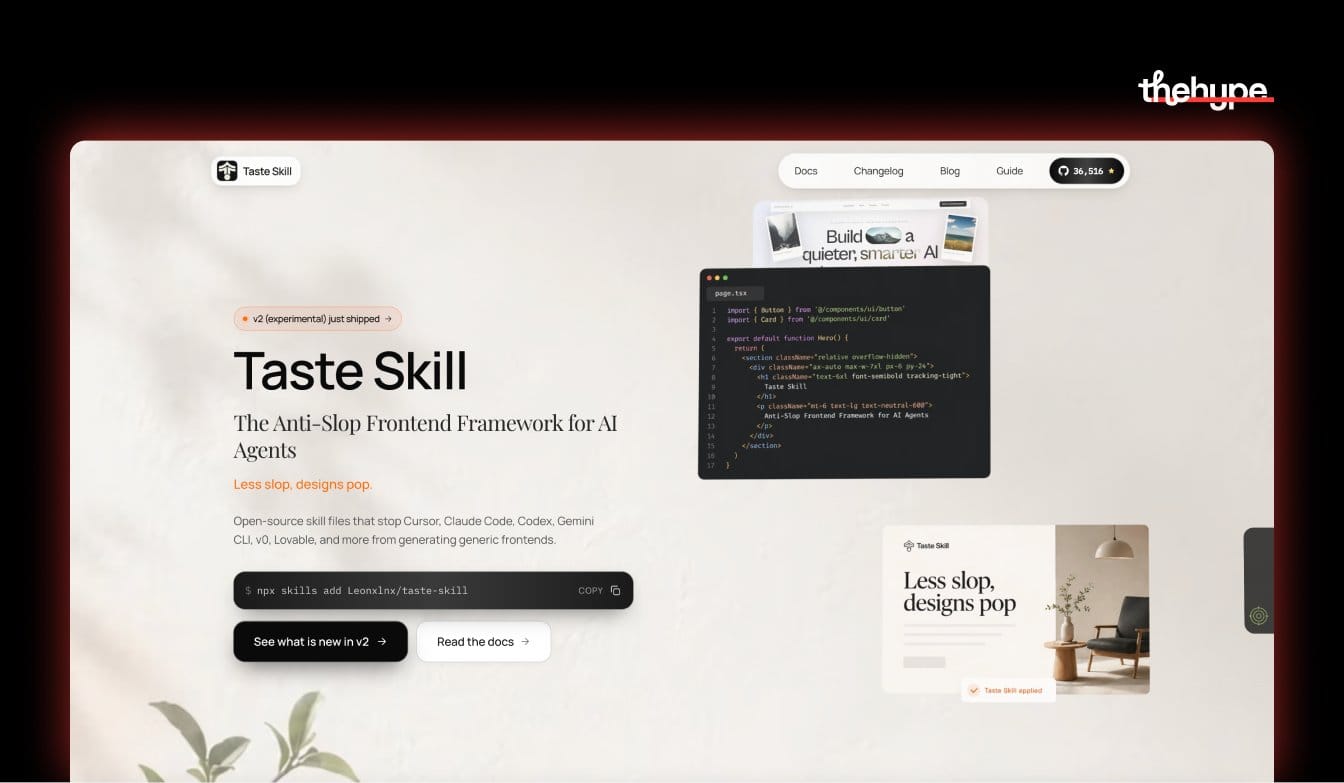
taste-skill by @lexnlin (33,080 total stars, 9,084 weekly stars) is a direct reaction to this regression. it operates as an anti-slop framework, providing skill.md files that explicitly forbid agents from generating generic designs. it forces the ai to operate within rigid typographic rules, visual density parameters, and motion constraints
taste is no longer an abstract natural language prompt (for example, "make it look modern"). it is a hard dependency you install via your package manager. developers are realizing that human expertise must be packaged into programmatic heuristics that override an llm's default behaviors
the infrastructure of constraint
developers have hit the limits of throwing a single claude.md file into a root directory. with 207,108 total stars and 10,008 weekly stars, ecc (everything claude code, created by affaan mustafa) has evolved from a simple configuration pack into a heavy-duty "agent harness performance system." it introduces pretooluse hooks that block unauthorized git flags, agentshield for static security analysis of agent configs, and continuous learning systems that extract memory across sessions
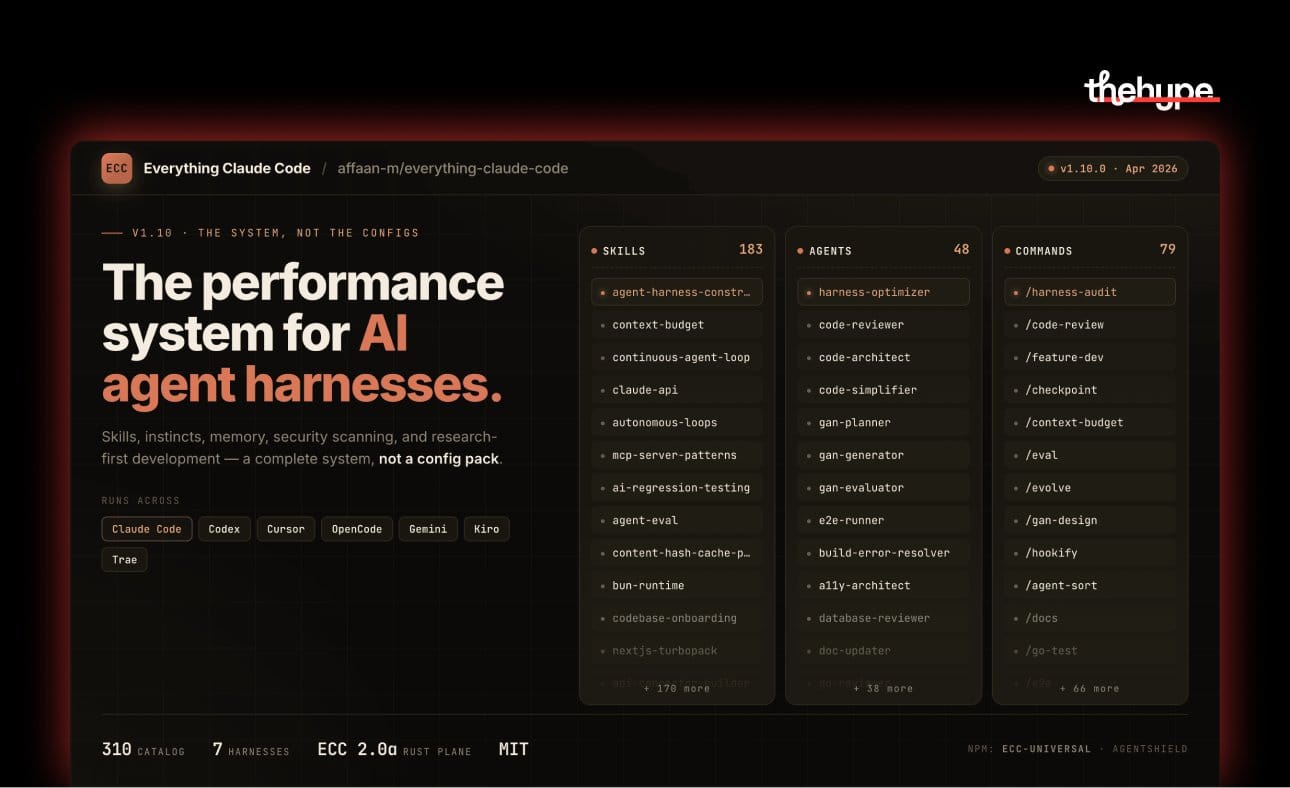
while ai engineering has reached the enterprise governance phase, ecc is standardizing how agents behave whether they are running in cursor, codex, or opencode. by injecting strict developer hygiene, like enforcing test-driven development (tdd) before code generation, ecc is ensuring that ai operates safely within a confined, auditable blast radius
the automation of output
while the previous four trends focus on internal software development workflows, moneyprinterturbo by harry0703 (79,405 total stars, 18,553 weekly stars) signals the endgame of external digital production. it is a complete mvc architecture that wires together faster-whisper, edge tts, multiple llm providers, and ffmpeg to generate fully edited short-form videos from a single keyword
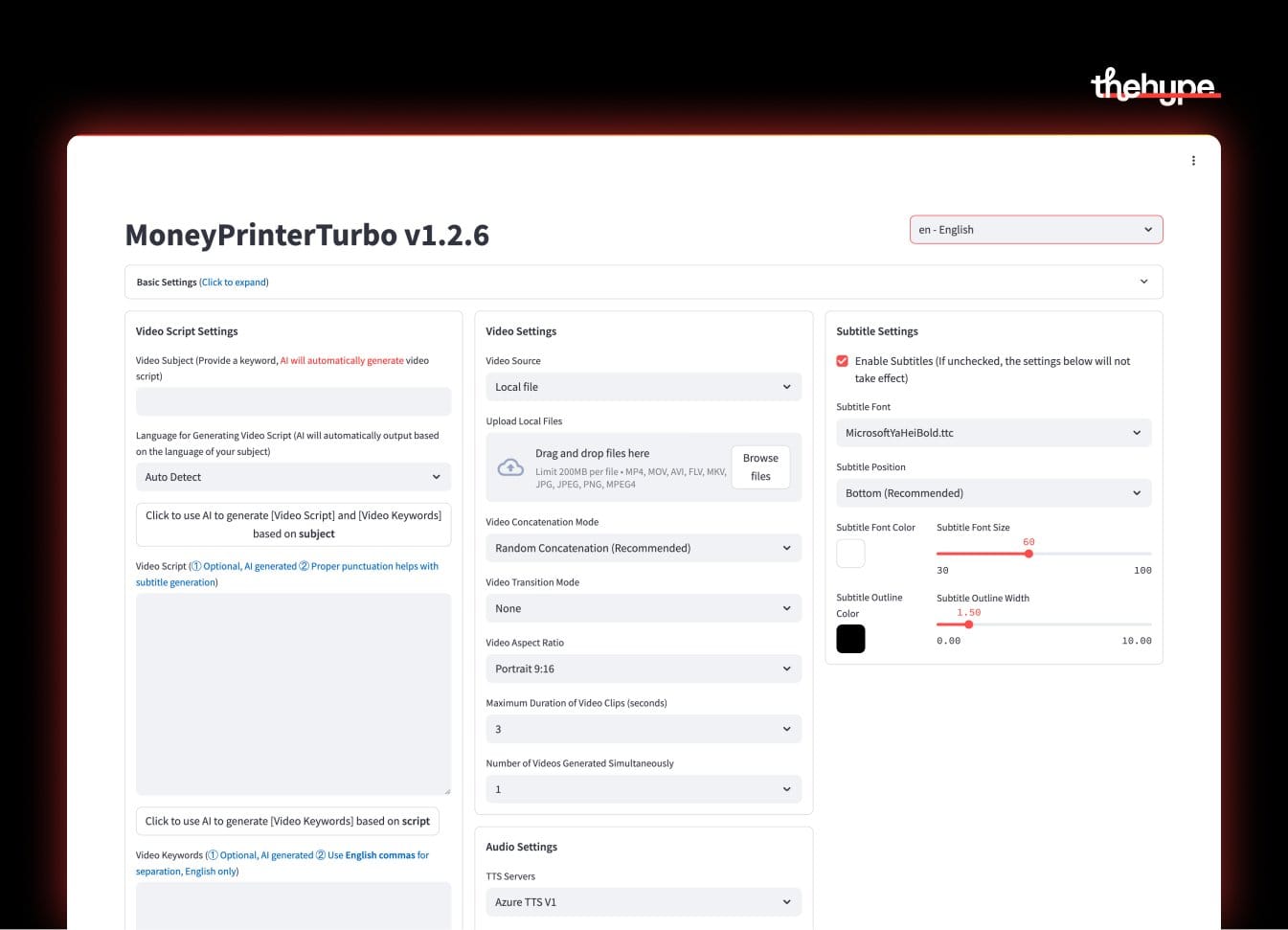
here, things are moving past the "co-pilot" paradigm. by handling pipeline state, isolating dependencies, and stringing together multi-modal models, developers are building persistent execution factories. in this case, ai becomes a headless service layer operating continuously in the background, systematically removing the human from the loop of routine content generation
abstraction layer dominance
if you look at these five repositories as a collective behavioral signal, the meta-pattern is stark: the model is no longer the complete product
for the last three years, the dominant layer in ai was the model itself. today, it is the abstraction infrastructure sitting above the model. developers are optimizing for reliability, security, and token efficiency. old paradigms, like letting an agent endlessly loop through files to find a bug, or begging an llm to design something beautiful, are breaking down.
the github signals from early june 2026 reveal an interesting truth: we do not need the models to get exponentially smarter right now. the future of ai engineering isn't about waiting for the next frontier model to solve our problems out of the box. it is about building the architectural scaffolding, like graphs, skills, harnesses, and factories, that turn raw, erratic intelligence into persistent, predictable infrastructure. welcome to the era of the ai systems architect!