 Nick Trenkler
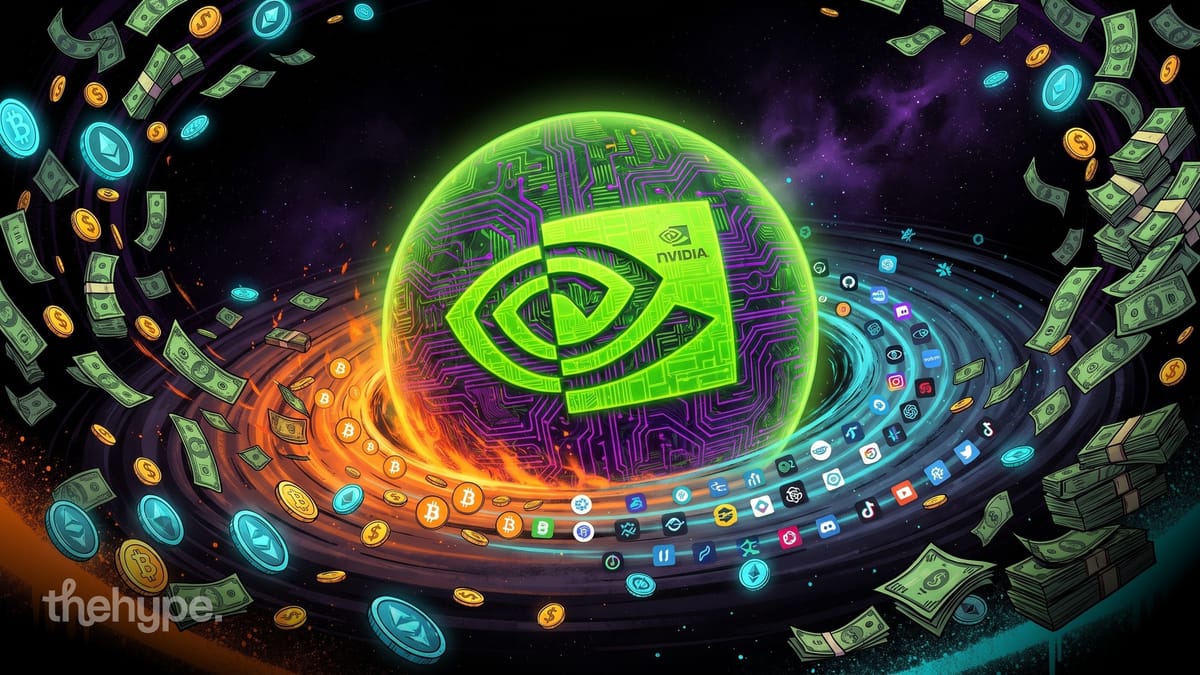
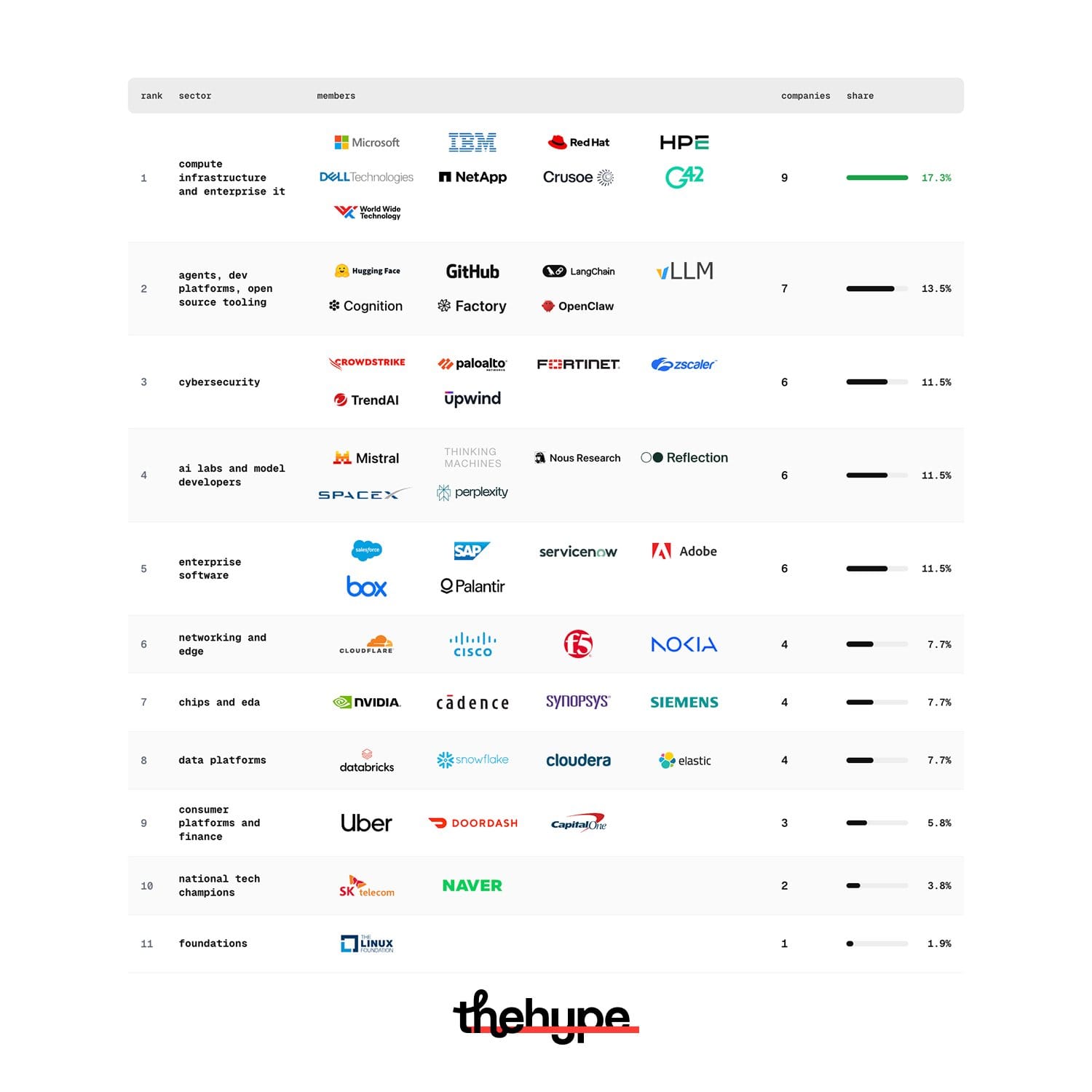
on july 27, nvidia announced the open secure ai alliance – a coalition of 52 companies committed to building and sharing open tools for ai security. the stated mission is to give defenders open, frontier systems they can inspect, adapt, and run on their own infrastructure. the group builds on the linux foundation's akrites initiative and existing openssf work.
the framing is safety. the membership list tells a more precise story.
what was actually announced
the alliance launched with concrete contributions rather than a statement of principles:
- nvidia open-sourced nooa, a research framework for agent harnesses designed to make agent behavior easier to test, trace, and audit
- hewlett packard enterprise contributes to spiffe/spire, a zero-trust identity standard that cryptographically verifies which agents and workloads are allowed to talk to each other
- hugging face handed safetensors, its safe format for storing model weights, to the pytorch foundation
- ibm and red hat brought lightwell, which extends supply-chain security with digitally signed patches
- microsoft contributed mdash, a multi-model harness that orchestrates agents to find and prove exploitable bugs
- spacexai open-sourced grok build, its terminal coding agent, and says it plans to release grok model weights
the anchor case in nvidia's announcement is the recent hugging face security incident. closed ai tools could not distinguish the attacker from the defender and blocked forensic analysis mid-response. hugging face ran the open-weight glm 5.2 model on its own infrastructure instead, analyzed more than 17,000 actions, and contained the intrusion.
that example does a lot of work in the announcement, and it is worth noting why: it is the rare case where openness is not a preference but a hard technical requirement.
who is in
who is not
openai, anthropic, google, meta, and amazon are all absent.
that absence is the most informative line in the announcement. every one of the 52 members sells something adjacent to the model – silicon, servers, security, storage, software, logistics. none of them sells the frontier model itself as its primary asset. the two members closest to being model companies, mistral and spacexai, are precisely the ones whose weights are open or promised to be.
this is a coalition of complements. the classic move is to commoditize the thing next to what you sell: the cheaper and more abundant frontier models become, the more valuable everything sitting around them gets. seen that way, the alliance is less an argument for openness as a value than an argument for turning frontier capability into a commodity rather than someone's moat.
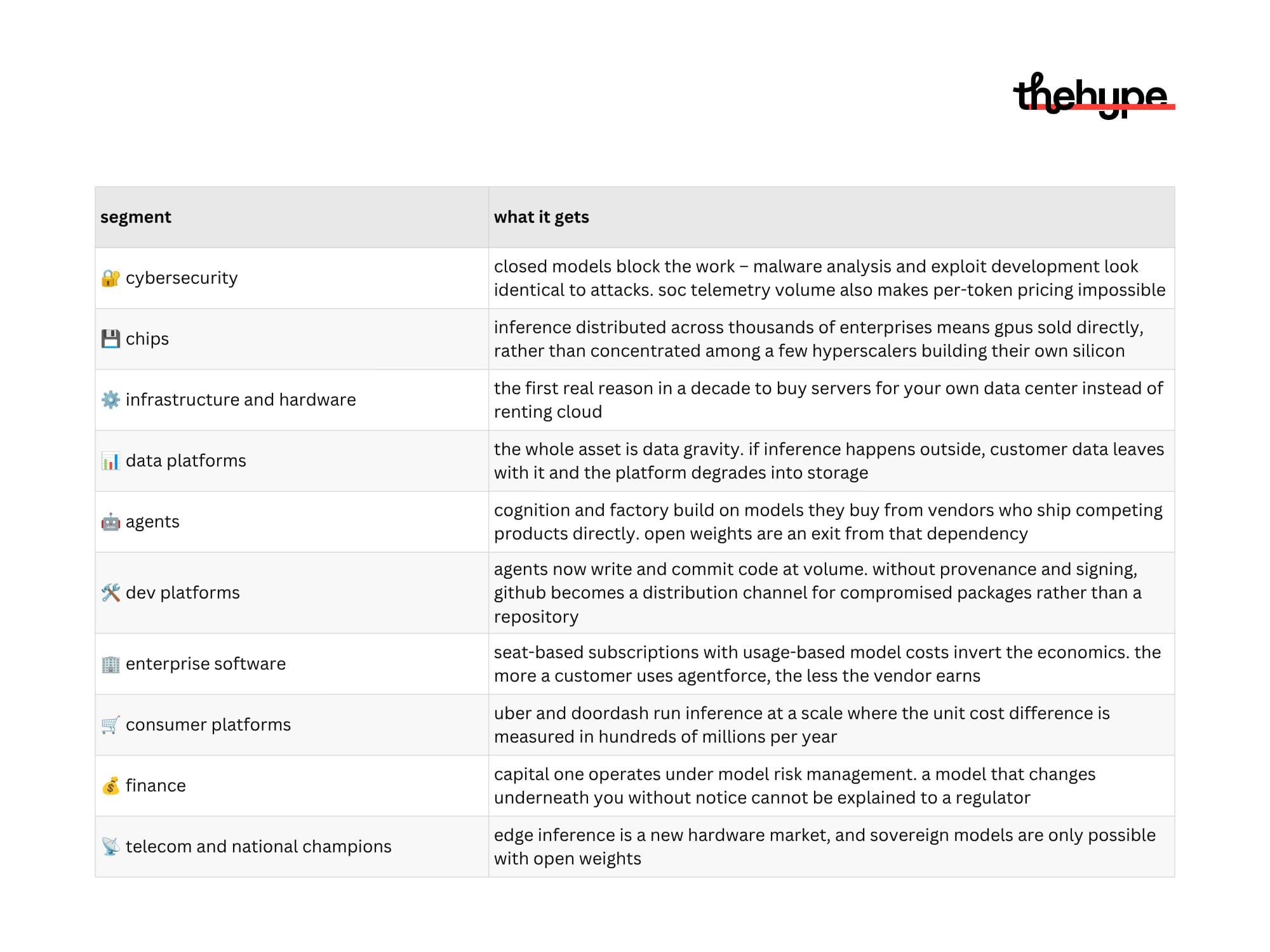
why each segment shows up
the practical case for running open weights locally comes down to three constraints: cost per call, data that cannot legally leave the building, and models that refuse to do the work.
the sovereignty layer
mistral is french. naver and sk telecom are korean. g42 is emirati. nokia is finnish. sap and siemens are german. for each of them, open weights are the only route to a domestic frontier stack that does not hand the keys to an american vendor.
nvidia's announcement frames the entire effort in terms of the united states and its partners, and closes with a direct appeal to policymakers: treat open models, harnesses, and security tooling as defensive assets, and avoid blanket restrictions on open frontier systems. the coalition is international. the framing is american. the ask is regulatory.
what to watch
the alliance has published real code and real standards, and the security argument for open weights is genuine – the hugging face incident is not a hypothetical. but a launch announcement with 52 logos is a lobbying position as much as an engineering program.
the test is whether the shared infrastructure the alliance calls for – datasets, evaluation frameworks, attack simulators, red-teaming tools – actually gets funded, and whether members whose interests are commercial rather than defensive keep contributing once open weights have done their job of pressuring model prices down.