
 Nick Trenkler
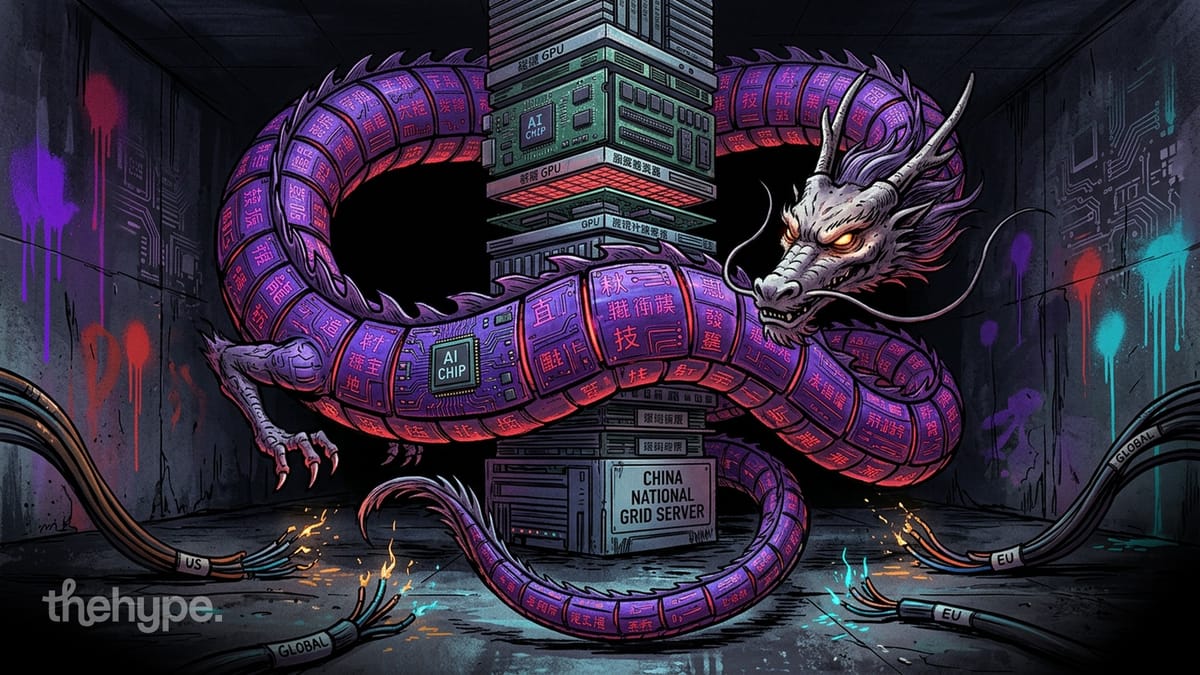
china's ai industry in mid-2026 looks paradoxical. record funding rounds, aggressive poaching, and unprecedented retention schemes suggest a hot private market. at the same time, beijing is quietly tightening the borders around the people doing the work. these are not contradictions – they are the same phenomenon from different angles.
ai has become too strategically important for the state to leave to the market, and too lucrative for the market to let the state run alone
the talent war
tencent, having admitted last year that it fell behind on large language models, is now poaching aggressively from bytedance's seed lab, led by a researcher hired from openai
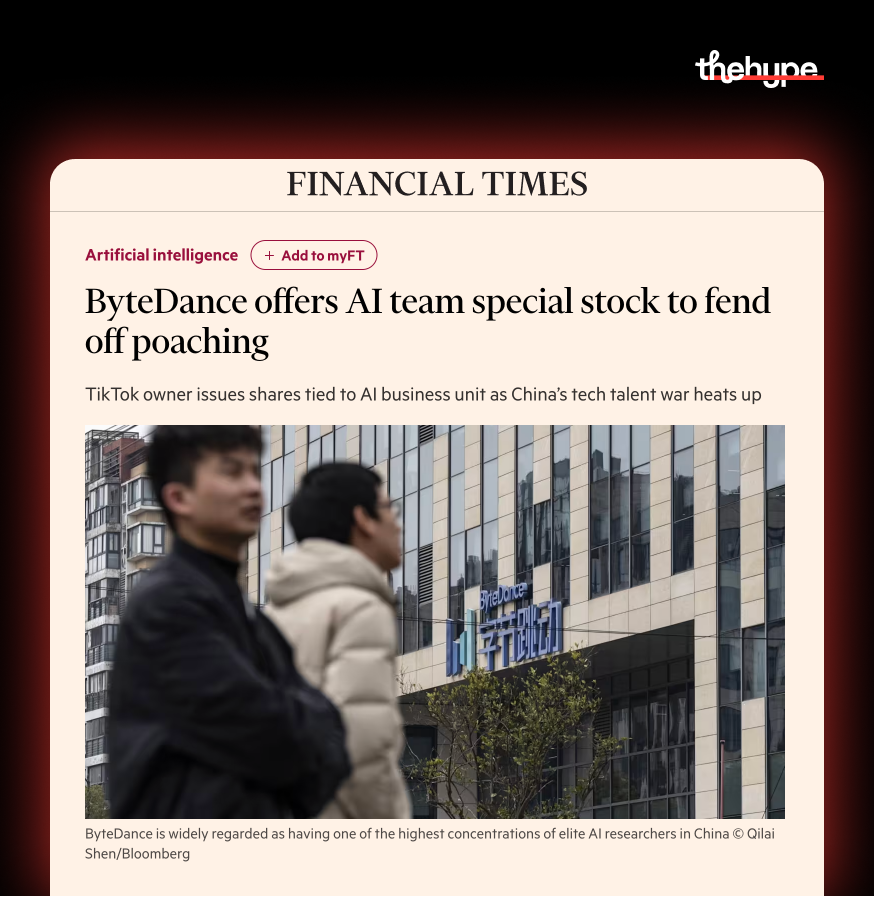
bytedance's response is the more revealing move: it has issued unit-specific stock options tied only to seed, separate from the broader company. employees can buy doubao shares at thirteen dollars, up roughly thirty percent from late last year. it is the first time bytedance has fragmented its equity structure this way.
the message – standard compensation is no longer enough to hold key researchers
deepseek faces the same pressure from the other direction. bytedance reportedly poached several of its infrastructure team last year, and part of the rationale for its massive funding round is to pay people enough to stay. when a company needs billions partly to retain staff, the labor market has reached an unusual state
capital is consolidating
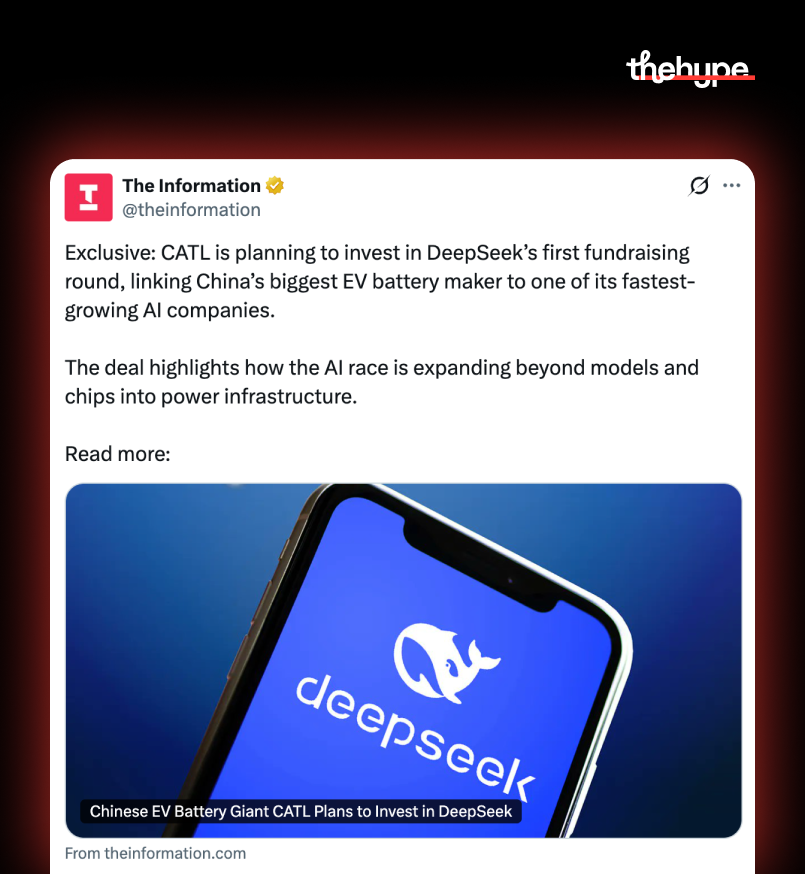
deepseek's round, if it closes as expected, will be the largest in chinese ai history – fifty billion yuan, valuation potentially above 350 billion. the investor list matters more than the size: catl, jd.com, netease, tencent, alibaba, a state-backed semiconductor fund, with founder liang wenfeng providing the largest single chunk
the composition is strategic, not financial
catl is a battery company looking to sell power equipment into ai data centers. the tech giants are protecting their own infrastructure and cloud businesses. the state fund makes the industrial-policy logic explicit. capital is concentrating into a small number of nationally important entities funded by a small number of nationally important investors – closer to coordinated industrial policy than venture diversification
the irony is that deepseek's original distinction was doing more with less. r1 was trained at a fraction of american costs, and the constraint was part of what made it impressive. a company sitting on tens of billions and building its own inner mongolia data center is no longer that company
the state is closing the exit
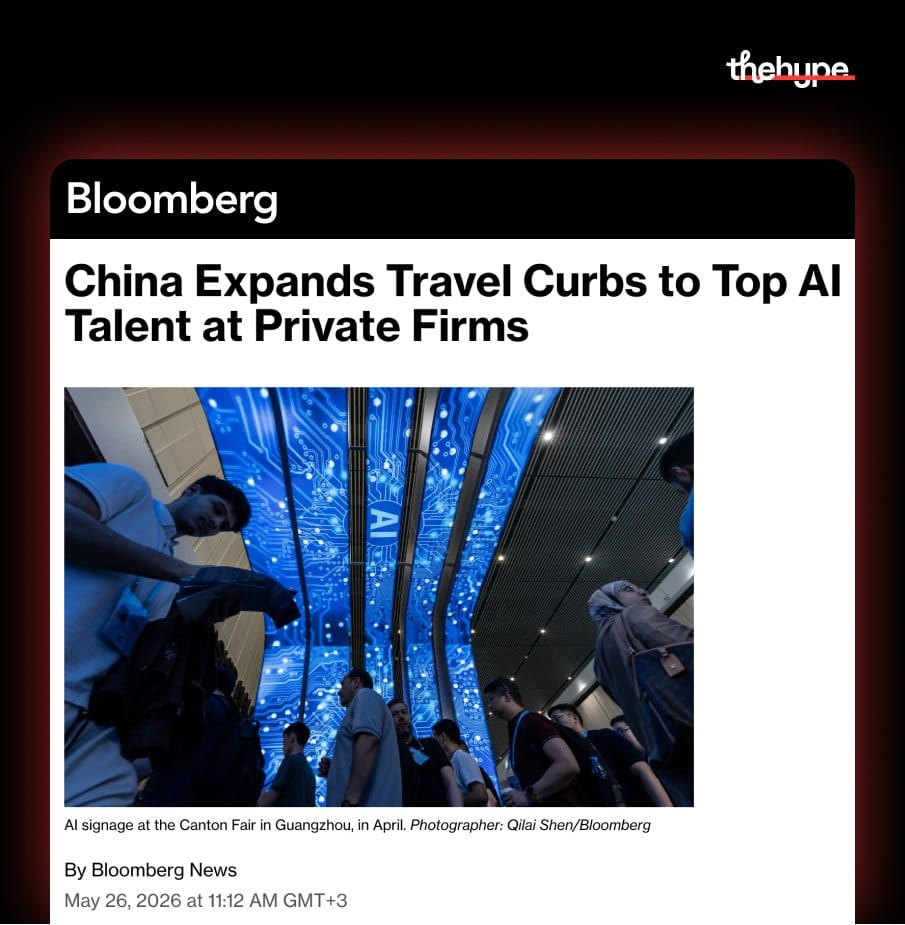
the most consequential development is bloomberg's reporting on travel restrictions. requiring top ai professionals at private firms to obtain government approval before leaving the country crosses a line that previously separated state enterprises from the private sector. the criterion is new too – individuals are added based on strategic importance, not seniority or employer
the trigger is plausibly the manus episode, where meta's acquisition of a chinese-origin ai company prompted beijing to bar two co-founders from leaving the country during an investigation. the broader policy is the systemic version of that ad hoc response
the operational consequences cut against the stated goal. an exit regime that constrains talent also makes the country less attractive to enter or return to. it weakens engineers' leverage against domestic employers, but also reduces competition for them – on net favoring the largest, most state-aligned firms at the expense of smaller ones and of the engineers themselves
a self-contained stack
underneath this is a longer project: building a chinese ai industry dependent on no foreign inputs. deepseek's v4 has been optimized for huawei's ascend 950pr chips. catl is moving into data center power. bytedance, still nvidia's largest chinese customer, looks increasingly anomalous against the policy direction. domestic chips, domestic models, domestic capital, domestic talent that stays domestic.
the strategy is coherent. the open question is whether self-containment is compatible with frontier performance. ai research has historically been a globally circulating field. china is betting that scale and concentration can substitute for openness – a bet that is neither obviously right nor obviously wrong.
the contradictions to watch
three tensions matter:
- concentration versus innovation – deepseek's breakthrough came from constrained scrappiness, and its new form is a different kind of organization
- retention versus motivation – keeping people in place is not the same as keeping them engaged
- strategic importance versus market dynamism – the more the state cares about ai outcomes, the less it tolerates outcomes it cannot predict, and that knowledge is now priced into every decision in the industry
the immediate signals will come from the deepseek round's final terms, the scope of the travel restrictions in practice, and whether deepseek can ship v4.1 in june on schedule
the broader question is whether china can run a frontier ai industry on these terms – heavily capitalized, tightly held, increasingly walled in – or whether the contradictions accumulate faster than the capabilities